Do You Think They Want Your Words?

No Words

She abruptly stopped talking as we stood outside her front door. She asked if we could wait here a minute. We said yes.

When she came back, she handed us a piece of paper. On the front was a picture of a man. On the back was his funeral program.

Our friend explained that this was her brother. He had committed suicide on Thanksgiving Day.

She was still reeling from the loss. She went back inside and brought out more photos of her brother.

She needed to show who he was. She needed to talk about him.

We said relatively little.

Who Cares?

Often we’re caught off guard by the stories that people share with us. If we just happen to be in the right place at the right time, we might catch the overflow of emotions from someone else’s pain.

But what about when we know in advance that they’re hurting?

  • How often do we intentionally step into another person’s heartache?
  • Are we more likely to run into the pain or run away from it?
  • And if we do choose to avoid it, why?

For me, I often allow my doubts and fears to override my good intentions. I’m afraid I won’t know what to say.

Or I’m afraid I’ll say the wrong thing (because sometimes I do). So I don’t even show up.

If the only choices I see are perfect or nothing, I’m tempted to choose nothing at all.

Which leaves the other person thinking I care nothing at all.

A Different Focus

Likely we’ve all been on both sides of this. Sometimes we’re the one who doesn’t show up. And sometimes we’re the one that others don’t show up for.

In both scenarios, we hurt.

What can we do about it?

If possible (and granted, it isn’t always possible), if your friend is hurting, bolster your courage to show up in person by knowing this truth:

It’s less about what you’ll say, and more about what you’ll hear.

Otherwise, when we assume the opposite—when we think what we will say is more important than what they will say—we shut the other person down.

Release the pressure on yourself to have the right words.

You’re not there to take away their pain; you’re there to make room for it.

Let go of what you think you should say. Focus more on what they are saying.

People feel loved more when they are seen and heard.

Grace Flows

But what about when you are the one with the heavy heart?

Be honest with your friend who wants to help. If they do unintentionally say the “wrong” thing to you (give them the benefit of the doubt when possible), it’s okay to gently let them know that they’re making your pain worse.

And if they truly want to be helpful, they will listen to you and believe what you’re saying. They will change their words or behaviors going forward.

Grace flows easier when we’re invited to participate in the conversation about our own pain.

Connect More, Heal More

Bottom line, when someone around you is hurting, make it more about them than about you. Listen more than you talk.

And when you are hurting, allow yourself to be vulnerable in the presence of a safe and trusted friend. (Never obligate yourself to spill your guts to just anyone!)

What we all need—whether we’re the one doing the consoling or we’re the one in pain—is to feel community. More connections make the load easier to bear.

Our imperfect presence matters more than our perfectionistic absence.

By being human together, we’re being Jesus to each other. This is one way God works in the world.

Use Your Ears

We listened to our friend at the door as she shared more about her brother. She cried. We cried.

We had no magic words to relieve her pain. We had no advice to give or stories to share. We felt we had done so little as we walked away.

Because our friend was still sad, of course.

But we could also tell she had felt seen, which is something we all want.

When space opens up to relay our suffering with other human beings, everyone is the better for it.

If lending our ears more than our mouths can make even a small difference, may we all learn to listen more and talk less.

“Funny, how we worry about having the right thing to say, when listening is so often what people need most.”
– Anonymous


Who has really listened to your pain? Did it help? Share in the comments.

sharing at these linkups


Assign It a Day and Time

I knew we had a problem when I saw it was 1 a.m.

Prior to looking at the clock, but after I woke up, I assumed it was time to get up because so much light was coming through our bedroom window.

But glancing at the clock, I discovered it was not time for either me or the sun to rise and shine at 1 a.m.

This was early spring of 2021. Unbeknownst to us, a nearby business had installed a very, very bright light in their parking lot earlier in the day. And by night, it was shining directly into our bedroom window.

So for a couple months, Jeff and I talked about getting blackout curtains for our bedroom window to block the dreaded light. And talked about it more. And talked about it even more.

Until the trees finally grew new baby leaves, and the parking lot light was a little diffused. And then the leaves grew bigger and bigger, blocking the light more and more. Eventually the light was no longer a pressing problem, thanks to all our trees.

We stopped thinking about buying blackout curtains.

But the problem didn’t go away; it was only masked. The problem has now returned. 

The trees have lost all their leaves. I wake up all through the night and wonder: Is it already morning?

We started talking again about getting blackout curtains.

But this time we did something different. On Tuesday morning we set a time to look together online for some curtains (5:30 p.m.), and a day (Thursday afternoon) to go look at curtains in person.

The days and times were only arbitrary, of course. But they were important.

Because when something can be done anytime, it sometimes doesn’t get done at all.

The artificial deadline worked. Jeff and I sat together on the couch at 5:30 last Tuesday night to search the internet for blackout curtains. It took awhile to discover what was available, what we liked, and what we wanted to spend. But by 6:30 p.m., we had ordered the curtains and all the accompanying hardware.

In less than an hour, we accomplished what we’d delayed doing for almost a whole year.

The lesson learned: for things without an obvious deadline, still assign a day and time to get them done, especially things I keep procrastinating.

Granted, I’ve tried this trick in the past with varying levels of success.

But just because something doesn’t work every time doesn’t mean I shouldn’t keep trying it some of the time.

So I’ll keep trying it.


What time management hacks do you have? Share in the comments.

I’m linking at these blog parties

Grace & Truth Featured Post

For our featured post this week, read this insightful post by Susan. For whatever area you are working on, see if some or all of her handy eight tips can help you become more efficient in 2023.

Read all of Susan’s post here, then add your own links below.

8 Tips on How To Have a More Productive Year


Review the rules here about adding your most recent Christian Living posts and how to be the Featured Post. Visit all four hosts social media here or websites here: Maree Dee, Lisa notes, Lauren Sparks, Tammy Kennington.

Now Let’s Link Up!

You are invited to the Inlinkz link party!

Click here to enter

A Journal Page of Pride
Review of "Learning Humility"

This Scribbled Page

I sit on my couch and flip through the pages of my clipboard. I’m looking for notes I took last month on a project.

Instead, I happen across a page of intense scribbles. It is my handwriting from a year ago. I hesitate to read my own words, but curiosity compels me.

I don’t like what I find. The written words are furious and biting and sharp.

Granted, they weren’t meant to be seen by any eyes except my own. That’s what journaling pages are for.

Would I intentionally invite anyone to read my personal journals? No way. They contain too much ugliness.

Yet in my year of exploring what it means to be human, it will also include exploring what it means to be humble.

And humility involves letting yourself be seen from many angles, not just from your preferred good side.

Learning Humility

I just finished reading my first book of the year. It’s called Learning Humility: A Year of Searching for a Vanishing Virtue by Richard Foster, one of my favorite influential authors I began reading decades ago.

His book reads like an open journal, compiled from pages of his real journal.

Despite being 80 years old, Foster is still on a path of exploring and learning. And of humility. Thus, he allows us to peek into his journal from his year spent studying and practicing the virtue of humility.

He begins with the “supreme touchstone” of Jesus, the ultimate example of humility. From there he ventures into classic Christian texts on humility. He also uses twelve virtues from the Lakota calendar to frame his year-long adventure into humility.

Early on, Foster discovers this:

“As I talk with people about the topic of humility and read about it and seek to practice it, I find a common misconception. It is this notion that if I am truly humble, I won’t know that I am humble. That is, self-knowledge of humility actually proves that we lack it.”

In other words, the myth is “if I think I’m humble, I’m not.” By believing it, Foster says we prevent ourselves from trying to become more humble.

But how can we overcome this roadblock to humility?

Foster says one simple way is this: pay attention to humility’s opposite—pride. Observe pride in ourselves and in others, not to judge it, but to sharpen our view of seeing how different pride looks compared to humility.

“Pride is always a distortion of who we are truly created to be. Humility is so very appealing when we see it in another person. Conversely, when we watch someone consumed with pride it feels unnatural, deformed, twisted.

“Humility is beautiful, whereas pride is ugly.”

Ultimately, Foster concludes, to find humility, don’t try to attain it directly. Follow the principle of indirection.

He suggests “we simply take up those things that, in God’s time and in God’s way, will lead us into the virtue of humility. An obvious example is the spiritual discipline of service.”

Participate with God in grace-filled work, developing “deep in our soul a right relationship with others and with God.”

Foster says he learned that humility made him more human, more genuinely accessible to other people.

This is a lesson of humility—and humanity—worth pursuing for me, too.

One More Page

I look back at my page of angry writing. I consider wadding it into a tight ball or cutting it into tiny pieces and throwing it all away.

Instead, I put the journal page back into the clipboard where I found it. Perhaps I’ll stumble upon it again another day, a witness to how prone I am to fall into my own pride.

But I want to add an extra page to it, an addendum for my future self to see for the next time I run across it.

I take a sticky note and write these four sentences on it from Richard Foster about humility:

  • Be brave enough to learn humility.
  • Be strong enough to learn humility.
  • Be courageous enough to learn humility.
  • Be compassionate enough to learn humility.

I put the sticky note on my journal page. And put it all back on my shelf for now.

Learning humility isn’t for wimps. May I be brave, strong, courageous, compassionate—and human—enough to do it.

blank


I hope to be humble enough this year to share my journaling thoughts about being human in this space. I invite you to share with me your thoughts, book suggestions, article links, etc., too, about what it means to you to be human.

Which do you see more of: people being proud or people being humble? Share your thoughts in the comments.

my thanks to NetGalley + InterVarsity
Press for the review copy of this book

sharing at these linkups


What Does It Mean to Be Human?

I’m only human.

  • I need shelter when I’m cold.
  • I get hungry every few hours.
  • I need to rest unconsciously every single night.

I’m just human.

  • I misspell words.
  • I say things wrong.
  • I leak anger instead of grace when I’m upset.

I am human.

  • I create art.
  • I cry with a friend.
  • I overflow with awe in the presence of Love.

What does it mean to be human?

What does it mean to be human?

To even ask the question is a sign of humanity. To think of answers, to communicate those answers, and to imagine answers yet unknown are also parts of being human.

Understanding what it means to be human is more than an intellectual pursuit. It is a also a physical practice. And it is a spiritual discipline.

Living human is a remarkable achievement.

This year I choose to explore what it means to be HUMAN, my One Word for 2023. To accept its limitations and its liberations. To appreciate its complications and its comforts.

In body and mind and soul.

I’ll alternate monthly practices for body, mind, and soul through each of the four seasons. I’m creating a list of 23 concrete things I want to accomplish in 2023 around being HUMAN.

There are certain things only humans can do. Making this plan and writing these thoughts and reading this post are some of them.

As my fellow human being, I thank you for your presence alongside me on this journey in space and time. We are human together.

Community is critical as we learn to live wisely and to love well as humans.

To be human—in this year, on this planet, in this skin—is a rare gift.

I don’t want to waste it.


For January, my focus is on the human body. I am committing to connecting with my body through “Yoga with Adriene.” Each January, Adriene leads a 30-day practice on Youtube to build strength and live more grounded in our bodies. Her theme this year is Center.

Have you chosen one word or made any resolutions for 2023? Share your thoughts in the comments.

.


On the Blog—December 2022

Here are brief summaries and links to posts on the blog, Lisa notes, in December 2022.

blank

See previous months’ archives here


11 Books I Recommend—December 2022
—Grace & Truth Linkup

“A peasant that reads is a prince in waiting.”
– Walter Mosley

Here are 9 nonfiction books and 2 novels I recommend from what I finished reading this month.

[See previously recommended books here]

blank

NONFICTION

1. How to Keep House While Drowning
A Gentle Approach to Cleaning and Organizing
by K. C. Davis

How to Keep House While Drowning

This book says you don’t exist to serve your space; your space exists to serve you. You don’t have to do everything in the most efficient way (my personal struggle), but in whatever way gets the job done. Davis’s philosophy is very freeing: “Anything worth doing is worth doing partially.”

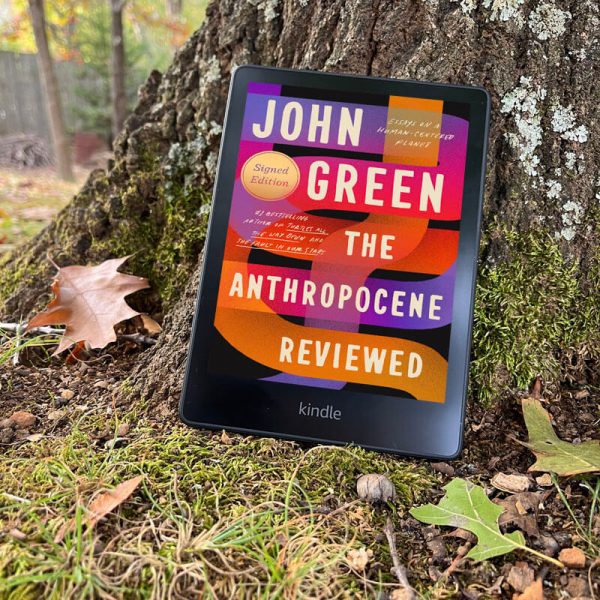
2. The Anthropocene Reviewed
Essays on a Human-Centered Planet
by John Green

blank

This is a lovely collection of essays about random things related to the Antropocene (our current geological age) when human activity is influencing the planet. It includes beautifully written stories about Green’s experiences with things such as Piggy Wiggly and sunsets and Scratch ‘n’ Sniff stickers.

3. Platonic
How the Science of Attachment Can Help You Make—and Keep—Friends
by Marisa G. Franco

blank

I was surprised by the depth of this book about friendships, including chapters on initiative, vulnerability, authenticity, anger, etc. Lots of good advice here based on scientific data (yet easy to read).

4. The Myth of Normal
Trauma, Illness, and Healing in a Toxic Culture
by Gabor Maté

blank

I’m still processing this dense book about our culture and health. What is considered normal? Why? And what should we do about it?

5. The First Christmas
What the Gospels Really Teach About Jesus’s Birth
by Marcus J. Borg

blank

I read this during Advent for a fresh perspective on Jesus’ birth stories. Some passages were a little dry for my interest, but overall it was enlightening.

6. The Grief Recovery Handbook
A Program for Moving Beyond Death, Divorce, and Other Devastating Losses
by John W. James

blank

Recommended by my counselor, this book is a classic for helping us move through our losses, not to “get over them” (as if that were possible), but to handle them appropriately, including writing a good-bye letter to each one.

7. In the Shelter
Finding a Home in the World
by Pádraig Ó Tuama

blank

Such a delightful surprise to discover this deep, brooding Irish poet in his wrestlings with faith and life. I’ll hear him in person in a few weeks and this book definitely has whetted my appetite for whatever message he will share about spirituality.

8. No Time Like the Present
Finding Freedom, Love, and Joy Right Where You Are
by Jack Kornfield

blank

I love the quiet, gentle yet powerful wisdom of Jack Kornfield from his podcasts and his writings. This book takes us through stories and examples on topics such as the dance of life, responding with love, aging with trust, and starting where we are.

9. This Chair Rocks
A Manifesto Against Ageism
by Ashton Applewhite

This Chair Rocks

At least in the West, there’s a large bias against the aged. We often depict older people as out of touch, annoying, and just in the way. But Applewhite refutes these myths about later years in a refreshing way, while also staying realistic about its genuine trials. We don’t have to dread getting older.

FICTION

10. Big Lies in a Small Town
by Diane Chamberlain

blank

An excellent murder mystery novel about a 22-year-old artist in 2018 serving a prison sentence until she’s freed to restore an old post office mural in a North Carolina town. The story flips back and forth between 2018 and 1940 when the mural was originally painted.

11. True Biz
by Sara Nović

True Biz

As a deaf child, teenage Charlie never learned sign language or about the deaf culture. When she transfers to a boarding school for the deaf, a series of events provide quick introductions for her into the deaf community. I learned a lot of valuable lessons about it, too.

WHAT I’M READING NOW

  • Learning Humility
    A Year of Searching for a Vanishing Virtue
    by Richard J. Foster
  • The Lives We Actually Have
    100 Blessings for Imperfect Days
    by Kate Bowler and Jessica Richie
  • Curveball
    When Your Faith Takes Turns You Never Saw Coming
    by Peter Enns
  • The It Girl
    by Ruth Ware

What good book do YOU recommend? Please share in the comments.

More:

Grace & Truth Featured Post

While Pam’s post is about celebrating Advent and Christmas with the gift of simplicity, we can apply it to our everyday lives as we head into 2023. God wants more for us than grand celebrations.

May we “enter into quiet communion with the One who modeled this gift so we can learn to see more clearly and hear more sharply.”

Read all of Pam’s post here at her blog, then link up your own blog posts below.

The Gift of Simplicity


Review the rules here about adding your most recent Christian Living posts and how to be the Featured Post. Visit all four hosts social media here or websites here: Maree Dee, Lisa notes, Lauren Sparks, Tammy Kennington.

Now Let’s Link Up!

You are invited to the Inlinkz link party!

Click here to enter