On the Blog—June 2020

Here are brief summaries and links to blog posts from June 2020.


7 Books I Recommend—June 2020

To read a book and surrender to a story is to keep our very humanity alive.
— Helen Fagin

Here are 7 books I recommend from June. See all my recommended books here.

7 Books I Recommend_June 2020

Nonfiction

1. Don’t Overthink It
Make Easier Decisions, Stop Second-Guessing, and Bring More Joy to Your Life
by Anne Bogel

don-t-overthink-it_sm

I’m an overthinker. And overplanner. While thinking and planning are generally beneficial, you can get too much of a good thing. I appreciate Anne’s practical tips and personal anecdotes of ways to make quicker decisions and move on. I listened to the audiobook (read by her!) but I still want to read the book so I can better apply the content.

2. Because Internet
Understanding the New Rules of Language
by Gretchen McCulloch

Because Internet-sm

The internet is changing how we talk. It’s not only giving us new words for new technologies but it’s influencing the way we use language in general (for example, we’ve repurposed the exclamation mark as more than a sign of excitement; it also now indicates warmth or sincerity). If you’re at all a word person, you’ll likely enjoy this book as much as I did.

[Side recommendation:
Wordslut: A Feminist Guide to Taking Back the English Language
by Amanda Montell
This is a fascinating (and often witty) book about the history of language regarding women: insults about women, women’s speech patterns, metaphors used about women, etc. As such, it contains a lot of language that might be offensive to some, so I won’t give it a full recommendation for all readers. But taken in context, it’s quite informative. “If you want to insult a woman, call her a prostitute. If you want to insult a man, call him a woman.” Ugh.]

3. You’re a Miracle (and a Pain in the A**)
Understanding the Hidden Forces That Make You You
by Mike McHargue (Science Mike)

You're a Miracle_sm

If you listen to “The Liturgist” podcast or “Ask Science Mike” podcast, you already know and love author Mike McHargue. You’ll love him more if you read this book. Mike (quite the intellectual but approachable genius) is open about his struggles with life and his ongoing progress so that we can make progress and be accepting of ourselves in our struggles, too, both in cognitive and emotional ways. “Acceptance beats shame every time. . . . The feeling of sadness doesn’t break me; it teaches me. I’m learning to trust it.”

Read more here

4. I’ve Seen the End of You
A Neurosurgeon’s Look at Faith, Doubt, and the Things We Think We Know
by W. Lee Warren

I've Seen the End of You_sm

Dr. Warren is a brain surgeon who was fighting to keep his faith in God, despite seeing patients die of incurable brain cancer. His memoir is moving and inspiring in its rawness and honesty. Warren doesn’t tell you to lose all your doubts, but rather to use them to draw closer to God. This book is full of stories that will stick with you long after you finish it.

[My review here of I’ve Seen the End of You]

5. Lies We Believe About God
by William Paul Young

Lies We Believe About God_sm

None of can fully know God 100%. He’s too big. But this book helps destroy some of the things we think we know about God that aren’t true about him. Young kept a list of “words you will never hear God say” and turned them into this book, lies such as “I keep a record of wrongs. You are the child I never wanted. You overestimated Jesus.” You don’t have to agree with everything he says to still gain a lot from this book. It was helpful to me.

6. Write Better
A Lifelong Editor on Craft, Art, and Spirituality
by Andrew T. Le Peau

Write Better_sm

This is a beautifully-written book to encourage the writer in you. Le Peau approaches writing as a spiritual ministry. Regardless of the type of writing you do, Le Peau is sure to encourage you to do it with more skill, clarity, meaning. He offers both practical advice and spiritual motivation.

“What should I write about? We need to ask ourselves, What do I already know? What have I already done or been involved with? What has God already taught me, or where has he already taken me?”

Fiction

7. In a Dark, Dark Wood
by Ruth Ware

in-a-dark-dark-wood_sm

Continuing my tour of Ruth Ware mystery novels, this one centers around Clare’s hen party…and her engagement to Nora’s ex-boyfriend. I continue to appreciate Ware’s storytelling abilities without resorting to violent gore or obscenities or images that will keep me awake at night. Yet they are still full of suspense.

Reading Now

  • Me and White Supremacy
    Combat Racism, Change the World, and Become a Good Ancestor
    by Layla F. Saad
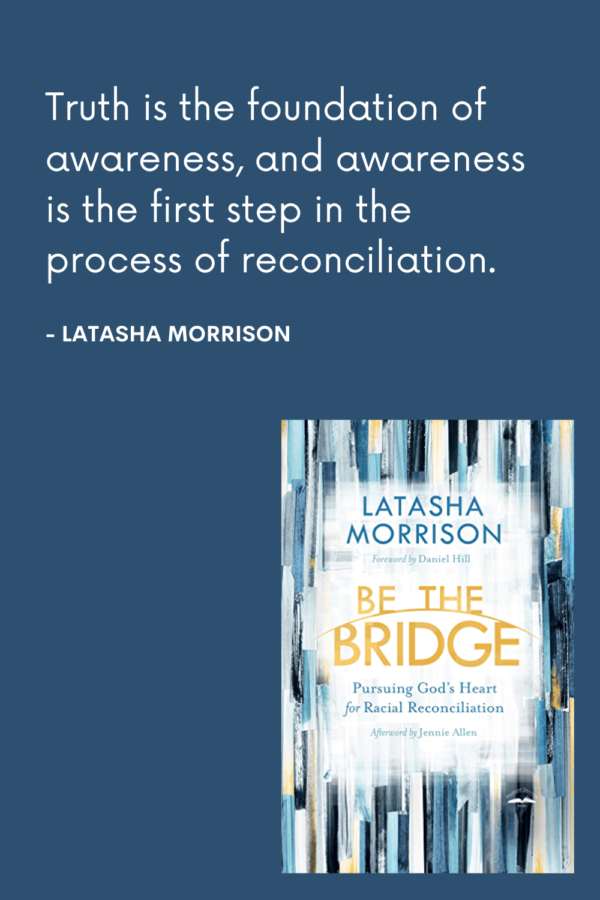
  • Be the Bridge 
    Pursuing God’s Heart for Racial Reconciliation
    by LaTasha Morrison
  • Stamped from the Beginning
    The Definitive History of Racist Ideas in America
    by Ibram X. Kendi
  • The Color of Compromise
    The Truth about the American Church’s Complicity in Racism
    by Jemar Tisby
  • Why I’m No Longer Talking to White People About Race
    by Reni Eddo-Lodge
  • Holy Envy
    Finding God in the Faith of Others
    by Barbara Brown Taylor
  • All the Missing Girls
    by Megan Miranda

What good book are YOU reading this month? Please share in the comments.

For those interested, I posted this last week:

My books on Goodreads
More books I recommend

sharing with Modern Mrs. Darcy


Freedom’s Sidekick: Mercy

Now the Lord is the Spirit, and where the Spirit of the Lord is, there is freedom.
2 Corinthians 3:17

Mercy is one of the first things to go.

I realize that about myself.  I’m not proud of it.

When I’m stressed—physically, emotionally, whatever—my tolerance of minor annoyances decreases drastically.

I found myself talking back to the radio as I was getting ready for the day: “How about playing some MUSIC instead of all that chit-chat???”

I knew I was in need of much mercy.

And was giving little.

blank

Later that day I heard Romans 1:31 read aloud—a list of things we want to avoid—and one phrase in particular landed on me:

having no mercy.

Having no mercy.

Was that me?

I moved on to James 2:13:

For judgment is without mercy to one who has shown no mercy. Mercy triumphs over judgment.

Uh-oh.

I looked up the Greek word for mercy, Strong’s 1656, eleos. And immediately noticed the word that followed it, Strong’s 1657, eleutheria, meaning freedom.

Mercy. Freedom.
Side by side.

Was there a stronger connection between the two words besides Greek alphabetical order?

Yes.

While judgment is bound up in law, mercy is released in freedom.

Freedom allows opportunity.  And through those opportunities, we love.

My friends, you were chosen to be free. So don’t use your freedom as an excuse to do anything you want. Use it as an opportunity to serve each other with love.
Galatians 5:13 (CEV)

When I’m bound, tied up by my own anxieties and worries, I’m not free to show grace to others.

I’m not free to give mercy.

I’m simply, well, not free.

But when I embrace my freedom—because of mercy that has been freely delivered to me through the Spirit of the Lord—I can give grace again.

That is freedom.

And in freedom, mercy is never the first thing to go.

Mercy never leaves at all.


RELATED:

revised from the archives


Serving Loved Ones Is Serving the Kingdom
+ Grace & Truth Linkup

blank

Today’s Featured Post

Today’s featured post is by Suzette, How to Serve with a Smile Even When You Don’t Feel Like It.

If you are or have been a caregiver, you’ll relate to Suzette’s situation. She’s in the sandwich generation, taking care of her 91-year-old mother, her sister with Down’s syndrome, and a child at home.

Suzette writes,

“One day, my mom will not be here to hold my hand, or pray for me, and me for her. Why is it so hard to live in the moment? To enjoy a conversation or just spend time together?”

Time is short and things have to get done. Yet Suzette realizes this truth that we all need to remind ourselves of, whatever our season in life:

“God gave each of us certain gifts to serve the Kingdom. Caregivers, we must remember that serving our loved ones is serving the Kingdom and God will provide what you need to do it in love.”

I encourage you to read her post and be encouraged yourself.

Read all of Suzette’s post here at her blog, My Concrete Dove.

Then add your own links below.

blank

Thanks for sharing, Suzette! Here’s a button for your blog.

blank


Grace and Truth_Rules

1. Share 1 or 2 of your most recent CHRISTIAN LIVING posts. (No DIY, crafts, recipes, or inappropriate articles.) All links are randomly sorted.

2. Comment on 1 or 2 other links. Grace & Truth linkup encourages community.   

3. Every host features one entry from the previous week. To be featured, include this button or link back here on your post (mandatory to be featured, but not to participate).

Grace Truth_Button

Grace and Truth_Meet Hosts

We encourage you to follow our hosts on their blogs or social media.

MAREE DEE – Embracing the Unexpected
Blog | Facebook | Twitter | Instagram | Pinterest

HEATHER HART & VALERIE RIESE – Candidly Christian
Blog | Facebook | Twitter | Instagram | Pinterest

LAUREN SPARKS
Blog | Facebook | Twitter | Instagram | Pinterest

LISA BURGESS – Lisa notes
Blog | Facebook | Twitter | Instagram | Pinterest

Now Let’s Link Up!

You are invited to the Inlinkz link party!

Click here to enter


Which Is Better? Knowing or Doubting?
—Book Review of "I've Seen the End of You"

“The most important surgery I would ever perform would be the stitching together of my faith, my doubt, and the things I thought I knew.”
– Dr. W. Lee Warren

There’s a type of brain cancer I wish I didn’t know about. Glioblastoma.

And even now, I only know about it because I read something in a book about it. Thankfully, that’s all I know.

But Dr. Lee Warren knows much more about glioblastoma, and I’m glad. He’s a brain surgeon who cuts it out.

I've Seen the End of You_pin

Is It the End of You?

The bad thing about glioblastoma for Dr. Warren is that it’s almost always fatal. So when he sees glioblastoma show up on your brain MRI, he has to be the one to tell you something. To be honest. Yet still give you hope.

And choosing which words to say is a heavy weight on him.

It bothers him so much that he wrote a book about how to deal with it. About how to “pray for God to heal someone of something no one ever survives.” It’s called I’ve Seen the End of You: A Neurosurgeon’s Look at Faith, Doubt, and the Things We Think We Know. And I highly recommend it.

If the intersection of doubts and faith weigh on you as well, Dr. Warren’s words may help you, too.

It’s a book of stories, but it contains a faith thread from beginning to end.

When Doubts Come, Don’t Despair

When we believe God is good, yet we see bad things happening, we can question our faith in who God really is.

Dr. Warren wrestled with this as he worked on one patient after another, and lost one patient after another.

But then a deep tragedy occurred in his own life. And all his doubts surfaced to a new level.

“Did I really believe, or did I believe I was supposed to believe?”

Instead of insisting on certainty in every aspect of his faith, he made peace with his doubts. He even came to see the necessity of doubts.

“I have learned that doubt is not the enemy of faith. The enemy of faith is often the things we think we know.”

Thinking we’ve already arrived, that we already know it all, can be the end of us.

But doubting? Doubting can keep us pushing forward to learn more.

It can motivate us to keep searching for things we’ve gotten wrong, and “like a good scientist, reform our hypothesis and reframe our beliefs.”

Dr. Warren says,

Doubt is not fatal if we recognize it for what it is: a smudge on the lens. When we realize that, wipe it clear, and put the glasses back on, we’ll be okay. The things we think we know are more like cataracts. They can obscure and blind us to the truth of God’s work around us that is plain to see when our eyes are healthy.”

While there are things we can know and rely on as foundational truths, there are other things we think we know but that aren’t reliable. Those are the things I’d rather doubt than *know* because they prevent me from seeing the real truths.

But how can we know the difference between the two? That’s our work to do.

Just the Beginning

I don’t want smudges on my glasses. When I notice them, I take my glasses off, wipe them clean, then put them back on. And see clearer once again.

I want to do the same with my doubts.

I hope no one I know personally gets a diagnosis of glioblastoma. Because I don’t want to see the end of them.

But as Dr. Warren says, there is always more to the story. Faith is stronger than doubt.

Maybe we’ve seen just the beginning.


Your thoughts?

Thanks to WaterBrook Multnomah and
Net Galley for the review copy of this book

sharing with Grace & Truth, Jen, Teresa


It’s Way Past Time
+ Grace & Truth Link-Up

Time to Let Go

When I was a teenager, if you asked my favorite book, I’d say Gone with the Wind. Scarlette O’Hara provoked a love/hate feeling for me as the protagonist of the story.

But as time went on, and I got older, and opened my eyes a little wider, I realized Gone with the Wind was no longer my favorite book. Far from it. It stereotyped Black people as tools for white people’s use. It glorified slavery as a way of life in the antebellum south that I never participated in or believed in.

Yet this very week I noticed I still had my very old copy of Gone with the Wind displayed on my living room bookshelf. After all these years of knowing better. Ugh.

I’m replacing it with Stamped from the Beginning: The Definitive History of Racist Ideas in America.

It is one of two books I bought this week from Black authors for #BlackoutBestsellerlist week. The other is The Color of Compromise: The Truth about the American Church’s Complicity in Racism by Jemar Tisby. I’ve already started it. And am already being convicted. 

blank

It is time, way past time. 

What else is it time for?

Time to Change

Corporate America is being jostled out of its slumber, too.

The movie Gone With the Wind was pulled off HBO Max last week.

Also, the companies of Aunt Jemima, Uncle Ben’s Rice, Cream of Wheat, and Mrs. Butterworth’s announced they’ll be rebranding. NASCAR is finally banning Confederate flags at their races.

While banning flags, rebranding products, and replacing books are good starting points, they can’t substitute for the harder work of dismantling racism.

It’s time to press in to change policies to prevent more senseless deaths, to create reforms to end systemic inequality in housing and education and healthcare, and to pass better legislation to ensure a more just justice system.

And it’s time to do the even harder work of weeding out racism in hearts, one by one. Getting to the root of prejudice is work for Jesus and me, for each of us.

It is time, way past time. 

What else is it time for?

Time to Celebrate

Today is the day we celebrate Juneteenth.

June 19, 1865, is when Union General Granger told the slaves in Texas that they were now free (even though the Emancipation Proclamation had formally freed them two years earlier on January 1, 1863).

blank

On June 19, 1980, Juneteenth was made a Texas state holiday. New York and Virginia are making progress for the same.

Even though Juneteenth is not currently a national holiday, 47 of our 50 states observe it to some degree (all but Hawaii, North Dakota, and South Dakota). Last year the Senate passed a resolution to make it a national holiday; the House has yet to approve it.

Companies, communities, and churches across America acknowledge Juneteenth in various ways, including the National Football League and Twitter. This year even Jeff Bezos of Amazon sent a letter to his employees to use the holiday to reflect, learn, and support each other.

But today is also a day, like every day, we can ask God to clean out the nooks and crannies where prejudice may still hide. To purify our hearts of all racism and pride. And to fill us with grace and love for every person, everywhere.

It is time, way past time.

blank

Today’s Featured Post

Today’s featured post for the Grace & Truth Linkup is by Shelbee, Maybe It’s Time We Listen.

She writes about the past two weeks,

“I feel like someone stole my rose colored glasses. Ripped them right off my face, threw them to the ground, and stomped on them until they were nothing but a pile of shattered plastic. But I think I probably deserved it. I have been hiding behind those things for my entire life.”

“I have no idea where to start. But those who have been the victims of these injustices, they might have some ideas where to begin. I think maybe it’s time we listen to them.”

Read all of Shelbee’s post here at her blog, Shelbee on the Edge.

Then add your own links below.

blank


Now Let’s Link Up!

You are invited to the Inlinkz link party!

Click here to enter

What have you had to let go of?

Please share your thoughts in the comments.