On the Blog—March 2021

Here are brief summaries and links to blog posts from March 2021.

on-the-blog-march-2021


7 Books I Recommend—March 2021
+ My 1-Minute Video Book Review

A peasant that reads is a prince in waiting.
– Walter Mosley

Below are 7 books I recommend from those I finished reading in March + a 1-minute video review. 

[See previously recommended books here]

books-i-recommend-march-2021

Nonfiction

1. Caste
The Origins of Our Discontents
by Isabel Wilkerson

Caste is a must-read for those who want to better understand the divisions in America. I highly recommend it. Even if you’ve read other books you think are similar, read this one anyway. 

Here’s my 1-minute video review of Caste.

2. Journey to the Cross
A 40-Day Lenten Devotional
by Paul David Tripp

journey-to-the-cross

I’ve been reading these 40 devotionals during Lent. They’re short enough to be read daily, but long enough to be meaningful. I’ll keep the book to read again in a few years.

3. Irresistible
Reclaiming the New that Jesus Unleashed for the World
by Andy Stanley

irresistible-andy-stanley

Why was Christianity so irresistible to many in the first century, and yet so repellant to many in our century? Andy Stanley suggests we need to return to the roots of Jesus. Jesus is the real draw. I appreciate Stanley’s message. 

4. Faith after Doubt
Why Your Beliefs Stopped Working and What to Do about It
by Brian D. McLaren

faith-after-doubt

Read this book for a four-stage model of faith development that you may be experiencing yourself and seeing around you. Brian McLaren walks you through each stage from Simplicity to Harmony. This isn’t a book for everyone, but for those willing to question their old beliefs, this book is refreshing.

5. Chatter
The Voice in Our Head, Why It Matters, and How to Harness It
by Ethan Kross

Chatter-The Voice in Our Head

We talk to ourselves all day long. Are we saying the right things? This book helps us have a better conversation with our inner voices. I really found it helpful.

6. The Power of Writing It Down
A Simple Habit to Unlock Your Brain and Reimagine Your Life
by Allison Fallon  

power-of-writing-it-down

This book helps you see the importance of having a personal, daily writing practice, not so you can publish a book, but so you can understand your life.  It motivated me to start again. 

Fiction

7. Meet Me at the Museum
by Anne Youngson

meet-me-at-the-museum

I enjoyed this novel written as a series of letters between farm-dwelling Tina in England and Professor Anders from a Danish museum. I alternated between reading the ebook and listening to the audiobook (depending on if I was at home or driving). I recommend both versions.

Reading Now

  • The Sum of Us
    What Racism Costs Everyone and How We Can Prosper Together
    by Heather McGhee
  • Freeing Jesus
    Rediscovering Jesus as Friend, Teacher, Savior, Lord, Way, and Presence
    by Diana Butler Bass
  • Salt to the Sea
    by Rita Sepetys
  • Effortless
    Make It Easy to Get the Right Things Done
    by Greg McKeown
  • Storyworthy
    Engage, Teach, Persuade, and Change Your Life through the Power of Storytelling
    by Matthew Dicks
  • Time Management Ninja
    21 Rules for More Time and Less Stress in Your Life
    by Craig Jarrow

What good book are YOU reading this month? Please share in the comments.

My books on Goodreads
More books I recommend


Share Four Somethings—March 2021

Here are my “four somethings” from March that I’m sharing at Heather’s.


~ * ~ * ~ * ~

Something Loved

  • ALI ABDAAL ON YOUTUBE 

Ali Abdaal YouTube channel

I subscribe to only a handful of YouTube channels, mainly churches that we watch until we can go back in person. But I found a new (to me) channel recently that I really connect with.

It’s the YouTube channel by Ali Abdaal. He is a junior doctor in the UK, but he’s also an all-around interesting guy that makes very informative videos on the best books to read, how to be more productive, tools and tech, time management, etc.

He’s very practical and puts on no pretenses. I don’t feel guilty spending time on YouTube when I’m watching his videos. And obviously I’m not alone; he has over a million followers. 

~ * ~ * ~ * ~

Something Read 

  • IRRESISTIBLE

irresistible-andy-stanley

My reading order of books in my stack is typically:

  • Library books
  • Books to review
  • Books borrowed from friends
  • Book club books
  • Then last, books I’ve bought

So when I finish a book that I actually bought from the bottom of the pile, it’s a big deal.

And I finished two of my bought books this month!

The best of the two is Andy Stanley’s Irresistible: Reclaiming the New that Jesus Unleashed for the World. I bookmarked so many pages and copied so many quotes that it’ll take me awhile just to review my own notes.

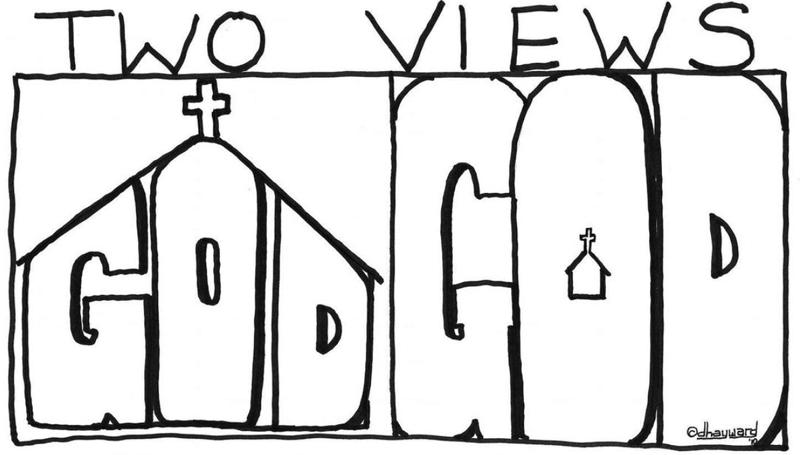
One of his many points I resonate with strongly is that we too often idolize our Bibles at the expense of God. I can’t explain it as well as he can, so read the book to hear more.

“Christianity predated the Bible by hundreds of years. There were thousands of Christians long before there was a Bible. The Bible did not create Christianity. It’s the other way around.” 
– Andy Stanley

(The other book of my own that I finished is Staring at the Sun: Overcoming the Terror of Death by Irvin D. Yalom. It was very interesting in a different way.)

~ * ~ * ~ * ~

Something Treasured

  • DRIVE-THRU BABY SHOWER

drive-thru-baby-shower-2021

We had a drive-thru shower this past weekend for our grandson-on-the-way! It was a huge success (although the second half of the shower was less of a drive-thru and more of a block party in the cul-de-sac).

Rain had been predicted for the whole day, but in the end, it never rained a drop. It was wonderful seeing friends and family we hadn’t seen in months due to covid. The weather was perfect for outdoor social-distancing to catch up.

Then the family went inside and and we filmed Jenna and Trey opening the gifts on Facebook Live. It was the next-best thing to having everyone with us, yet keeping everyone safe (including Jenna and the baby).

facebook-live-gift-opening

~ * ~ * ~ * ~

Something Ahead

  • MORE SHOTS!

covid vaccine

A year ago I couldn’t have imagined how eager we would be to get a shot.

I got my first shot of the covid vaccine on March 22, the first day it opened for my age group (quite the miracle!). I had no side effects with this one (except a sore arm).

I’m excited to get my second shot on April 12. Jeff gets his second shot April 6.

By the end of April, we look forward to having a little more freedom than we’ve had in a year. Yippee!


previous Share Somethings

What’s a favorite from your month in March? What are you looking forward to in April? Share in the comments.


Lose the Unforgiveness. Take the Grace
—Grace & Truth Linkup

blank

Theresa felt happy arriving early with her teenage son to his doctor’s appointment. Until she realized she was a whole month early!

Her son forgave her. But she had trouble forgiving herself.

I do this, too. I too often beat myself up for the small things instead of rapidly accepting God’s grace and forgiveness and moving forward.

But we don’t have to keep believing lies about ourselves, God, and others.

As Theresa writes,

“Beating yourself up does not change the reality that you are forgiven and clothed with grace. God has enough for everything big and small. All we have to do is set down our pride and accept it.”

Read all of Theresa’s post here about how to quit punishing yourself over the small things, then link up your own blog posts below.

Quit Beating Yourself Up Over the Small Things

Lose the Unforgiveness


Grace and Truth_Rules

1. Share 1 or 2 of your most recent CHRISTIAN LIVING posts. (No DIY, crafts, recipes, or inappropriate articles.) All links are randomly sorted.

2. Comment on 1 or 2 other links. Grace & Truth linkup encourages community.   

3. Every host features one entry from the previous week. To be featured, include this button or link back here on your post (mandatory to be featured, but not to participate).
Grace Truth_Button

Grace and Truth_Meet Hosts

We encourage you to follow our hosts on their blogs or social media.

MAREE DEE – Embracing the Unexpected
Blog | Facebook | Twitter | Instagram | Pinterest

HEATHER HART & VALERIE RIESE – Candidly Christian
Blog | Facebook | Twitter | Instagram | Pinterest

LAUREN SPARKS
Blog | Facebook | Twitter | Instagram | Pinterest

LISA BURGESS – Lisa notes
Blog | Facebook | Twitter | Instagram | Pinterest

Now Let’s Link Up!

You are invited to the Inlinkz link party!

Click here to enter
Do you find it hard or easy to forgive yourself? Share your thoughts in the comments.


Book Review: Faith After Doubt

When You Doubt

When’s the last time you did a turnaround on one of your opinions or beliefs?

Was it painful?

Often it is painful when we’re in the middle phase between an old belief and a new belief.

It’s a season of doubt.

And we don’t like to feel doubt. My One Word for 2021 is Uncertainty; I don’t particularly like uncertainty. It’s more comfortable to be confident.

But we can’t always be right. Often our beliefs are just wrong. And that realization can hurt.

We shouldn’t take it personally when we discover we’re wrong. That’s part of growing up. We discard things we learn are inaccurate, and pick up things that are more true. It’s growth.

So when it comes to our faith, why are we so reluctant to acknowledge this process? As my own beliefs shift and grow through the years, I’d rather skip the in-between phase and just be transported to the opposite shore fully intact again.

But it doesn’t work that way.

Book review_ Faith After Doubt

Faith After Doubt

Brian McLaren wrote a book about it. It’s called Faith After Doubt: Why Your Beliefs Stopped Working and What to Do About It.

In it, he addresses the doubt that millions of people in the U.S. and around the world experience when their faith is shifting.

McLaren starts by saying this:

“You and I don’t have to keep our doubts a secret any longer.”

He frames doubt not as a fault or failure to be ashamed of, but as an expression of our humanity, and as an opportunity for growth in faith itself.

The book is organized in three movements:

  • Your Descent into Doubt
  • All in Doubt
  • Life After (and with) Doubt

Throughout the book, McLaren shows us that doubt isn’t a death knell to faith. Quite the opposite, it can actually be our saving grace as it shifts us more toward God and less away from shaky religion.

“The greatest threat to our moral and spiritual health wasn’t questions or doubts but rather dishonesty or pretense about our questions or doubts.”

Four Stages of Faith

It isn’t an easy journey. And it isn’t always linear. McLaren describes our faith growth not as climbing a ladder or a stairway, but as climbing a tree with branches. He gives many other helpful analogies as well, including this one:

“Think of your current stage of faith as a base camp. On any given day, you might venture back a stage or forward a stage to cope with what life throws at you.”

The four stages of faith that McLaren posits are these:

  1. Simplicity
  2. Complexity
  3. Perplexity
  4. Harmony

They don’t come to us in a straight line. We may be in stage one in one area while in stage four in another area.

“Love isn’t like calculus, which can’t be taught until after one learns geometry and advanced algebra. No, love is more like music. We expose the youngest musicians to the most sublime music so that, as they learn the basics of scales, keys, tone, tempo, and timing, they know why the basics matter and what they can produce.”

And the end result we all want is love.

Here are simple prayers from the appendix that McLaren offers for each stage, but each prayer is good for all stages.

  • Simplicity
    Here. Thanks. O.
  • Complexity
    Sorry. Help! Please!
  • Perplexity
    When? No! Why?
  • Harmony
    Behold. Yes. (Silence.)

Note:
Maybe you’ll agree with McLaren’s personal beliefs in this book; maybe you won’t. Either way, the gist of the book holds true, which is to grow in your own faith, practicing what Paul wrote: “For in Christ Jesus neither circumcision nor uncircumcision counts for anything, but only faith working through love” (Galatians 5:6).

P.S.
My thanks to David for working through the end-of-the-chapter questions with me. I learn more when I read with others.

When has your faith made a shift? Was it uncomfortable? Share in the comments.

My thanks to NetGalley
for the review copy of this book


What Does It Mean to Know God? Is Knowing About God the Same Thing as Knowing God?

Does God Want Us to Know Him?

What does it mean to know God?

It’s complex. Because God is complex.

All we can really know about God is what he chooses to reveal. It’s not as if we can sneak up on God and say, “Caught you!” He sees us peeking around the corner first.

But we don’t have to sneak.

God reveals himself to us because he created us to know him. He won’t leave us empty-headed about him.

And from what I’ve seen him reveal so far? He’s all good. He wants to be seen.

He wants to be known. 

what-does-it-mean-to-know-god

Knowing God Is Having Life

Still, what does it mean to “know God”?

Knowing God is eternal life, per J. I. Packer in Chapter 3 of his classic book, Knowing God.

Jesus said this to God:

“And this is eternal life, that they know you the only true God, and Jesus Christ whom you have sent” (John 17:3).

But what exactly does that mean?

what-does-it-mean-to-know-god-packer

1. Knowing God is personal.

Just like knowing a person is, well, personal, knowing God is personal. It is you relating to God, and God relating to you.

It’s not just knowing about God. That is theology. That’s like me knowing the President. I can study him and know about him. But I don’t have a relationship with the President.

Knowing God goes beyond the study of theology. It’s knowing the being, and being known by him.

It’s a two-way connection, not just one-way. 

“You can have all the right notions in your head without ever tasting in your heart the realities to which they refer; and a simple Bible-reader and sermon-hearer who is full of the Holy Ghost will develop a far deeper acquaintance with his God and Savior than more learned men who are content with being theologically correct.”
– J. I. Packer

2. Knowing God requires involvement.

Knowing God is more than holding facts in our head. Yes, knowing him requires our mind, but it goes beyond that, and also includes our will and our emotions.

Packer says, “To get to know another person, you have to commit yourself to his company and interests, and be ready to identify yourself with his concerns.”

A meal may look good, but until we sit down and eat it, we’ll never really know.

The same with God. Until we actually do life with God, it’s all theory. 

Also, contrary to what some teach, knowing God is emotional. To know God is to be emotionally involved with the things he’s emotionally involved with. If we attempt to think his thoughts and to act in his ways, we should also feel what he feels. (Even though we’re terribly limited in each of these.)

“. . . we must not lose sight of the fact that knowing God is an emotional relationship, as well as an intellectual and volitional one, and could not indeed be a deep relation between persons were it not so.”
– J. I. Packer

3. Knowing God is a matter of grace.

It’s only a gift of grace that we can know God at all. Grace starts first with God, not us. He initiates everything, including knowledge.

Because God knows us first, better than we know ourselves and long before we know him, he knows what we need. And he knows what we need to know. And gives it to us.

What we need to know—and see—is that God loves us. We are seen. We are understood. We are treasured.

We do not make friends with God; God makes friends with us, bringing us to know Him by making His love known to us.”
– J. I. Packer

While it’s important for us to know God, of first importance is that God knows us.

Being known by God makes it possible for us to know God.

Knowing God is grace.

Knowing God is life.


[These thoughts are an updated post from Chapter 3 of Knowing God, “Knowing and Being Known.” I benefited from it. But I disagree with Packer in Chapter 4, “The Only True God,” for his refusal of any imagery to remind us of God.]

How do you know when you really know someone? What does it mean to you to know God versus knowing about God? Please share in the comments.

Knowing-God-Packer-summary