It’s not THE answer. But it is AN answer.
The Enneagram is credited for more than it can accomplish and blamed for less than it can do.
In reality, it falls somewhere in between. The Enneagram is a tool for personal growth. And as such, it can also be used as a tool for spiritual formation.
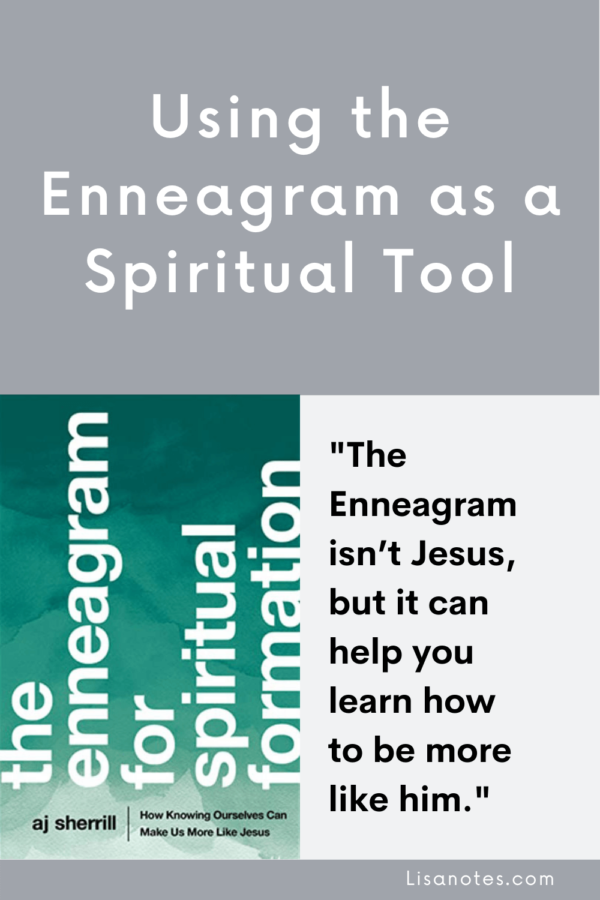
Improving our spiritual practices is a goal of A.J. Sherrill’s book, The Enneagram for Spiritual Formation: How Knowing Ourselves Can Make Us More Like Jesus.
Sherrill shows in his book that we can use the Enneagram to root our identity in Christ, to work with our personality, and to create a life of wholeness and beauty.
After I read a few pages, it seemed vaguely familiar. I bought and read Sherrill’s Enneagram and the Way of Jesus a year ago. That book is no longer for sale and this book is its updated rewrite.
As Sherrill does in his Enneagram workshops, he also states in The Enneagram for Spiritual Formation these four agreements:
- Remember that you are not a number.
- Refuse to become branded as the Enneagram person, church, or organization.
- Resist the urge to type another person.
- Reclaim the Enneagram as a means, not an end.
For each of the nine Enneagram types (see all the numbers here), Sherrill lists the following (as an example, I’ll use Type 6):
- Type 6
- One Word: Questioner
- Survival Strategy: “I must be secure and safe.”
- Full Description
- Lies they believe: “It is not okay to trust yourself.”
- Truth they need: “You are safe.”
He later lists discipleship spiritual practices for each Enneatype: downstream practices (these come naturally) and upstream practices (harder to do).
For example, he suggests Type 2s practice hospitality as their downstream practice and to use centering prayer as their upstream practice. The day in the church calendar they should heed is Maundy Thursday (the day Jesus washed feet).
This book isn’t an exhaustive resource to fully explain the Enneagram. But if you already know your number, it can help you discover specific ways to practice it.
In the conclusion, Sherrill says,
“There are many things the Enneagram cannot do. Its power is limited. However, as a means toward self-reflection, spiritual practice, marriage, leadership, and evangelism, it is an incredibly valuable tool. . . .
The Enneagram isn’t Jesus, but it can help you learn how to be more like him.”
To learn more about the Enneagram (including 3 ways to find your number), see my Enneagram series, “The Enneagram for Spiritual Growth” here.
Do you know your Enneagram number? I’m a Type 5. Share in the comments.
My thanks to Net Galley
for the review copy of this book