Give Thanks to Your One Word of the Year
{One Word 2024 November Linkup}

As you pause to give thanks in November, if you’ve had a One Word of the Year, can you also thank your word for the gifts it has brought into your life, in both expected and unexpected ways?

Here’s a simple gratitude exercise to try:

Take a few quiet moments to think about 5 or 6 things you’re thankful for as a result of your word. Write down each one as if you’re speaking directly to your word. Start with, “Thank you for…”

Need some ideas?

– “Thank you for this lesson you taught me…”
– “Thank you for helping me meet these people…”
– “Thank you for improving this attitude…”
– “Thank you for motivating this change…”
– “Thank you for deepening this spiritual practice…”

If you’d like, write these reflections on a real thank-you card. Keep it somewhere you’ll see in the next few weeks to remind you of the gift your One Word has been in 2024.

Here’s my thank-you note to my word CURIOSITY:

Dear Curiosity,

♥ Thank you for teaching me the power of curious uncertainty—that staying open, even when it’s uncomfortable, is often more valuable than the false safety of already knowing.

♥ Thank you for leading me to new friends: the climate advocates I’ve met in person this year, the seekers I’ve connected with online, the volunteers in my community doing good things, and even me—I’ve learned more about myself as I’ve opened up to people curious to know me (curiosity flows in both directions).

♥ Thank you for showing me how curiosity can foster compassion rather than judgment, inviting understanding instead of arguments or judgments.

♥ Thank you for inspiring me to ask more often, “Can you tell me more?”—a small question but one that’s allowed me to hear some amazing life stories.

♥ And thank you for deepening a spiritual practice I’ve always loved: memorizing meaningful truths to embed in my heart, such as this gem from Joseph Campbell: “We must be willing to let go of the life we have planned, so as to accept the life that is waiting for us.”

With my gratitude,
Lisa

We would love to see your list, too! Share in the comments below, link up a blog post here, or snap a quick photo of your list to post in our Facebook group.

This linkup will stay live for two weeks from Sunday, November 24, through Sunday, December 8. Next month’s linkup will open on Monday, December 23 (one day early) through Tuesday, January 7.

What are you grateful for this year thanks to your One Word?  Please leave a comment here.

If you’d like to receive our monthly One Word emails and ideas, join here any time of the year.


Link Up About Your One Word!

You are invited to the Inlinkz link party!

Click here to enter


A Wake-Up Call We Better Not Ignore
{Nonfiction November Week 4}

We’ve all felt it—the mental clutter from living in an age of dinging notifications, scrolling, and digital distractions. Information overload is a real thing.

Maybe we don’t need another book—with even more information—to identify the problem.

But what if that book offered a blueprint for the way out? Sometimes a single book is enough to challenge our assumptions and shift our behavior.

This might be that book: Jonathan Haidt’s The Anxious Generation: How the Great Rewiring of Childhood Is Causing an Epidemic of Mental Illness. It is a wake-up call to any of us living in the smartphone era.

Haidt tackles a question that gnaws at us as we notice the difference between our childhoods and the one that many of today’s kids are experiencing. How dangerous is the shift from the “play-based childhood” many of us grew up with—filled with tree climbing and hide-and-seek—to today’s “phone-based childhood,” dominated by selfies, TikTok, and endless texting?

The answer is chilling: it’s not just a change; it’s a crisis.

The data Haidt presents is staggering. The rise of smartphones and social media isn’t just altering how kids spend their time; it’s causing a mental health epidemic. Rates of anxiety, depression, and self-harm have soared, especially for girls, as screens rewire their brains in ways we’re only beginning to understand.

Reading this book made me pause and reconsider my own relationship with screens. No, I’m not tossing my phone in the nearest river (my neighbor accidentally did that; it was painful to even hear about the experience).

But Haidt’s book is pushing me to think about the opportunities we might be missing for real connection because of our split attention between the in-person world and the virtual one.

Herein lies the beauty of reading good nonfiction. It not only highlights a problem, but it also shares research on practical solutions. Books like Haidt’s are meant to move us into action. Whether it’s advocating for tech reforms, setting boundaries around screen time in our homes, or simply having conversations about these issues, Haidt offers four rules in his book that can help us find a better balance.

So if you’re ready to rethink your relationship with technology—and to help the next generation do the same—I recommend you also read The Anxious Generation. (Full disclosure: ironically, I read this book on a screen.)

And then maybe set aside your phone for an hour. Or two. Or a day. Talk to a friend, have a meal together, or just enjoy the quiet. See how good it can feel to live untethered.


For Week 4 of Nonfiction November, we’re sharing mind-opening books at Rebekah’s.

What book has opened your mind? Share in the comments here.

blank


6 Lessons When Curiosity Meets Compassion

“Love and compassion grow when we see that there are really no viable alternatives.”
– Joseph Goldstein

While my One Word of the Year is Curiosity, I change subwords every two weeks. Curiosity and Awe. Curiosity and Wisdom. Curiosity and Kindness, etc.

And these two weeks in November? It’s Curiosity and Compassion, which is especially curious to me because Compassion was its own Word of the Year for me ten years ago.

And it was one of my favorites.

Never assume your One Word is finished with you when the year is up. Words have a way of circling back around again and again.

What did I learn about Compassion ten years ago that I can carry alongside Curiosity these next two weeks? I looked back and reminded myself of these six lessons on compassion that are still applicable today.

1. PITY ISN’T THE SAME AS COMPASSION

I don’t know about you, but I hate feeling pitied. But I do appreciate someone showing me compassion. I’m curious about what the difference is exactly, and why one feels bad and the other feels good.

Perhaps it’s because compassion means accepting people’s pain as it is, whereas pity views a person as a project that needs fixing. Real compassion is one human being relating to another through love instead of through a hierarchy of helper over helpee.

2. COMPASSION CAN WRECK YOU

Some encounters bring both heartbreak and transformation. I still remember the pain of stepping into the deep poverty of families living in Guatemalan slums.

These moments remind me of what Jeff Goins wrote in Wrecked: “Our brokenheartedness at the injustices we witness is what gives us compassion. So when we rush past these messy and uncomfortable moments, we take away the experiences that teach us mercy.” I want to remain curious enough about people’s pain to risk being wrecked by what I find.

3. SOMETIMES COMPASSION IS QUIET

Compassion doesn’t always use words. It can be as subtle as wearing all black in solidarity with the grieving, making eye contact with the lonely, or choosing to sit at the table with those who feel invisible.

Quiet choices can speak loudly. Be curious about when to speak up and when to simply be present.

4. COMPASSION CAN BE SMALL

The more I see the needs for compassion, though, the more I see my own limits. With a friend facing homelessness, for example, her needs outstrip what I can give. I have to remind myself that doing something, anything, is still better than doing nothing.

Compassion is movement, even if it’s slow and steady. Curiosity is staying alert to any small step you can take in the right direction.

5. WE BEGIN AGAIN IN COMPASSION EVERY DAY

Every day is an invitation to start again in compassion. Sometimes I look at friends who are pros at showing compassion, and I feel so inadequate. I’m curious about how they do it and I want to learn from them.

Yet nobody is a complete expert in this. As we are each presented with unique opportunities, we can learn anew the best way to show compassion, again and again.

6. GIVE YOURSELF COMPASSION TOO

Perhaps the boldest lesson I’ve learned about compassion has been more recent than ten years ago. The past three years I’ve been working on giving myself compassion, too. Self-compassion doesn’t come naturally to those of us who were taught to only meet the needs of others instead of tending to our own needs as well. I’ve had to grow curious about why showing compassion to myself feels selfish, when it’s not.

The work of Kristin Neff is teaching me that we can be better givers of compassion to others if we’ve learned how to also give compassion to ourselves. Compassion isn’t a zero sum game; instead of depleting, it multiplies the more we practice it.

Compassion is a gift to both give and receive, creating a web of connections that extends to everyone around us, including ourselves.

I’m curious where I’ll see the need for compassion this week, and how I’ll learn to respond.

blank


More articles on Curiosity

Share your thoughts in the comments.

Read more about compassion:


The Power of Pairing Fiction and Nonfiction Books
{Nonfiction November Week 3}

Maybe you prefer fiction over nonfiction. Or vice versa. But often they’re better together.

Sometimes when I’m caught up in a great story in a nonfiction book I have to stop and check the cover: “This is really nonfiction, right?” Nonfiction can contain some amazing stories.

Or sometimes I’m reading a novel and note, “This happens in real life too!” It feels so true.

We often think of nonfiction and fiction as opposite genres, yet they have more in common than we realize. They both can educate, entertain, and open our eyes to new things. They both can have either great endings or no ending at all. They both can impact our real lives in ways we couldn’t have imagined.

Imaginary or true, stories we read in books can encourage us to be braver, kinder, and more compassionate human beings in this world.

For Week 3 of Nonfiction November, we’re pairing nonfiction and fiction books to create a dynamic reading experience. Here are four sets of books I recommend that combine the heart of storytelling with the depth of real-life insights.

Book Pair #1

blank

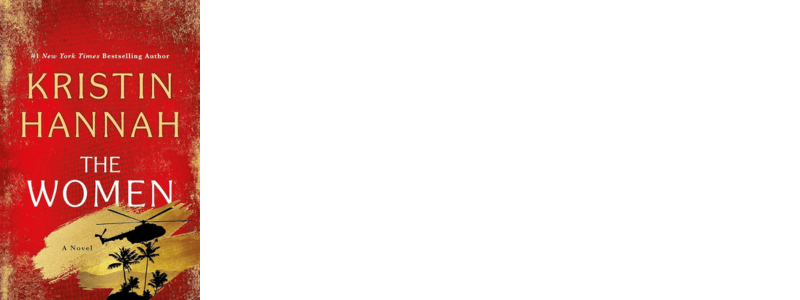
In The Women, Frankie joins the Army Nurse Corps during Vietnam, only to find her hardest battle begins when she returns home to a divided America.

In Cloistered, Catherine seeks purpose in a silent monastery, but discovers the dangers of blind loyalty and ultimately must choose between obedience or reclaiming her voice.

Together, these books reveal the price of idealism—and the strength it takes to find truth.

Book Pair #2

  • FICTION: The Covenant of Water by Abraham Verghese
  • NONFICTION: With the Devil’s Help: A True Story of Poverty, Mental Illness, and Murder by Neal Wooten

blank

The Covenant of Water is a multi-generational family saga set in India. Much of it is centered around a family curse tied to water.

With the Devil’s Help also follows multiple generations but tells a true story of abusive men and hidden family secrets.

Both books explore a common thread of resiliency by a few strong family members who fight to break free of generational trauma.

Book Pair #3

  • FICTION: The House in the Cerulean Sea by TJ Klune
  • NONFICTION: Children Under Fire: An American Crisis by John Woodrow Cox

blank

The House in the Cerulean Sea tells the story of a group of special children living in an orphanage. Linus Baker, a 40-year-old case worker, is assigned to assess the orphanage and quickly notices many unusual happenings.

In Children Under Fire, we hear stories of two young children traumatized by the loss of a friend or family member to gun violence. The book tells intimate details about their lives as they learn to cope with their losses and the ripple effects that follow.

Each of these books will motivate you to look around for the vulnerable children in your own circles and be a steady force for justice in their lives.

Book Pair #4

blank

It Ends with Us follows Lily, a young woman who finds herself trapped in an abusive marriage with a neurosurgeon who is successful on the outside, but who is troubled behind closed doors.

Tia tells a similar story about her life in A Well-Trained Wife. In her quest to be a godly Christian wife, she discovers she is married to a man whose abuse demands far more than anyone should bear.

The women in both these books tell stories I’d rather not know about, but ones I know occur every day around us. Becoming aware of domestic violence is a first step in learning how to help stop it.


Do you have a favorite fiction/nonfiction pairing? Share in the comments here.

Week 3 Nonfiction November

Here are my book pairings from previous years:


4 Inspiring Nonfiction Books for Readers, Writers, and Talkers
{Nonfiction November Week 2}

When I pick up a nonfiction book, I want it to do more than provide words to read; I want it to change me. I love books that are useful. That teach me something. That prompt me to think wider, to behave better, to love deeper.

Some books do this; some don’t.

For books that do prompt action, it’s often because the author: (1) has something worth saying, and (2) knows how to say it effectively and efficiently (and if we’re lucky, also beautifully).

While I can’t assert that what I say is worth saying (1), I can make better efforts to say it better (2). That’s why I like to read books about reading and writing and just communicating in general. I like learning why people choose the words they do, how they communicate their messages so powerfully, and what keeps them motivated to keep reading, writing, and talking.

For Week 2 of Nonfiction November, I’m sharing four standout books I’ve read this year on reading, writing, and communicating. If you, too, are interested in how to better convey your thoughts and tell your stories, I highly recommend any of these as additions to your own reading list.

1. Writing for Busy Readers
Communicate More Effectively in the Real World
by Todd Rogers

Writing for Busy Readers

Everybody writes—whether it’s emails, texts, contracts, blogs, etc. This practical book offers straightforward advice on how to improve your writing, making it easier and quicker for others to understand what you’re saying.

Some of their tips for easier-to-read writing are:

  • Less is more—use fewer words.
  • Use short, common words.
  • Write straightforward and shorter sentences. (Did you know? Novels published in 1800 averaged 27 words per sentence, whereas those published in 2000 averaged just 10 words per sentence.)

2. Magic Words
by Jonah Berger

Magic Words

Words matter. Altering just a few words here and there can make all the difference.

For example:

  • Use nouns (say, “I’m a runner”) instead of verbs (“I run”) to better motivate yourself.
  • Instead of saying you “can’t” eat the extra helping, say I “don’t” eat extra helpings.
  • Instead of saying I “should” get up earlier, say I “could” get up earlier.

3. Write a Must-Read
Craft a Book That Changes Lives―Including Your Own
by A.J. Harper

Write a Must-Read

I started writing a nonfiction book last year. But I’ve done nothing with it this year. However, while reading A.J. Harper’s book this spring about how to write a book, I became inspired again. When I do pick up my book later, I’ll definitely follow A.J.’s advice about the writing and editing processes.

4. Supercommunicators
How to Unlock the Secret Language of Connection
by Charles Duhigg

Supercommunicators

If you’re able to talk about difficult topics, if you’re able to discuss opposite viewpoints, or if you’re able to get others to speak up, you might already be a supercommunicator. And for the rest of us, we can improve by reading (and doing) this book.

From Supercommunicators, here are three common conversations we all have:

1. The “What’s this really about?” Conversation
This one is practical. It deals with facts. It is helpful when we need to make a decision and move on.

2. The “How do we feel?” Conversation
When we need to connect on an emotional level, this is the conversation to have. It invites awareness of our emotions, beliefs, and memories.

3. The “Who are we?” Conversation
We tap into a broader, more social mindset with these conversations. These help us acknowledge social differences rather than pretending they don’t exist.

Read more about them here: Which of These 3 Conversations Are You Having? Insights from a Doctor’s Office.


Nonfiction November Week 1: My Must-Read Nonfiction Recommendations: Books that Deepen Connections

It’s Week 2! Link up about your year in nonfiction for Week 2 of Nonfiction November with Frances.

blank

Do you read books about writing and/reading, too? Share your thoughts (and book recommendations!) in the comments.

Read More:


6 Books I Recommend – November 2024

“I read so I can live more than one life in more than one place.”
– Anne Tyler

Here are 4 nonfiction books and 2 novels I recommend from my recent reads. 

[See previously recommended books here]

NONFICTION

1. Briefly Perfectly Human
Making an Authentic Life by Getting Real About the End
by Alua Arthur

Briefly Perfectly Human

We’re familiar with midwives who help bring new life into the world, but Alua Arthur serves as a midwife to the dying—she’s a death doula. But this isn’t a depressing book. It’s actually filled with life, hope, and beauty. It will encourage you to think more intentionally about end-of-life choices. I highly recommend it.

2. Lovely One: A Memoir
by Ketanji Brown Jackson

Lovely One: A Memoir

I hope you’ll read Justice Ketanji Brown Jackson’s memoir. She shares her story from humble beginnings as the daughter of two teachers to becoming the first Black woman on the Supreme Court. Her resilience and strength are so inspiring—it’s the kind of book that leaves you feeling uplifted and hopeful. I absolutely loved it.

3. Collateral Damage
Changing the Conversation about Firearms and Faith
by James E. Atwood

Collateral Damage

Should churches be addressing gun violence? This author—a pastor, activist, and hunter—believes they should, calling on Christians to unite in the effort to end gun violence. The book combines powerful statistics with real-life stories and spiritual reflections about how we could better care for each other.

4. Magic Words
by Jonah Berger

Magic Words

Words matter. Choosing the right ones at the right time can make all the difference. I love how this book explores so many ways we can alter just a few words to encourage, persuade, and communicate with greater clarity and impact.

FICTION

5. The Life Impossible
by Matt Haig

The Life Impossible

In this novel, a former student reaches out to his retired math teacher, Grace Winters, sharing his struggles with depression. Her letter in response is the bulk of the book. She tells him how she went on an unexpected journey to a Mediterranean island, where she ends up on a magical quest and uncovers some amazing secrets that make her life worth living again.

6. By Any Other Name
by Jodi Picoult

By Any Other Name

This isn’t my favorite Jodi Picoult book, but only because I’m not a fan of stories set so far in the past. Granted, this one does alternate between the 1500s and the 2000s, adding a modern storyline. Nonetheless, I still recommend it because it covers an important theme of women finding and using their voices, then and now, through the written word of plays. Plus, it left me wondering—did Shakespeare really write all his plays, or is there more to the story, as Picoult suggests through the story?

WHAT I’M READING NOW

  • The Small and the Mighty
    Twelve Unsung Americans Who Changed the Course of History, from the Founding to the Civil Rights Movement
    by Sharon McMahon
  • Star-Spangled Jesus
    Leaving Christian Nationalism and Finding A True Faith
    by April Ajoy
  • The Road to Wisdom
    On Truth, Science, Faith, and Trust
    by Francis S. Collins
  • The Violent Take It by Force
    The Christian Movement That Is Threatening Our Democracy
    by Matthew D. Taylor
  • Ghosts Over the Boiler
    Voices from Alabama’s Death Row
    by Project Hope to Abolish the Death Penalty
  • Do You Still Talk to Grandma?
    When the Problematic People in Our Lives Are the Ones We Love
    by Brit Barron

blank


What good book have you read lately? Please share in the comments.

sharing at these linkups