When You Can’t Get in the Game: Finding Purpose from the Bleachers

“When we are no longer able to change a situation, we are challenged to change ourselves.”
—Viktor E. Frankl

Sitting in the Bleachers

Sometimes I have dreams that I’m sitting in some bleachers. Just watching a game. A spectator. Maybe cheering, maybe emotional about who is winning or losing.
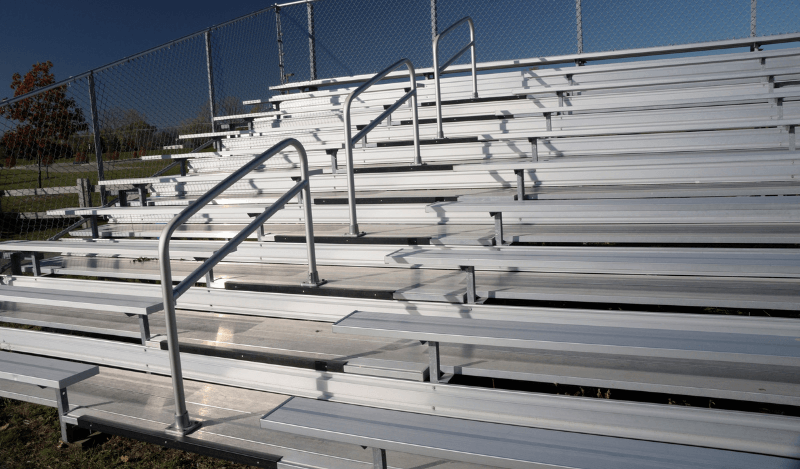
A set of empty bleachers at night

In some of those dreams, the bleachers begin to tip backward, and we all begin to fall out (although I usually wake up before I hit the ground). Other times, I almost drop something through the cracks beneath my feet.

I awake from these dreams feeling uneasy—because even in waking life, sitting in the bleachers doesn’t always feel safe to me.

When You Can’t Get in the Game

When I’m a spectator in the bleachers, I have no control over how the game is played. I can’t advise the players. I can’t referee the calls.

I can only sit and watch.
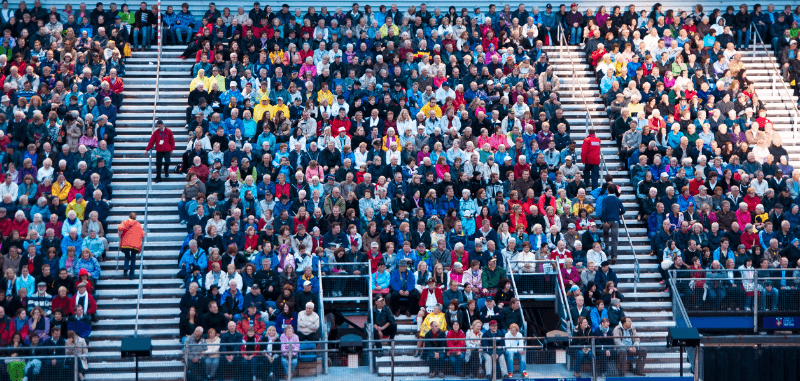
A crowd of people sitting in the bleachers watching a game

Our culture shouts, Get in the game! And often, that’s good advice. I’m currently even memorizing Teddy Roosevelt’s “Man in the Arena” speech to remind myself that courage belongs to those who show up and participate.

But not every game is ours to play.

Not every work is ours to do.

Some games we simply can’t play right now—whether by choice or circumstance. Sometimes the best we can do is sit in the stands and watch and cheer for those who actually are on the field.

One person sitting alone in the bleachers

Finding Purpose from the Sidelines

It’s humbling. It can feel powerless.

Yet I’m learning that being in the bleachers doesn’t mean I’m disconnected. I can still pay attention.

From the stands, I can see the whole field. I can notice things I’d miss if I were on the field. Distance sometimes bring clarity that can’t be achieved close up.

Sitting out also can be a time of healing. A place to rest, to regain strength for when it is our turn to play again. The bleachers may be the safe place we need to recover from previous grueling games. Protection, not punishment.

And sometimes? Sitting in the bleachers means I can turn away from the game and talk to my friends; I can go to the concession stand and get popcorn; I can leave early if the game is too slow or a blowout.

While the bleachers may feel torturous when we want to play, with a reframing of perspective, maybe the bleachers can become exactly where we need to be. At least for now.

And when a new game begins that is ours to play, maybe we’ll be more ready than ever to get in the game.

Teammates huddled together ready to get in the game


When have you found yourself sitting in the bleachers—watching instead of playing—and what did you learn from it? Share your thoughts in the comments.


How to Grow a Long Joyspan: Why Older Can Truly Mean Better

Do you know Sister Jean?

Sister Jean during the 2018 NCAA Tournament, when Loyola Chicago went on a Cinderella Final Four run

I first discovered Sister Jean in 2018 as I was watching March Madness, the annual NCAA Division I men’s basketball tournament.

At 98 years old, she was cheering on her favorite team, Loyola University Chicago, as they reached the semifinals as a Cinderella Final Four team (they later lost to Michigan). As the team chaplain, she knew the players by name, led them in pregame prayers, and knew the scoop on their opponents.

I watched for Sister Jean on TV every year after that.

But last week on October 9, 2025, Sister Jean died. She was 106 years old. What an amazing life she had lived.

Maybe you have someone in your family like Sister Jean.

Or maybe you also know someone who is older but instead of being the life of the party, they are the grouchy one.

Grandmother with granddaughter and great-granddaughter

This is my grandmother who lived another 10 years after this photo, dying at 97 years old. (She was never grumpy around me.)

As we age, none of us want to become the grumpy older person; we’d rather be a Sister Jean. But how do we become that way?

If the question intrigues you, you might enjoy Dr. Kerry Burnight’s new book Joyspan: The Art and Science of Thriving in Life’s Second Half as much as I did.

Burnight, known as “America’s Gerontologist,” writes with warmth and humor. Her well-researched message is simple yet profound: we don’t want to just live long (lifespan) or even just remain healthy (healthspan); what we really want is to enjoy living however long we have (joyspan).

Challenging the Anti-Aging Industry

You already know that our culture is obsessed with youth. It’s hard to find a pleasant birthday card to give an older person that isn’t a lewd joke about being over the hill. In advertising, we’re surrounded by products that promise to reverse aging. They play into our fears of getting older.

And often it works.

To counter that, Burnight says:

“People spend their lives trying not to age, trying not to die. Why not try to live instead?”

In her view, joy comes not from erasing your wrinkles but from nurturing your “ageless qualities,” like kindness, curiosity, humor, and resilience.

Quote on beauty of growing older from Joyspan

Redefining Aging: From Fear to Fulfillment

Joyspan again and again reinforces the idea of living better, not just longer. Burnight says that joy in later life isn’t accidental—it’s an “inside job.”

She outlines four practical actions that people with long joyspans consistently take:

1. Grow
Growth might mean learning a new skill.

2. Connect
Connection could be as simple as making time for old friends—or finding new ones of different ages.

3. Adapt
Adaptation helps you meet life’s challenges with flexibility

4. Give
Giving feeds your sense of purpose.

The book is full of great suggestions under each category for practicing these skills.

The Gifts of Growing Older

Your body will decline as you age. There’s no denying that. But Joyspan points out other things that actually strengthen over time:

  • emotional stability,
  • spiritual depth,
  • problem-solving wisdom,
  • and the freedom of not caring as much what other people think about you.

Burnight says science backs this up—studies show older adults often experience greater well-being and emotional balance than younger adults.

5 generations in a family

This is my daughter, me, my mother, my grandfather, and my great-grandmother, who lived to be over 100. She was very pleasant, active, and a joy to be around until the end.

Love as the Final Word

But to me, the book’s most powerful truth might be this one: love endures. Even when your body and health fade, your capacity to love—to mentor, to comfort, to show up in whatever ways you can—lives on.

To grow that direction for later, though, start living that way now. Whatever your age, be intentional to live with joy, purpose, and connection, even alongside life’s sorrows that are also bound to come.

Most of us won’t be traveling to basketball games at 98 years old like Sister Jean did. And we probably won’t live to be 106.

But like Sister Jean, we can hopefully make our older years as meaningful and joyful as possible.

Perhaps our best days aren’t behind us. They may still be ahead.


Are you one and/or do you have joyful older people in your family?

Share your thoughts in the comments.

My thanks to NetGalley for the review copy of Joyspan


Have You Made a To-Dread List? Stop Procrastinating with This Surprising Trick
—How naming what you dread can actually make life easier

Woman bent over computer looking at her to-do list

We all do it—avoid the hardest things on our to-do lists.

So I cringe when I read this action item in Time Anxiety, a new book I’m reading by Chris Guillebeau:

Make a “To-Dread List.”

It’s like a to-do list but for all the things you’re trying to avoid.

Sticky notes with procrastination phrases on a cluttered clock

I glance at my regular to-do list for ideas to add to my to-dread list. I find several things I’ve been carrying over for a long time that would be perfect for a to-dread list.

Some are simple.

But then there are more emotionally complicated tasks for my to-dread list.

  • Decide what pictures go on the newly painted walls
  • Clean up storage on my laptop
  • Start thinking about Christmas gifts

And then I also have the bigger projects, the ones I haven’t even put on a list anywhere.

  • Clean out the attic
  • Sort through files in the basement
  • Digitize old home videos

Granted, not everything has to get done. Maybe the attic can stay as it is until I die.

But Guillebeau makes a good point about procrastinating:

“If you want to feel better, face more and avoid less.”

Procrastination is often just avoidance. And avoidance catches up with you eventually.

So maybe it’s time to prioritize my to-dread list.

  1. Maybe I could tackle one item per month.
  2. Or at least take a baby step or two on a few items.
  3. And perhaps delete altogether what doesn’t really matter—not every to-dread item deserves my energy.

Doing dreaded things isn’t fun. But not doing them isn’t great either. They linger in our minds, clogging up mental space, or else they slip through the cracks altogether, causing more work later than if we’d just done them and moved on.

Feet on start-now arrow to avoid procrastinating

Until this year, we’d forever put off our house repainting and new flooring project because . . . well, it just felt overwhelming. But now that it’s done? I wake up every morning so happy to place my feet on soft new carpet, and my eyes on clean walls instead of scuffs and marks.

The dreaded hassle was really a thing. But the rewards have been more than worth it.

So maybe I’ll add one more item to my To-Dread List:

Face more and avoid less.

It’s ironic—but if I can practice it, maybe I’ll finally get to cross it off.


What’s something on your “to-dread list” that might bring relief if you did it? Share your to-dreads in the comments.

Read more:


When to Ignore GPS (and Listen to Yourself Instead)
- A digital road sign, a scary hill, and the wisdom of trusting yourself

It’s the strangest road sign I’ve seen yet.

Jeff and I are driving on I-40 East in North Carolina, where several roads are still a mess after Hurricane Helene barreled through with all her water in September 2024.

Curving North Carolina mountain road symbolizing life’s detours

Seeing digital road signs along this stretch isn’t unusual.

But this one? Definitely is.

A Road Trip Flashback

It takes my mind back to an earlier drive . . .

I am driving alone to spend the weekend with friends in Chattanooga. I am completely dependent on GPS.

If it says, “Turn left,” I turn left. “Go right,” and I go right.

But at one intersection when it says, “Go straight,” I balk for the first time.

The Scary Road Ahead

The road ahead looks impossibly steep—a road straight out of my nightmares. My toes tingle; my fear of heights kicks in.

Thankfully, the traffic light is red. I have a minute to think.

Do I:

  • Obey the GPS and go straight when the light turns green?
    Or
  • Venture off on my own, turn left (or right?), and risk getting completely lost?

The light changes. My foot taps the gas—but my hands won’t stay steady.

Going Rogue

I won’t go straight.
I take a hard left turn.
I can’t take orders this time—I’m going rogue.

But as I do, questions flood my mind:

  • Will my ETA slip into the next hour?
  • Will I run out of fuel if I have added mileage?
  • Will I end up hopelessly lost in the hills of Chattanooga?

I wait for the GPS voice to chime in with its scolding: “Rerouting…rerouting…”

Close-up of a GPS screen showing rerouting directions

Listening to Me

Sometimes we just have to listen to our own voice instead of an external authority.

Self-trust is a valuable resource. And even though it can sometimes lead us astray, over time it can also become wisdom—earned the hard way.

Ultimately, we’re each responsible for our own decisions.

While we may occasionally share the blame of a bad choice—with a faulty app or stinky advice or simply poor judgment on our part—in the end, trusting our eyes and following our values usually gets us where we’re meant to go . . . even if it takes a few extra turns.

The Surprising Outcome

I look back at my GPS again.

Before the turn, my ETA was 3:41 p.m.
After the “wrong” turn? Still 3:41.

My heart rate slows again.
My blood pressure goes down.
My confidence goes up.

That scary, steep road hadn’t been necessary after all. I didn’t need it. I could reach my destination just fine without it.

I follow the GPS for the rest of the trip though—grateful for its guidance, but now knowing I don’t have to obey it blindly.

Back to the Present

Now, driving through North Carolina, that Chattanooga memory makes me laugh. The digital sign we just passed isn’t meant to be funny, but it makes me laugh, too.

I pull out my phone for a quick photo, but I’m too late.

Still, Jeff and I will remember it—and laugh about it—for a long time.

What did the sign say?

“Do not follow GPS!”


Have you ever blindly followed GPS into a field or around in circles? Sometimes it’s best to *not* follow directions—like trying to drive down a closed road on I-40E (though I hear it’s partially open again!).

Share your thoughts in the comments.

Read More:


From Politics to Belonging: 7 Books That Leave a Lasting Mark
—October 2025 Book Recommendations

“A house that has a library in it has a soul.”
— Plato 

Some books are companions. Some are warnings. Some are guides. And some become classics that leave a lasting mark on us. This past month, I finished seven books that together did all these things. They ranged from political deep-dives to thought-provoking reflections on belonging, justice, money, and resilience.

Books like these continue to remind me that stories—whether true or imagined—shape the way we see ourselves and can inform how we interact with the world.

Here are the 5 nonfiction books and 2 novels that made an impact on me this month. 

[See previously recommended books here]

NONFICTION

1. We Can Do Hard Things
Answers to Life’s 20 Questions
by Glennon Doyle, Abby Wambach, Amanda Doyle

We Can Do Hard Things - Answers to Life’s 20 Questions

This is a heavy book, both literally and emotionally. And also an enlightening one. It is full of answers on some of life’s hardest questions based on the words and wisdom of guests through years of conversations on the “We Can Do Hard Things” podcast. I really enjoyed it. 

2. 2024
How Trump Retook the White House and the Democrats Lost America
by Josh Dawsey

2024 - How Trump Retook the White House and the Democrats Lost America

Unlike Original Sin (which I read last month about Biden’s campaign only in 2024), this book flips back and forth between both Biden’s and Trump’s campaigns. I can’t know how much is accurate, but assuming much of it is, it was quite a fascinating, behind-the-scenes look at how Trump managed to return to the presidency in 2024. It’s also a sobering reminder of how fragile democracy can be.

3. Arbitrary Death
A Prosecutor’s Perspective on the Death Penalty
by Rick Unklesbay

Arbitrary Death - A Prosecutor's Perspective on the Death Penalty

I read this for a book club Zoom with other death penalty abolitionists, and, as you might guess, it was both disturbing and informative. Unklesbay, an Arizona prosecutor, has seen firsthand how arbitrary and flawed the death penalty system can be. The murder cases are hard to read about, but Unklesbay’s perspective is an important one to listen to, an insider’s view on some flaws in our justice system.

4. Die with Zero
Getting All You Can from Your Money and Your Life
by Bill Perkins

Die with Zero - Getting All You Can from Your Money and Your Life

This book surprised me by how much it made sense. While nobody wants to run out of money before they die, we also don’t want to hoard it for no good reason. Perkins encourages us to align our spending with our values—so we actually use our resources for experiences and meaning while we’re alive.

5. Belonging
Remembering Ourselves Home
by Toko-pa Turner

Belonging - Remembering Ourselves Home

Ah, this book is a deep cleansing breath among some of the heavier ones. We all like to belong, right? Turner writes beautifully about the ways we already do belong and how to nurture that sense of belonging in our communities. If you’ve ever felt out of place, her words are a reminder that belonging is not a destination but a practice. This was another online book club choice; our conversation about it was rich. 

FICTION

6. Take My Hand
by Dolen Perkins-Valdez

Take My Hand

Unfortunately, this novel is based on a true story—the truth behind it is heartbreaking. Set in my state of Alabama in the 1970s, it uncovers a horrific racial injustice in the healthcare system. Painful, yes, but important to read. We need to learn from the past so we can do better in the future.

7. The Color Purple
by Alice Walker

The Color Purple

How have I never read this classic? I only vaguely remember the 1985 movie (with Oprah in it), but reading the book now made a big impression on me. There’s good reason why Walker’s story of sisterhood, resilience, and transformation remains a masterpiece since it was first published in 1982.

WHAT I’M READING NOW

  • The Art of Gathering *
    How We Meet and Why It Matters
    by Priya Parker
  • Joyspan
    The Art and Science of Thriving in Life’s Second Half
    by Kerry Burnight
  • Bad Therapy
    Why the Kids Aren’t Growing Up
    by Abigail Shrier
  • Traffic
    Why We Drive the Way We Do and What It Says About Us
    by Tom Vanderbilt
  • Facing Climate Anxiety
    Evidence-Based Skills to Cope with Fear and Overwhelm, Find Meaning, and Take Action
    by Jon Gorman, PsyD
  • Time Anxiety
    The Illusion of Urgency and a Better Way to Live
    by Chris Guillebeau
  • Not That Wheel, Jesus!
    Stories From a Faith That Went Off-Road in the Best (And Worst) Possible Ways
    by Mary Katherine Backstrom
  • Broken Country
    by Clare Leslie Hall

* Asterisked books from Daniel Pink’s Favorite Books list; you can find it here.

blank


What book has left a lasting mark on you? Please share in the comments.

I’m sharing at these linkups


On the Blog – September 2025

Here are brief summaries and links to posts on the blog, Lisa notes, from September 2025.

blank

See previous months’ archives here