Everything Is a Story: How the Narratives We Live By Shape Our Lives

The first time I heard Kaitlin Curtice speak was at a conference I attended three years ago. From her talk that evening, I wrote down these notes (among others):

“Once you know, you can’t unknow.”

“We live in cycles not lines.”

“When oppression happens around us, even if not to us, it affects us.“

“Protest is grief in motion.”

Looking back, it’s easy to see she would later write a book about stories.

And that I would want to read it.

Stories as Living Things

In Everything Is a Story, Curtice invites us to look at the stories we tell, the stories we inherit, and the stories we repeat—and ask a question of them:

Are these stories healing us, or are they holding us hostage?

As a visual metaphor throughout the book, Curtice equates stories to oak trees. Thus, she describes stories as alive—planted in us, growing over time, shaping who we become.
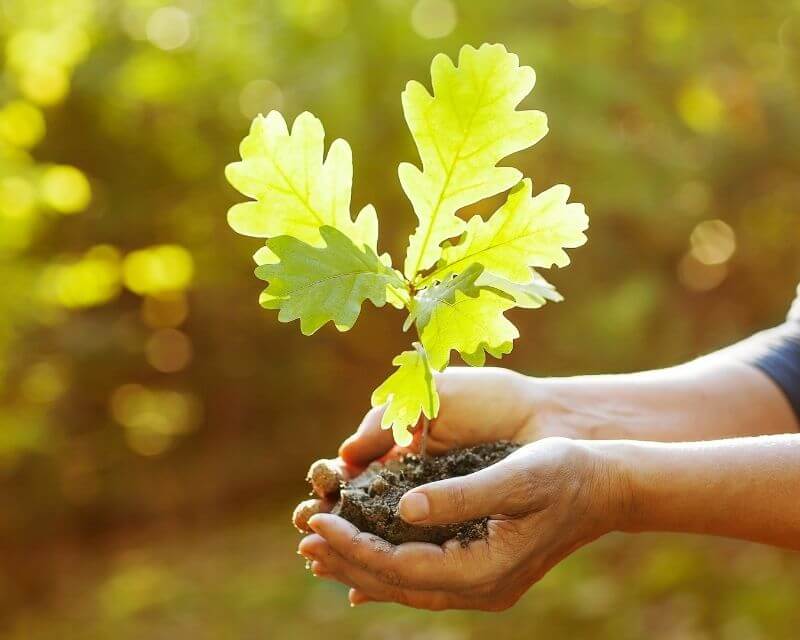
Hands holding acorns and a small oak tree indicating the beginning of a story

“Throughout time, we are repackaging many of the same stories: redemption, spirituality, power, grief and pain, ecstasy, and, yes, the magic and the mundane of humanity.”

She explains that even when stories are ignored, they don’t necessarily fade. Sometimes they just deepen their roots.

So pay attention to your stories.

The Power to Harm or Heal

Rather than offering answers in her book, Curtice offers discernment.

“This book is a chance for us to examine how storytelling has been a revolutionary tool for love and a weapon used for power and submission throughout the centuries.”

She asks us to notice how stories function in our lives—especially ones we’ve never questioned.

Consider the framework she offers for sorting our stories:

  • Liminal stories — complex, uncertain, full of questions
  • Loving stories — rooted in belonging and tenderness
  • Lethal stories — driven by fear, oppression, and control

Then also ask whether the story is cyclical or linear—does it trap us, or does it allow transformation?

Applying this framework to the narratives we often repeat to ourselves can bring clarification and insight.

Stories as Mirrors

“Our stories are mirrors . . . and when used the right way, these stories can lead us to tenderness and curiosity rather than judgment.”

This section of Curtice’s work feels particularly important to me—does labeling our stories distort their message and turn them into something they weren’t meant to be?

For example, she uses this example of the ways we talk about one another:

“Some kids are bad, while some kids are just having a bad day. Spot the difference?”

Also, stories can change over time. Our best hope is that they mature well, like an oak tree.

“Oak trees are often at least twenty to thirty years old before they bear any fruit. So, too, stories take time.”

Meanings shift. Layers are revealed. What feels fixed today may not be the story that lasts.

Why This Book Matters

Everything Is a Story doesn’t tell you which stories to remember and tell. Rather, it teaches you how to notice your stories.

And in doing so, it leaves you with this truth:

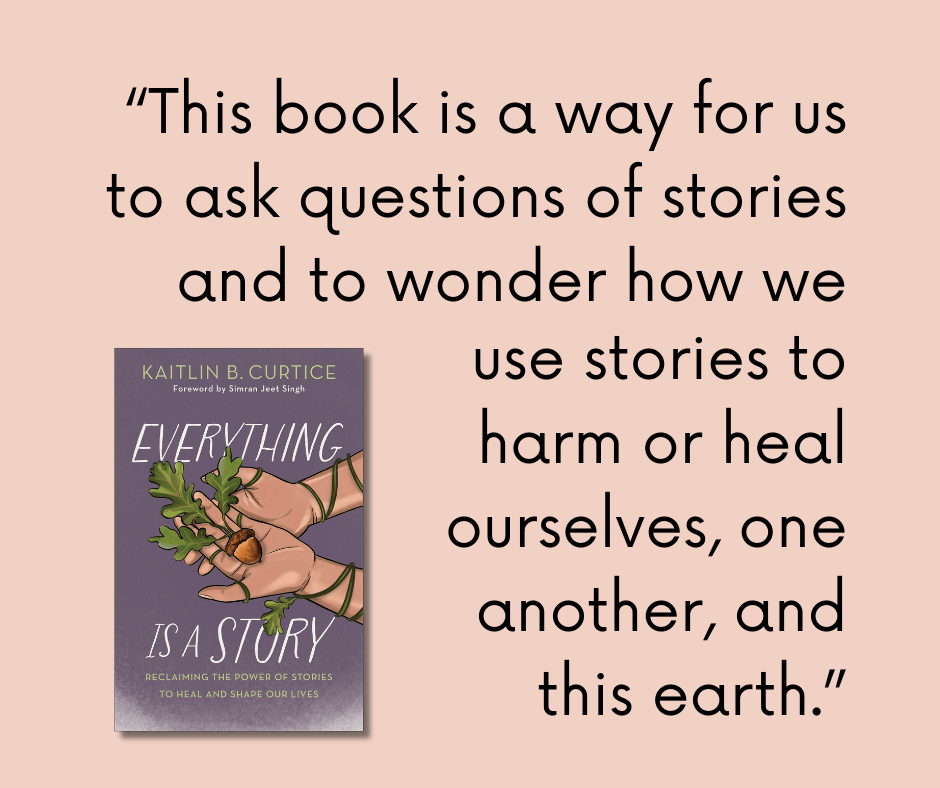
“We tell stories, we experience stories, but also, we are the stories, and the stories are us.”
A question for you:
Is there a story you tell yourself that needs to be reframed into a better story?

Share your thoughts in the comments.

My thanks to NetGalley for
the review copy of this book


Rate Your One Word 2025: Reflection, Closure, and What Comes Next
{One Word 2025 December Linkup}

As 2025 comes to a close, pause to take one more look back at your One Word.

Reflection Questions to Help You Look Back

Find a few quiet moments to answer one or several of these questions. Even one insightful response can bring clarity.

  • Did my word stay relevant throughout the year? Why or why not?
  • How often did I notice my word showing up—in conversations, decisions, or circumstances?
  • Did my word surprise me in any way, good or bad?
  • How did I change because of this word?
  • Am I pleased I chose this word?
  • Would I recommend this word to someone else?

Rate Your One Word: 1–5 Stars

On a scale of 1 to 5 stars, how would you rate your One Word for 2025?

  • 5 Stars — Deeply meaningful and transformative
  • 4 Stars — Helpful and grounding
  • 3 Stars — Mixed, but still worthwhile
  • 2 Stars — Some connection, but limited impact
  • 1 Star — Not the right fit this year

There’s no “right” rating. The value is in paying attention to what actually happened between you and your word. 

A Personal Note

One of the reasons I chose RIPPLE for 2025 was to explore the beauty of love moving from one person to another to another.

I hold this hope: that a ripple I set in motion now might one day brush up against a special someone beyond my reach. And that they will receive that love, even if they don’t realize it’s from me.

This is the ripple effect.
I know it’s real.

Will it reach the exact people I long for it to reach?
I may never know.

And if it doesn’t?

At least I have been changed by the sending.

And that is something.

I give 5 stars to Ripple.

Share Your Reflection (or Keep It Private)

blank

You can reflect privately in a journal, talk it through with a friend, share your thoughts in the comments, or link a blog post below. This linkup will remain open through Thursday, January 8.

Every shared post is also highlighted in our One Word Facebook group throughout the month, creating a space to read each other’s words and give encouragement.

Also on Facebook we’re already saying goodbye to our old words through a series of lighthearted polls. We’ll begin revealing our 2026 words on Monday, December 29.

Our first official One Word 2026 linkup will begin on Monday, January 26, and we’ll continue gathering on the 26th of every month throughout 2026.


Question for You

How many stars would you give your One Word 2025? Are you choosing a word for 2026? Share your thoughts in the comments.

If you’d like to receive our monthly One Word emails and ideas for 2026, join here.

Link Up About Your One Word

You are invited to the Inlinkz link party!

Click here to enter

My Top 5 Fiction Books of 2025: Stories That Stayed With Me

In 2025, these five novels kept my attention, their characters worked their way into my heart, and their storylines left me thinking more deeply about the human predicament and our resilience.

Here are my top fiction picks and what I’m taking from them. (See my top 10 nonfiction books here.)

1. Here One Moment

by Liane Moriarty

Here One Moment book cover

A mysterious passenger aboard a flight walks down the aisle predicting deaths. This was a great story for my word of the year Ripple. It showed how people react differently to news about their life spans. I appreciated how this novel made me wonder how I would react in a similar situation.

  • Quick takeaway: Expectations of the future affect choices made today.
  • Think about: How comfortable am I with uncertainty?

2. Take My Hand

by Dolen Perkins-Valdez

Take My Hand book cover

Based on a true story from the 1970s, the main character uncovers a horrific racial injustice in the healthcare system in Alabama. It was a painful story to read, yet also an important one to know about. Learning from the past helps us do better in the future.

  • Quick takeaway: Justice needs human prodding to keep it moving forward.
  • Think about: What sacrifices am I willing to make for human dignity?

3. The Color Purple

by Alice Walker

The Color Purple book cover

This classic is a series of letters that Celie writes over several decades to God and to her sister about the oppressive events of her life during the early 1900s. It’s a powerful story of resilience and change through trauma and self-discovery by a Black woman in the American South.

  • Quick takeaway: Everybody has a voice that deserves to be heard.
  • Think about: How do I claim my story to live a more full life?

4. There Are Rivers in the Sky

by Elif Shafak

There Are Rivers in the Sky book cover

This is a sweeping story that takes place over several centuries and continents, connecting four people linked by water, memory, and the ancient Epic of Gilgamesh. If you like multi-layered storytelling, this one is for you as it weaves together personal and cultural histories over time.

  • Quick takeaway: Stories connect the past with the present and with the self.
  • Think about: How has history shaped who I am?

5. My Friends

by Fredrik Backman

My Friends book cover

This new novel about is about a teenager in the present who is mesmerized by a painting of four teenagers in the past. Backman unfolds the plot by flashing back to the past to connect it with the present. It’s a coming-of-age story that is both heartbreaking and endearing.

  • Quick takeaway: Friends shape lives in unexpected ways, in the moment and years later.
  • Think about: What does it mean to truly see and be seen by others?

Did a novel make an impact on you this year? Share in the comments.

Related Reading:


My Top 10 Favorite Books of 2025: Lessons on Life, Loss, and Curiosity

2025 was a year of books that challenged, comforted, and inspired me. From randomness and mortality to dreams and embodiment, these ten nonfiction books stood out from all the rest.

Here’s a look at my 10 favorites—and why they might resonate with you too. (I’ll share my Top 5 Fiction Favorites on Friday, December 19.)

1. Fluke: Chance, Chaos, and Why Everything We Do Matters

by Brian Klaas

Book cover of Fluke: Chance, Chaos, and Why Everything We Do Matters

Do you want to be more comfortable with uncertainty? This book takes a curious look at how randomness shapes our lives. I was completely fascinated by it. It explores the tension between chance and meaning. It left me more confident that small actions still matter—even in an unpredictable world.

  • Quick takeaway: Embrace uncertainty.
  • Think about: If so much is out of my control, does it matter what I actually do? (Answer: yes!)

2. Traffic: Why We Drive the Way We Do (and What It Says About Us)

by Tom Vanderbilt

Traffic: Why We Drive the Way We Do (and What It Says About Us)

I was captivated by this observation of human behavior behind the wheel. This book brings both data and psychology to explain how and why we drive like we do.

  • Quick takeaway: The systems we function in (including highways and parking lots) shape our behavior.
  • Think about: Why do I act differently on the road and how can I improve?

3. Meditations for Mortals: Four Weeks to Embrace Your Limitations and Make Time for What Counts

by Oliver Burkeman

Meditations for Mortals: Four Weeks to Embrace Your Limitations and Make Time for What Counts book cover

If you’re a student of productivity culture (I can’t help but be drawn to these books), don’t look in this book for more life hacks. But what you find might be more helpful: a way to reframe our limits. Burkeman sees them as a feature of being human, not a flaw. He offers permission to live fully and make peace with boundaries. I’ll read anything Oliver Burkeman writes.

  • Quick takeaway: Focus on what matters most.
  • Think about: What if the problem isn’t my self-discipline, but my expectations about what I can accomplish in a day?

4. Moving On Doesn’t Mean Letting Go: A Modern Guide to Navigating Loss

by Gina Moffa

Moving On Doesn't Mean Letting Go: A Modern Guide to Navigating Loss book cover

For anyone who is grieving something—a person you love, a material possession, a job, etc.—this book talks to you like a compassionate friend. It guides you through living and growing with grief, not trying to erase it and pretend the loss never happened.

  • Quick takeaway: Deep grief changes over time, but it doesn’t disappear.
  • Think about: Is it okay that I’m still grieving—and may never stop?

5. The Dreaming Way: Courting the Wisdom of Dreams

by Toko-pa Turner

The Dreaming Way: Courting the Wisdom of Dreams book cover

If spiritual listening and learning to trust your wisdom are important to you, this is a mesmerizing look about paying attention to your nighttime dreams. While our minds speak to us in words all day, at night they switch to images to get our attention.

  • Quick takeaway: Notice what your dreams want you to see.
  • Think about: Does my deeper self know more than I’m giving it credit for?

6. Advice for Future Corpses (and Those Who Love Them): A Practical Perspective on Death and Dying

by Sallie Tisdale

Advice for Future Corpses (and Those Who Love Them): A Practical Perspective on Death and Dying book cover

We may not like to think about death. But we (and everyone we know) are all going to die. So why not contemplate our mortality with more clarity and compassion? This book by a palliative care nurse does that in a soothing and honest way.

  • Quick takeaway: Face your mortality head-on.
  • Think about: What could dying well look like for me—and for helping others I love?

7. The Art of Gathering: How We Meet and Why It Matters

by Priya Parker

The Art of Gathering: How We Meet and Why It Matters book cover

Whether you host elaborate work conferences or an occasional family meal, this is a surprisingly helpful book to improve any type of gathering. I found several practical ideas to use for creating more intentional connections with groups of people.

  • Quick takeaway: Meaningful gatherings are created by design.
  • Think about: What few details could I intentionally tweak to create more purposeful gatherings?

8. Everybody Writes: Your New and Improved Go-To Guide to Creating Ridiculously Good Content

by Ann Handley

Everybody Writes: Your New and Improved Go-To Guide to Creating Ridiculously Good Content book cover

Yes, everybody writes. It doesn’t have to be the great American novel. It could be just a text confirming a lunch date. This book addresses all of us as the writers we are, whether we’re writing for work, personal relationships, or online communications. Lots of helpful tips.

  • Quick takeaway: Write like a real person—yourself!—and not a brand.
  • Think about: What words can I use to communicate with more clarity and value?

9. Returning Home to Our Bodies: Reimagining the Relationship Between Our Bodies and the World

by Abigail Rose Clarke

Returning Home to Our Bodies: Reimagining the Relationship Between Our Bodies and the World book cover

Our bodies are our first and constant home on this earth. This book explores what it means to reconnect with our bodies and their place in the world at large.

  • Quick takeaway: Reevaluating your relationship with your body is healing in personal, social, and ecological ways.
  • Think about: What if my body is more than a productivity tool to move me through life?

10. Die With Zero: Getting All You Can from Your Money and Your Life

by Bill Perkins

Die With Zero: Getting All You Can from Your Money and Your Life book cover

I’ve always been more of a money saver than a spender. (I’m good at talking myself out of buying things.) This book was a wake-up call that, at this stage of my life, it’s okay to use money that I’ve saved up (within reason, of course; I’m still going to be thrifty) for things that matter to me.

  • Quick takeaway: Use money as a tool to live fully, not just as a security blanket.
  • Think about: What if the goal isn’t to die with a stash of money, but to thoughtfully spend and give more away while I’m alive and can watch it make a difference?

Final Thoughts

Each of these 10 books gave me a unique gift in 2025, and left me with better questions after I finished them.

I hope you found a book or two this year that did the same for you.


Did you have a favorite? Share your recommendations in the comments.

Related Reading:


Still Deciding What to Buy? You’re Not Alone

The Struggle of Choosing the Right Gift

I’m not ready for Christmas yet.

My house looks ready—the tree is lit, the stockings are hung, the mantel is decorated—but under the tree, there’s not much.

Christmas tree decorated with lights and ornaments, with few gifts underneath

The hardest part for me isn’t buying gifts—it’s deciding what to buy.

Just yesterday, I spent awhile searching online for the right gift for someone I love. I found what I thought they’d want. Then I saw the shipping fees. Outrageous. I clicked away, pleased that the company wouldn’t get my money.

But also displeased that I’m no closer to having the gift to give.

Woman browsing online for gifts, looking frustrated by shipping fees

That moment, as silly as it sounds, is an apt metaphor for my gift-giving struggle: I think of something, but then I talk myself out of it.

The Myth of the Perfect Gift

My desire is to find the perfect gift for each person. The one thing that they wouldn’t buy for themselves, but that they’ve been wanting.

But there is no perfect gift. Not really. And even if there were, it would only be perfect for a season. The new always wears off, the excitement fades away, and the object eventually becomes, well, just another object.

Minimalist Christmas gifts in simple wrapping

Finding Joy in Imperfection

Still, I hope the gifts I give are received with my good intentions. Used and enjoyed. I hope they bring a moment of joy, however fleeting. I try to remind myself that even if the thought counts more than the item itself, the item can still carry joy—and isn’t that what we want for those we care about?

I’ve never felt like a great gift-giver. Maybe it’s because I’m a minimalist at heart.

I talk myself out of buying things for me all the time because…Do I really need that thing, after all? Why would I want more clutter? And do I want to be responsible for adding more junk to the landfill one day?

Letting Yourself Off the Hook This Christmas

So every Christmas I sit with this tension. I have a desire to give, yet a fear of getting it “wrong.”

I want to let myself off the hook these remaining two weeks before Christmas. I’ll wrap the gifts I’ve already bought, hope the gifts I’ve ordered will come in soon (!), and finish shopping for things that might put a smile on someone’s face at least for a moment, even if not forever. The moment is enough.

And maybe that thought actually does count for quite a lot.

Person sharing a happy moment while opening a Christmas gift

Share your thoughts in the comments.

Related reading:


The Power of Ripples: One Word That Carried Me All Year Long
—My end of the year wrap-up

A One Word of the Year practice won’t always teach you something brand-new. But it does give you fresh and valuable gifts throughout a year.

That’s exactly what Ripple did for me this year.

A ripple expanding across calm water, symbolizing small moments creating big impact

Beginning the Year in Pencil

Back in January, I wrote parts of my calendar in pencil instead of ink because I wasn’t sure how Ripple would unfold. I felt the uncertainty of it—what it might ask of me, where it might lead. (More about that here.)

We can never fully predict what’s ahead: the places we’ll go, the experiences will have, or the people we’ll meet—like the hospital housekeeper I met from Thailand—who quietly ripple in and leave a lasting mark.

Learning to Stay Present

A child’s hands in flowing water, reflecting presence and attention to the moment

I originally chose Ripple at the beginning of the year to remind me of the importance of the past and of the future.

But ironically, Ripple kept nudging me back into the present. It reminded me that this moment, this breath, this body is where life actually happens.

Sometimes that reminder came through my grandson and Daniel Tiger.
Sometimes it came through my own body telling me she was doing her best.
Sometimes it came simply through slowing down enough to stay awake to the small things.

When One Stone Falls Into the Water

The biggest lesson Ripple gave me was this:

One stone thrown into the water is never the end of the story.

A disagreement with “Mr. T-Shirt Man” taught me that.
Sending a letter in the mail did, too.
So did a simple yes that led to the next yes…and then one more…until a whole string of unexpected connections bloomed into life.

Sometimes we are present when the stone drops. Maybe we’re even the one dropping it. We are the ones creating the ripple that will outlast us, maybe reaching people we may never even know.

Other times we’re swept up in ripples from stones tossed by others on days, years, or even generations ago. (Like that crazy jigsaw puzzle synchronicity at the beach condo.)

A Ripple on a Monday Afternoon

I met a new friend just yesterday who reminded me of this truth.

She’s thriving now in her twenties, but not that long ago, she was a young girl trapped in an abusive situation. She came to see harm as normal. Several times, she tried to end her life because she couldn’t imagine another way out.

But beautiful humans—one by one, moment by moment—kept rippling into her world. Not always dramatically or perfectly. But with consistency and love.

Those ripples carried her to a new place of safety and hope.

She’s worked hard on her own healing, and she’s reaching back to help others heal, too, including learning more about our volunteer work, and eventually hoping to reach her dream of opening a shelter.

For a single Monday afternoon in December, our stories overlapped.
But that is long enough to create a shared ripple between us.

Sometimes that’s all it takes—a single moment, a single kindness, a single gift like a new backpack for a child starting over at a new school—to keep someone going one more day.
And then another.
And another.

Ripples Move Forward—Always Forward

Ripples don’t stay where they start. They move outward, sometimes far beyond sight.

This year reminded me to practice openture instead of closure—to stay open-handed with the stories still unfolding.

It reminded me to prepare for the future even as I honor the past, like when I hesitated to download this countdown app (I still haven’t done it) or when I found my mother’s words written 34 years ago that rippled back into my life just this year.

We carry the ripples of others.
We send out our own.
And together they light up the dark like fireflies on a summer night.

Glowing fireflies at dusk, symbolizing hope and the gentle glow of small acts of kindness

A Ripple Blessing for Year’s End

I wrote this Ripple blessing back in April, but I want to share it again—both for you and for me—as I close out this year of Ripple (even though the ripples never stop flowing).

May you be a ripple, flowing to see others that need to be seen.
May others ripple to you, gazing closer to witness your worth.

May you be a ripple with fresh ears to hear others’ words.
May others ripple to you, tuning into your voice as valuable.

May you be a ripple of gentle waves to heal those who’ve been harmed.
May others ripple to you with layers of compassion to soothe your wounds.

May you be a ripple of love to those from your past to your present.
May others ripple to you, enlarging their reach to surround you with love.


What small ripple has touched your life recently? Did you have One Word of the Year, too? If you want to choose one for 2026, here are 5 questions to help discover your word, and also 6 AI prompts to narrow down your list.

Share your thoughts in the comments.

Related Reading to Keep the Ripple Going

Here are a few of my favorite posts this year where small moments created big impact—stories that inspired me and may inspire you too: