5 Reasons to “Do” the Book Instead of Just Reading It (+ 5 Book Picks)
{Nonfiction November Week 2}
Week 2 of Nonfiction November is about Choosing Nonfiction. Here are a couple questions I often ask when I decide on a nonfiction book:
- Can I do something with this book besides just read it?
- How can I experience this for myself, too?
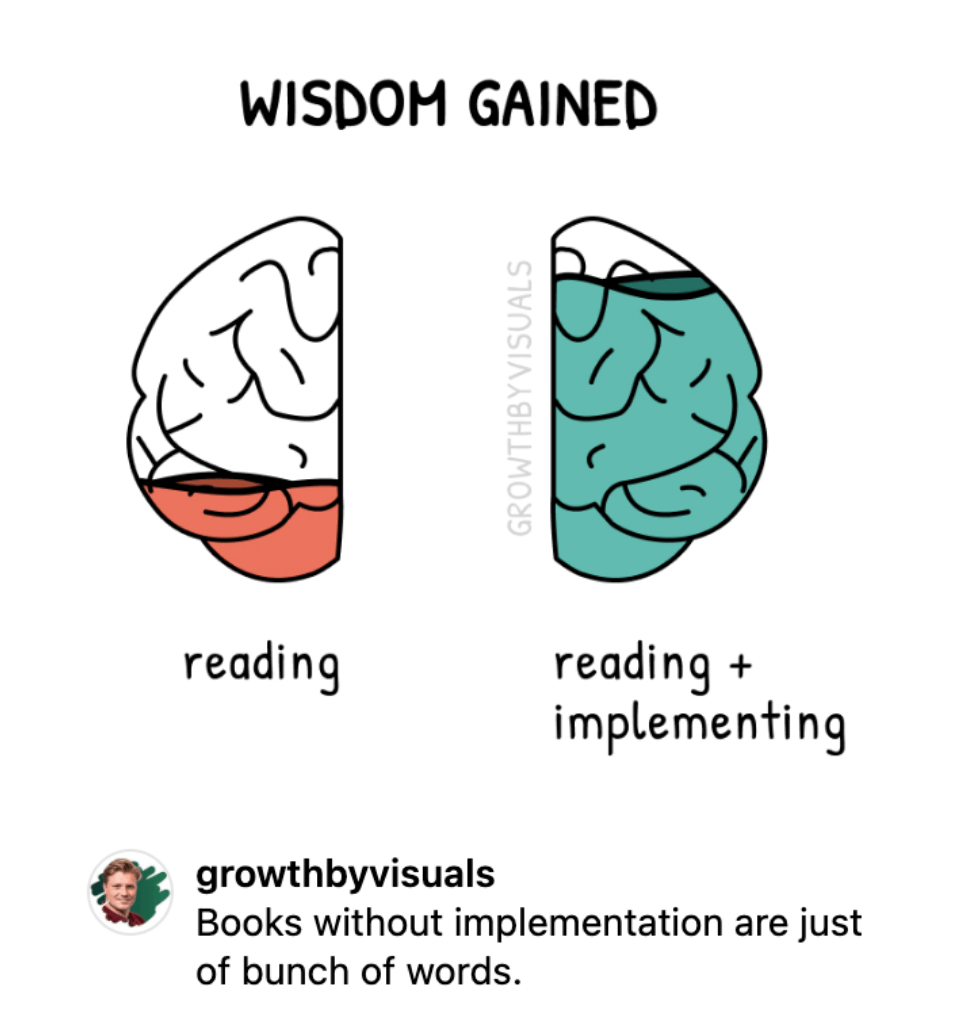
(Disclaimer: I also love novels! But I read them for escape, for fun, and for entertainment. If it turns out to prompt action, too, well, that’s just bonus.)
5 Reasons to Do a Book Instead of Just Reading It
Here are 5 reasons why I find doing a book to be beneficial—and a book suggestion for each.
1. YOU UNDERSTAND BETTER WHEN YOU PRACTICE.
Reading about something is one thing. Doing it is another. To get better at basketball, for example, you don’t just read about plays and strategies; you pick up a ball and play.
“Doing” a book works the same way to me. Answer the journal prompts. Try the exercises. Experience the game, when possible.
My book club recently finished Priya Parker’s book, The Art of Gathering: How We Meet and Why It Matters.
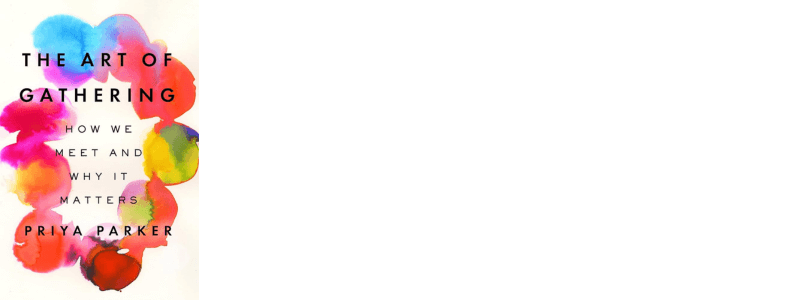
But instead of only reading it, we are trying to individually experiment with Parker’s ideas in our own gatherings. It’s been interesting to try new strategies in how we meet with others.
2. YOU DISCOVER BLIND SPOTS.
My friend showed me how to do something. It looked easy. Until I tried it myself. Sometimes you don’t know what you don’t know until you actually try it yourself.
Here’s a book that is perfect for this if you want to discover your blind spots: Seek: How Curiosity Can Transform Your Life and Change the World by Scott Shigeoka.

While reading about curiosity is one form of practicing curiosity, it’s more beneficial if you take the material outside the book to see where you can improve.
Shigeoka suggests practical tips, like acknowledge small bids for attention, take a “brave pause,” or ask yourself key questions before taking action.
While we want to learn from others’ mistakes, the strongest lessons still come when we experience our own.
3. DOING MAKES IT STICK.
We retain what we do longer than what we simply read. Books that get us out of our heads and into our bodies make knowledge stick around better.
This book did it for me: Democracy in Retrograde: How to Make Changes Big and Small in Our Country and in Our Lives by Sami Sage and Emily Amick.
Some of its practical suggestions include:
- Audit your news consumption
- Create a civic calendar
- Show up at local events
- Join a nonprofit
- Call your representatives
- Celebrate small wins
At the book’s prompting, I finally downloaded the Five Calls app for calling Congress, and now I use it to keep up with my calls to representatives instead of starting every time from scratch.
4. DOING BUILDS CONFIDENCE.
This summer when I realized I was on my phone too often, I read this book for strategies: How to Break Up with Your Phone: The 30-Day Plan to Take Back Your Life by Catherine Price.
In it, she instructs the reader to actually pull out their phone and do things like this:
- Set a digital Sabbath
- Assign a bedtime and wake-up time for your phone
- Establish no-phone zones in your home
- Unsubscribe instead of just delete unwanted emails
These are all actions I can do (well, some of the time anyway?), thus building my confidence (a little) that I can control my phone instead of my phone controlling me. This one is still a work in progress for me….
5. DOING TURNS KNOWLEDGE INTO WISDOM.
After watching the encouraging reels by James ‘Fish’ Gill on Instagram, I grabbed a copy of his book about relationships: How to Fall in Love with Humanity: 16 Life-Changing Practices for Radical Compassion. And I’m so glad I did.
His insightful advice can improve relationships—but only if they’re practiced.
Here are some examples from his book, things you may already know but good reminders to practice them:
- Share your experience, not your analysis
- Listen to understand, not just to respond
- Ask questions with curiosity, not assumption
- Witness both the yearnings and the pains of others
Learning is rarely one-and-done. It takes time and repetition to go from head-knowledge to heart-wisdom.
The Takeaway
Books aren’t only for your thinking—they’re also for your living.
The best nonfiction doesn’t just inform. It challenges you to act.
So read a book, then do it, and watch for the changes that follow.
Which book have you read recently that you could put into practice? Share your thoughts in the comments.
Read more about reading:
- 5 Ways to Get More From Reading Nonfiction Books
Don’t just read a book. Do the book. See 5 ways to get more from reading nonfiction books. - Read What Matters Most
Explore 5 inspiring nonfiction books on productivity and aging to help you use your time wisely, live intentionally, and read what matters most to you. - Can a Book Make You Do Something?
It’s easy to read and forget. But instead, what if we read and do? Can a book inspire you to do something?
Find more posts on choosing nonfiction books at Frances’s blog, Volatile Rune, for week 2 of Nonfiction November.
Great post. I like and read nonfiction fairly often. I hope to read 2 of the books you mentioned!
Interesting assortment of books. I don’t read much nonfiction and most of what I do read is for information or entertainment. Come see my week here. Happy reading!
This is a really thoughtful post, thanks for sharing your philosophy and advice.
Happy Nonfiction November
This is such simple, yet profound, advice, Lisa. Yes, let’s not just read a book but be inspired by its content to do something positive. Blessings!
I like how you give us a simple way to practice this and example on how to apply this. Great illustrations too. shows your teaching skills!! thanks
Thank you for this practical and thoughtful post. I agree. The more we interact with information, the better for learning.
My week 2 post:
https://headfullofbooks.blogspot.com/2025/11/nonfiction-november-week-two.html
Ooo, this sounds really interesting! “Doing” a book is generally a lot more beneficial for me as well, but I don’t do it as often because it’s def more time-consuming. I’m going to add The Art of Gathering to my TBR! :]
Democracy in Retrograde sounds like something I really need to read too — I feel so helpless with everything that’s going on right now. :[
great post, I might have a think about looking at some of these and trying out your ideas. I’m not a great nonfiction reader, they don’t tend to hold my attention long enough to actually finish them.
A very interesting approach to choosing nonfiction reading. Doing certainly does make knowledge stick better than simply consuming.
Very wise post! I’m adding the idea of “doing a book” to my journal today. Excellent.
I am inspired by this. It can be hard to persuade people to take action and it is a wise reading choice to find books that make us want to do more. Thank you.
Most of the nonfiction I read is informative or a memoir. Reading is an escape for me, but I like the idea of reading books that inspire me to take action! Great food for thought here.
Love the idea “doing makes it stick” when matched up with the bulleted list of action items. I think I’d get a lot out of the ‘Democracy in Retrograde’ book. It’s nice to think about being busy trying to help find solutions. Your whole list is great.
This post is awesome! I have a few books I want to reread so I can “do” them. I’m thinking about making “doing the books” a new year’s resolution.
A great and interesting post, thank you!
Great tips Lisa.
Visiting today from Farrah’s
I really like this concept of not just reading, but also doing—something I really need to look into.
So many great tips on this post!