Read What Matters Most: 5 Nonfiction Books To Use Your Time Well
{Nonfiction November Week 1}
Each November, nonfiction lovers pause to reflect on the books that have shaped us over the past year. Week 1’s theme—Celebrate Your Year of Nonfiction—invites us to look back at favorite books, topics, and what we want to explore next.
But here’s the challenge:
So many books, so little time.
Eventually we readers realize this truth—there’s not enough time left to read everything we want to.
So how do we choose wisely?
Unfortunately, there’s no magic formula.
You likely do what I do to decide what to read next:
- take recommendations from trusted reader friends with similar tastes,
- sample fresh books that break new ground,
- reread old books that stand the test of time,
- follow your personal curiosities, and
- know when to stop reading a boring book.
This year, especially relevant with my year of Ripple, I’ve been drawn to this theme: making the most of my time while I’m here—both in reading and in life.
To help with that, two topics have stood out in my nonfiction stack in 2025: productivity (time management) and presence (aging well). These books encouraged me to use my limited days (and book time) with more focus and intention while also accepting my finitude with more grace and clarity.
Five Favorite Books on Using Your Time Well
Here are my five favorite books so far this year on managing our remaining years better. I hope they inspire you, too—not just to read more books, but to spend your reading time (and all your time) on what truly matters most to you.
1. Tranquility by Tuesday
9 Ways to Calm the Chaos and Make Time for What Matters
by Laura Vanderkam
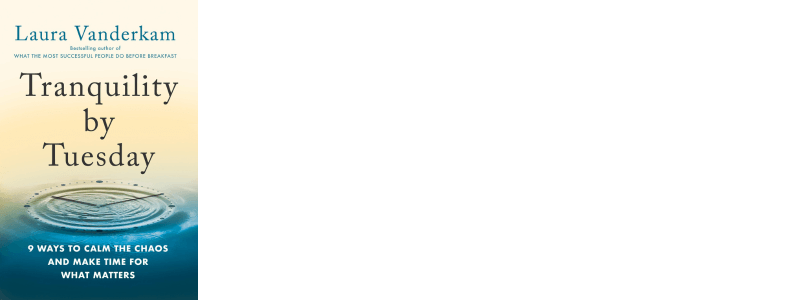
I’ve been working through Vanderkam’s nine strategies this year to give me a better perspective about time. Such as, I now have a weekly planning session with myself each Friday about my week ahead (it only takes about 10 minutes). I see what things I have to do, such as appointments, but also create slots to fit in things that I want to do, like working a jigsaw puzzle.
I hope I keep this habit going forward because it’s made such a difference—this year I’ve already put together another photo album, almost finished my end-of-life documents (Jenna will thank me later for this one!), learned new piano songs, and begun reading my and my mother’s old journals.
2. Advice for Future Corpses (And Those Who Love Them)
A Practical Perspective on Death and Dying
by Sallie Tisdale
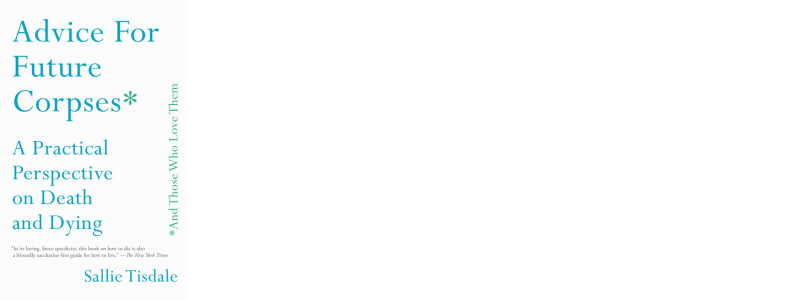
This book about death and dying is fascinating, but not in a creepy way. Tisdale’s experience as a nurse in palliative care brings a wise perspective on what to say and not to say to a dying person; how the last few weeks of life can look; what options are available for the body after death; and how to grieve your own future death.
Death is a given for each of us, so why not be better informed about it?
3. Aging as a Spiritual Practice
A Contemplative Guide to Growing Older and Wiser
by Lewis Richmond

I used the schedule in this book last December to reflect back on my year (and life) and think about my years ahead in a more intentional way. I hope to do it again this year as I reread this book.
It is full of personal reflections and practical meditations with wisdom gleaned from Buddhist philosophy. I want my aging to be an opportunity for growth instead of something to dread.
4. Meditations for Mortals
Four Weeks to Embrace Your Limitations and Make Time for What Counts
by Oliver Burkeman
Highly recommend! (And it’s NOT about meditating.) I read the short 28 chapters during the 28 days of February as an apt reminder that I’ll never get everything done—and that it’s perfectly okay.
One idea that has stuff with me is Burkeman’s 70% rule—that a 70% readiness is fine to put most things into the world, even if they feel unfinished, imperfect, or below our best. Life is too short to wait for perfection. Focus most on what matters most—even with its imperfections—in your limited time here.
5. Joyspan
The Art and Science of Thriving in Life’s Second Half
by Dr. Kerry Burnight
Joyspan is a very practical book. Dr. Burnight provides one idea after another on how to live a more joyful life, not just a longer life. While you’ll know some of these things already, it’s nice to hear how they all add up—things that help you grow, stay connected, be flexible, and give back.
Aging isn’t all downhill; there are many things that can actually improve as we age, and this book shines a light on those.
What’s a common denominator in these 5 books?
Not only is each book interesting to read, but each one prompts me to set the book down when I’m finished and go live a more interesting life.
That makes a book worth reading to me.
What helps you decide which books are worth your time? What’s a favorite nonfiction book you’ve read this year—or a topic you want to explore more?
Find more posts on Favorite books at Heather’s blog, Based on a True Story, for week 1 of Nonfiction November.
- Don’t Put It Off: 5 Questions to Ask Now to Discover Your 2026 Word
- Seasons of Change: How Weddings, Trees, Books, and Rooms Remind Us to Grow
Every one of these books you’ve mentioned here sound like winners to me, Lisa. Thanks so much and blessings!
You’re welcome, Martha. Each book provided something insightful in its own way!
Thanks for sharing your year in nonfiction and these recommendations.
Happy Nonfiction November
Thanks! I’m happy that Nonfiction November is here already, even in October. 🙂
I love your theme and topics. I’ve been exploring similar topics since I’m in my 60s. I’ll try Joyspan.
Glad to hear I’m not alone in exploring these topics even while in my 60s! Any age seems like a good age to realize that our time here is limited. Thanks, Joy.
I’d like to lead a more interesting life! I’m intrigued by the way Tranquility by Tuesday helped you organize your time better, so I think I’d pick that one up first. Sometimes I grab books when they come to my attention, sometimes I wait a while till the time feels right. Lists like these are certainly a factor in getting me interested.
You definitely lead an interesting life already by all accounts, Lory! 🙂 Tranquility by Tuesday had several tweaks that I don’t often see in books like this, so it was especially helpful to me for implementing some new ideas in the long-term, not just one-time-only things.
Aging as a Spiritual Practice sounds like a book I would enjoy.
It really was quite fascinating. I’m looking forward to rereading it soon!
Lisa, I just picked up Joyspan from the library this week, thanks to your glowing recommendation. Right now, I’m enjoying Jan Karon’s brand new My Beloved. It’s so good to sit with her and the Mitford gang again!
I’m glad you were able to find Joyspan at the library, Linda! I think you’ll resonate with a lot of her suggestions as things you are doing already. Glad you’re enjoy Jan Karon’s newest. I’m embarrassed to admit that I’ve never read any of her books, but I hear about them often as being really good.
These do sound like very worthwhile books. Thanks for their short blurbs, too.
https://headfullofbooks.blogspot.com/2025/10/nonfiction-november-week-one.html
You’re welcome. I just got the “Banned Together” Kindle sample sent to me off of your list, so thanks! 🙂
Thanks for this post! I’m on a quest to find a self-help book that actually helps. I’ll look into these.
Good luck on your quest. It’d be nice to compile a perfect self-help book that really does help. Of course it would have to be different for every person, but it would be lovely. 🙂 I find that most books have some things that help, and some things that aren’t relevant to me.
These all sound like really great books. Thanks for sharing!
You’re welcome, Linda. The hardest part about sharing favorite books is paring down the list. 🙂
Wow, that’s a bracing set of titles, Lisa!
One of the filters I use for my reading choices lately has been, “Is this something my readers need to be thinking about and that I feel qualified to write about?”
That has weeded out a lot of “unnecessary” books for me.
That’s such a reflective filter, Michele. I love that. It’s one I haven’t considered. Thanks for sharing. I can see how that would weed out a lot of books (and there are so many books to weed through!).
That’s an interesting selection. I’m going to add Advice for Future Corpses to my wishlist. As a former nurse, I’m interested in the author’s perspective. I worked with terminal patients, and was with my brother in his terminal illness. As for my criteria, I look for books related to history, biographies of interesting persons, accessible science (science for the lay person), and anything that just looks intriguing. As for what I want to pursue currently: with my therapist’s help, I have discovered, at 78, that I have ADHD and am wanting to learn as much about it as I can.
Based on your experience, I’m guessing you will appreciate Advice for Future Corpses. I also love reading about interesting people as well as accessible science in almost any genre. I recently finished a book on Traffic and found it so fascinating. I hope you find freedom in learning more about ADHD – it’s never too late to learn new things about ourselves! Thanks for stopping by and commenting, Karen.
I have not heard of any of these, Lisa! Thanks for sharing! I also mostly follow my interests. Here is my link if you are interested in popping over: https://cindysbookcorner.blogspot.com/2025/11/nonfiction-november.html
One of my favorite things about finally leaving school was that I could follow my interests in reading the books I liked. 🙂 So yay for us! Thanks for stopping by, Cindy. I just visited your blog too.
I love learning still, even though I am not in school, only now I pick what I want to learn more about 😉
Great recommendations and so true we can’t read everything in our life span. I think I will look up Aging as a Spiritual Practice, they all sound good… but you know – limits!
Yes – limits! They feel constraining but I actually need them to prevent an overload of books in my house at any given time. 🙂
Intriguing assortment of books. I really should read more nonfiction, but reading is entertainment for me. Come see my week here. Happy reading!
The beauty of reading is we can choose what we like and leave the rest behind. So bravo to you to stick with fiction if that’s what you’re enjoying the most! I do love fiction too so I have to split my time between fiction and nonfiction. ha.
What a fantastic topic and the titles of a couple of these books are really memorable. They all sound fun and helpful. “Meditations for Mortals” will have to go on my list. Thank you for the roundup!
I do love a good title. 🙂 Sometimes it alone is enough to make me pick up a book. I actually wasn’t crazy about the title “Meditation for Mortals” but the content is fantastic so I’m glad it sounds interesting to you too.
I truly believe I need all of these books! As an older person and facing a lot of personal challenges with life and death I believe you’ve chosen the perfect books to help guide someone just like me. Thank you.
I’m glad you’ve found books that are useful to you. Advice for Future Corpses does sound like a very useful read.
My view on reading is I read books which take me away from normal life, so I mainly read fiction. The non-fiction I read tends to be biographies or autobiographies, so they are just another form of story.
Popping over from Book Worms Monthly.