Is There a Hidden Ripple Right in Front of You?

“All that you touch
You Change.
All that you Change
Changes you.”
– Octavia Butler

SUNDAY AFTERNOON IN THE BIG RED CHAIR

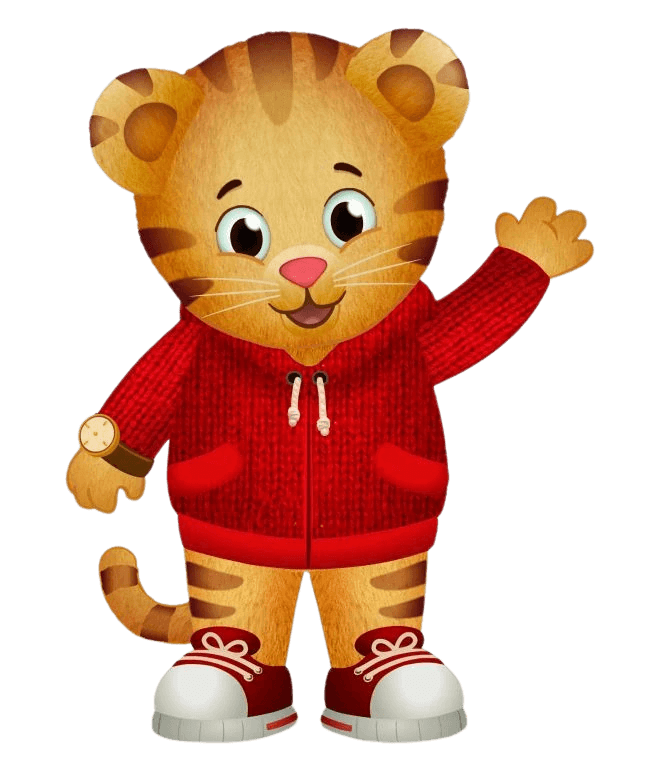
We snuggle into the big red chair, my three-year-old grandson and I, settling into the quiet joy of a lazy Sunday with nothing on my to-do list. His little arms rest beside mine as we munch on our afternoon snacks—veggie straws for him, animal crackers for me—while his current favorite show, Daniel Tiger’s Neighborhood, plays on the TV.

In this episode, Daniel is anxious about starting a new school. Through the screen, Daniel asks a question: “Do you go to school?”

My grandson nods, completely at ease. Yes, he does.

In the next scene Daniel plays with blocks and other toys in his new classroom until it’s time to clean up.

Daniel then asks another question: “Will you help me put the toys away?”

And without hesitation, my grandson gives an answer I won’t soon forget.

LOOKING BACK, LOOKING FORWARD

Lately, I’ve been tracing ripples—my One Word for the year—both those that led to me and those I hope to send forward.

As I look backward, I find ripples from my ancestors to me. I sift through old photos from my childhood, piecing together stories of the past. I turn the pages of my mother’s handwritten journal, hearing her voice in words she left behind. We clear out my late uncle’s house, discovering bits of his young adulthood we never knew.

And I look forward to ripples I want to create in my life to positively affect others. I’m working on my end-of-life plans to make things easier for my children when I die. I’ve been writing down my stories for a Storyworth book to leave for future generations. I’ve been organizing keepsakes for my Grand Box, tucking away treasures I want my grandkids to have in the future.

But has there also been a ripple unfolding right in front of me that I haven’t recognized as such? One that my grandson and Daniel Tiger are showing me?

THE RIPPLE OF NOW

It’s this moment.

Yes, it is good that I’m looking to past ripples and preparing future ripples, but a living ripple is here now. Just as my daughter and I used to watch Mr. Rogers together years ago as mother and daughter, so her child and I are now watching Daniel Tiger today as Granna and grandson.

After Daniel Tiger asks his TV audience for help, my grandson gives a quick, clear answer that I need to hear: “I’m at Granna’s house.”

(Duh, Daniel Tiger.)

That’s it. No excuses. Simple and to the point.

He can’t help there because he is here.

And here is where I am, too.

I recognize I won’t be here forever. Life continues to swirl around me and change every day, for each of us. No two hours are exactly alike.

But this day, this moment, is where the most important ripple is. And it is exactly where I want to be.
Daniel Tiger


Do you need the reminder, too, of the saying, “Be where your feet are“? Share your thoughts in the comments.


6 Books I Recommend – March 2025

“Every book makes a mark, even if it doesn’t stay in your conscious memory.”
– Katarina Janoskova

Here are 4 nonfiction books and 2 novels that I recommend from my recent reads. 

[See previously recommended books here]

NONFICTION

1. Meditations for Mortals
Four Weeks to Embrace Your Limitations and Make Time for What Counts
by Oliver Burkeman

Meditations for Mortals

Highly recommend! (And I now understand why it was highly recommended to me.) I read the short 28 chapters in Meditations for Mortals during the 28 days of February as an apt reminder that I’ll never get everything done—and that it’s perfectly okay. Burkeman (also the author of the fabulous Four Thousand Weeks) offers a freeing and practical guide to embracing imperfection and focusing on what truly matters in our limited time.

2. The Nocebo Effect
When Words Make You Sick
by Michael Bernstein

The Nocebo Effect

We all know about the Placebo Effect. But what about it’s opposite? The Nocebo Effect is the dark side of expectation—how believing that something will make us sick can actually make us sick. This is a very interesting book, but it might make you question whether you should read all those “This medicine may cause…” disclaimers in the fine print.

3. What’s Our Problem?
A Self-Help Book for Societies
by Tim Urban

What's Our Problem

I found this book very intriguing, agreeing with much of it and disagreeing with some. Tim Urban provides his own framework on why our American culture is so polarized and messy right now. He is both serious and witty in the book as he delves into politics and cultures with commentary and great illustrations. The book deserves a second reading because it did make me question some things, but it’s very long, so I probably won’t read it again.

4. Too Much and Not Enough
Sacred Thoughts Said Out Loud
by Karen Shock

Too Much and Not Enough

My in-person book club just finished this one. Written as free verse poetry, Karen Shock is very raw as she describes her journey through spiritual betrayal and healing. She offers hope to those wrestling with religious doubt and disillusionment.

FICTION

5. Here One Moment
by Liane Moriarty

Here One Moment

Highly recommend! This is such an interesting novel about fate, uncertainty, and human connection—perfect for my Ripple theme this year. The plot centers around a flight attendant and the passengers aboard a plane when a mysterious passenger starts predicting deaths. I found it riveting. (The audiobook is fantastic also! Hearing the reader helps identify which character is narrating each chapter.)

6. The Guest List
by Lucy Foley

The Guest List

This is a twisty thriller set on a remote Irish island, where a glamorous wedding takes a horrifying turn. Narrated by varying characters, this one kept me so intrigued about what would happen until the very end. I need to look into more novels by Lucy Foley. 

WHAT I’M READING NOW

  • Fluke
    Chance, Chaos, and Why Everything We Do Matters
    by Brian Klaas
  • Revenge of the Tipping Point
    Overstories, Superspreaders, and the Rise of Social Engineering
    by Malcolm Gladwell
  • Nexus
    A Brief History of Information Networks from the Stone Age to AI
    by Yuval Noah Harari
  • How to End Christian Nationalism
    by Amanda Tyler
  • You Don’t Need to Forgive
    Trauma Recovery on Your Own Terms
    by Amanda Ann Gregory, LCPC
  • Secrets of Adulthood
    Simple Truths for Our Complex Lives
    by Gretchen Rubin
  • Hope Dies Last
    Visionary People Across the World, Fighting to Find Us a Future
    by Alan Weisman

blank


What good book have you read lately? Please share in the comments.

sharing at these linkups


On the Blog – February 2025

Here are brief summaries and links to posts on the blog, Lisa notes, from February 2025.

blank

See previous months’ archives here


Share 4 Somethings – February 2025

I love how Jennifer tweaks our prompts each year for “Share 4 Somethings.” Write your own post and link up with Jennifer here for February.

The prompts for 2025 are:

  1. Some things we loved
  2. Some things we learned
  3. Some things that went well
  4. Some things we let go of

~ * ~ * ~ * ~

Something I loved

  • REPOTTING HOUSEPLANTS 

Lately I’ve been repotting my houseplants. While I don’t typically have good luck with succulents (I probably overwater them), I’m pleased at the moment with how cute these babies are doing since I gave them new pots.

blank

My next project is dividing up my Philodendron Selloum. It has outgrown both its pot and the spot where I keep it. I hope I won’t kill it when I divide it, but either way, it’s not working as it is.

 ~ * ~ * ~ * ~

Something I learned

  • DISABILITY VISIBILITY

I’ve been wanting to read this book since I kept seeing it recommended during Nonfiction November last year. I finally read it. And it made me aware of so much that I haven’t thought about for those living with disabilities. If we don’t already have some disabilities and we live long enough, we’ll all have disabilities of some sort.

Disability Visibility

My online book club with Moms Demand Action discussed the book this past Monday night, and the conversation there was enlightening too. I always get more out of a book when I get to talk about it with others.

Alabama is an especially tough state for children and adults with special needs. To make things worse, our only investigator in the U.S. Department of Education’s Office of Civil Rights—Victoria DeLano—had her position eliminated last week.

~ * ~ * ~ * ~

Something that went well

  • UNCLE’S ESTATE SALE

Last weekend we had an estate state for our dear uncle that we lost last November. It was sad to empty out his house. But going through his and my aunt’s treasured belongings to ready them for the sale was full of discoveries and delights. It was also rewarding knowing that new life will be breathed into their belongings in new families and new homes.

~ * ~ * ~ * ~

Something I let go of

  • THE PERFECT VACATION

My husband Jeff and I want to visit all the presidential libraries. We’ve made a good dent in our list so far with the libraries closest to us. But the furthest two libraries are in California (Reagan and Nixon). We’re planning a trip there this spring to tour them, plus see some national parks that we’ve always wanted to visit.

However, with California’s chaotic weather, the firing of national park workers, and the minimizing of staffing for presidential libraries, I’m wondering if this spring is the worst possible time we could visit!

But we’ve decided to go anyway. We’ll try to make the best of whatever we’re able to see and do. I realize no trip is ever perfect, but this one seems to have some extra obstacles up front. I’ll keep you posted on how it goes.


What is something you are loving, learning, has gone well, or had to let go of this month?

Share your thoughts in the comments.

I’m linking at these blog parties


3 Helpful Ways to Stay Connected to Your One Word
{One Word 2025 February Linkup}

Can you believe it’s been almost two months with your One Word? If your enthusiasm is starting to fade, now is a great time to find fresh ways to connect with your word.

Here are 3 simple ideas to try this coming month to keep your word alive in your daily life:  

1. SOMETHING TO HEAR  

Find a song with your word in the title or lyrics—maybe even write your own! Add it to a playlist, print out the lyrics, or learn to play it on an instrument.  

I’ve started a Ripple playlist on my phone to hear my word. I only have 6 songs on it so far. I started with “Ripple” by the Grateful Dead, but I’m not really a fan so I’ll probably delete that one. My favorite song so far is “The Waves We Give” by Beautiful Chorus.

“Be like water, my friend
You shall find a way around, or through it
When nothing within us stays rigid
We decide the shape we’re in”

Another favorite is “Underdog” by Alicia Keys. It never fails to move me.

“One conversation, a single moment
The things that change us, if we notice
When we look up sometimes”

2. SOMETHING TO SAY  

Look for a poem, quote, scripture, or book passage about your word. Read it aloud or record yourself reading it, then listen to it once a day for a week.  

I’ve gathered quite a few words related to Ripple. Here’s the poem I’m currently memorizing.

The Window
By Rumi

“Your body is away from me
but there is a window open
from my heart to yours.
From this window, like the moon
I keep sending news secretly.”

3. SOMETHING TO SEE  

Gather new visuals of your word and place them where you’ll notice them daily. Or challenge yourself to take a photo each day of something that reminds you of your word.  

Here are 4 of my daily photos of things reminding me of Ripple.

1. Gentle ripples on the lake behind my house

blank

2. Old leaves rippling through the grass as the wind moves them along

blank

3. I can’t remember where I found this photo, but it instantly reminded me of the word ripple—with wave after wave of executive orders issued in the U.S. over the past few weeks, each one ripples its impact through companies, communities, and families in countless ways

blank

4. The little pinwheel by my front walk ripples often when the wind blows

blank

Try these ideas yourself and see what you come up with.

The more you engage with your word through your senses, the more it will become a part of you.  

blank

Today’s linkup will remain open for two weeks from Tuesday, February 25, through Tuesday, March 11.

Our March linkup begins on Tuesday, March 25. We’ll have new challenges and a linkup on the 25th of each month throughout 2025—mark your calendars.  


How are you staying connected with your One Word for 2025? Please leave a comment here.

If you’d like to receive our monthly One Word emails and ideas, join here any time of the year.

Link Up About Your One Word!

You are invited to the Inlinkz link party!

Click here to enter


Is Forgiveness Always Necessary? When My Kindle Starts a Debate

If the books on my Kindle could talk, I imagine they’d be deep in a heated debate right now. Two of the books I’m currently reading are Forgive for Good alongside You Don’t Need to Forgive.

On one hand, Forgive for Good makes the case for peace that comes with forgiveness. Fred Luskin writes:

“The most important benefit of forgiveness is our assertion that we are not victims of the past. We cannot change the past so we must find a way to resolve painful memories. Forgiveness provides the key to acknowledge the past and move on. When we can forgive we have less to be afraid of.”

But on the other hand, Amanda Ann Gregory writes in You Don’t Need to Forgive:

“My point is that forgiveness should not be regarded as a compulsory component of any trauma-recovering process, or as a prerequisite for ‘moving forward.’ . . . Forgiveness is not required to recover from trauma, but safety is.” 

I didn’t intentionally choose to read these books at the same time. But here they are, staring at each other every time I open my Kindle each morning, challenging me to hold two viewpoints at once.

They remind me that while some truths are black and white—actions speak louder than words, love is stronger than hate, holding a grudge is harmful—other things live in gray spaces.

  • Is forgiveness one of those gray areas?
  • Does recovery come only if there is forgiveness?
  • Is there a level of harm so great that forgiveness becomes an unfair burden to demand?

Both authors agree that when possible, forgiveness can be a healthy, healing process. Their disagreement seems to be whether forgiveness is the sole path to healing. (And another complicating factor is how you define forgiveness; it’s complex.)

But this is what I love about reading books that seem to contradict each other: they force me to ask questions beyond my initial assumptions. They require me to dig a little deeper than I would on my own.

My brain isn’t always happy about the challenge. It’s easier to stick with what we already know. Don’t challenge the status quo. Stick with the familiar stories.

But more often than not, wisdom comes from considering opposing ideas instead of packaging a quick resolution into tiny, tidy boxes.

So as my Kindle quietly hosts the ongoing debate on forgiveness (and more), I’ll also keep the conversation active in my own mind. Maybe I’ll come to a new conclusion. Or maybe not.

Either way, maybe the most important thing I’m learning is there may not be a final answer to every dilemma. Rewards come through staying open to the questions.

blank


Share your thoughts in the comments.