On the Blog – August 2017


What’s Giving You Life? In the Waiting

Times-of-waiting

“What is killing you right now?”

Barbara Brown Taylor says we can usually answer that question easily. We know what makes our life harder.

So instead she asks her friends a different, more thought-provoking question: “What is saving your life now?” 

This week, Linda at LindaStoll.net is also asking the latter question.

Three of her long-time blogging friends, including me, are synchroblogging with her about what saved our lives this summer. (See all the links below.)

Here is my answer. I’d love you to hear your answers in the comments.

What’s bringing me life right now?

My oldest daughter Morgan and Fuller had been talking about babies for awhile.

And now they’re expecting their first child early in 2018.

Which, as I mentioned here, means that Jeff and I are going to have our first grandchild (it’s a girl!).

Which also means this: My life is about to change. At least that’s what you other grandparents tell me.

In the Waiting . . . The Past

I’ve been thinking about it a lot this summer during this waiting time. And praying about it.

Jeff and I have been empty-nesters since 2012 (even Kandie our Golden Retriever left last winter to go live with Jenna and Trey).

We’ve stayed out late eating doughnuts. Or we’ve gone to bed at 8:30pm if we’ve wanted to. We’ve spent time on the road for work, for pleasure.

But now a baby?

We couldn’t be more excited. But I realize it’s a time of transition. From the past, with one type of pleasure, to a future with a different kind of joy. I’ve been looking forward to and waiting for this.

In the Waiting . . The Future

God gives us times of waiting to prepare us for what’s next.

And sometimes he gives us a deadline to push us into action.

The time has come to prepare for the future. Time to clean out Morgan’s old room, to empty her closets, to prepare a fresh space for when they come to visit, no longer just the two of them, but the three of them once the baby is here. I want to make room for our little granddaughter.

So we painted the walls. Rearranged the furniture. Cleaned out from under the bed.

But this space-making for a new person isn’t just physical. We want to make not just space in our house, but space in our schedules.

And most importantly, we want to make space in our hearts.

In the Waiting . . . The Present

Jeff and I will soon visit Maine for our anniversary, a new place we’ve never been. We’ll celebrate 25 years of marriage.

But while we’re there, we also want to honor this moment.

We want to mark the now—this transition point during the waiting. We’re leaving a season of “just us” and embarking on the next season with a 3rd generation in our family.

You should see the spare bedroom now. It has less furniture, but more space. It has less grownup things, but more children’s books and stuffed animals.

You can’t see the spare places in our heart. But they’ve expanded, too. Loving the grandbaby is a now thing, not just a future thing. I’ve seen her twice on ultrasound and will see her again there soon.

Changing Seasons

Whatever season of life you are in now, know you won’t stay there forever. Your season will change, too.

And when it’s possible, God will give you a waiting period. A time to transition.

May we use our waiting periods wisely. In them we can prepare to carry out new responsibilities. And clean out space to receive new blessings.

So what’s been saving my life this summer?

Preparing for the joy of what’s next.

* * *

What has saved your life this summer? Another answer for me: I’ve begun a practice saying out loud, “All done!” at the end of every afternoon so I’ll put down my project-of-the-day. I’d love to hear your answers in the comments.

Read the other three posts from sweet, sweet friends and grace-filled bloggers in Linda’s synchroblog, “What Saved My Life This Summer.”

1. Linda

Linda-Stoll

~ * ~

2. Beth

Messy-Marriage

~ * ~

3. June

Inspired-by-June

~ * ~


4 Books I Recommend – August 2017

4-Books-I-Recommend-August-2017

Here are four books I recommend from what I read in August. Once a month we share our current reading lists at Jennifer’s.

Books I Recommend

1. Reading People
How Seeing the World through the Lens of Personality Changes Everything
by Anne Bogel

Reading-People

If you wonder about the strengths and weaknesses in the most popular personality typing systems and quizzes (Myers-Briggs, Enneagram, 5 Love Languages, etc.), this book is the perfect primer for you. Blogger, podcaster, and author Anne Bogel (also known as Modern Miss Darcy) presents a great breakdown. I thought I already knew a lot, but I learned so much more in this book.

“Truly knowing yourself is one of the hardest things you can do, but it’s also one of the most valuable. The sooner you begin, the sooner you’ll begin to see the payoff.”

My review here of Reading People

2. The Happiness Prayer
Ancient Jewish Wisdom for the Best Way to Live Today
by Evan Moffic

The-Happiness-Prayer

Such an inspiring book. Rabbi Evan Moffic shares a 2,000 year old prayer practice in 10 disciplines that can be practiced by anybody, every day. I’ll be re-reading this one and looking for more books by Moffic.

“Our presence can also symbolize God’s presence. . . .
We make God’s invisible presence visible when we are there for one another.”

My review here of The Happiness Prayer

3. The Turquoise Table
Finding Community and Connection in Your Own Front Yard
by Kristen Schell

The-Turquoise-Table-Book

Yes, it’s another book on hospitality. But this one is very laid-back, and focuses more on relationships than anything else. It might not take a whole book to make the point, but author Kristen Schell does share lots of personal stories of her own and of her friends.

“Hospitality begins in the heart, not the oven.”

My review here of The Turquoise Table

4. Small Victories
Spotting Improbable Moments of Grace
by Anne Lamott

Small-Victories

This is classic Anne Lamott. It’s a collection of stories of her life, some that make you laugh, some that make you cry, and all that make you think. She shows us that victories, however small, do come and deserve to be celebrated.

“Nothing can be delicious when you are holding your breath. For something to be delicious, you have to be present to savor it, and presence is in attention and in the flow of breath.”

Reading Now

  • The Light Between Oceans
    by M. L. Stedman
  • The Tiger’s Wife
    by Téa Obreht
  • Organizing Solutions for People with Attention Deficit Disorder
    Tips and Tools to Help You Take Charge of Your Life and Get Organized
    by Susan C. Pinsky
  • The Power of Moments
    Why Certain Experiences Have Extraordinary Impact
    by Chip and Dan Heath
  • How to Listen So People Will Talk
    Build Stronger Communication and Deeper Connections
    by Becky Harling
  • Who Thought This Was a Good Idea?
    And Other Questions You Should Have Answers to When You Work in the White House
    by Alyssa Mastromonaco

* * *

What good book have you read lately? Please share in the comments.

Whats-on-Your-Nightstand-at-_5-minut

My books on Goodreads
Previous reading lists


10 Practices of “The Happiness Prayer”

Happiness is not always pleasure. It is not always ease. It is connection.

There is a special Hebrew prayer that many of us don’t know. It’s called Eilu Devarim (pronounced ay-lu deh-var-eem), which means “These are the words.”

It was written over 2,000 years ago. But it is still perfect for today.

Ten short verses make up the prayer. Evan Moffic, a Jewish rabbi who helps people of all faiths, has rewritten the prayer for modern English readers. He then expands on each verse in his newest book, The Happiness Prayer: Ancient Jewish Wisdom for the Best Way to Live Today.

Here is Rabbi Moffic’s paraphrase of the Happiness Prayer:

How will you find happiness in this world and peace in the world to come? By learning these wisdom practices from your ancestors:

  • Honor those who gave you life
  • Be kind
  • Keep learning
  • Invite others into your life
  • Be there when others need you
  • Celebrate good times
  • Support yourself and others during times of loss
  • Pray with intention
  • Forgive
  • Look inside and commit

But more than reciting and singing this prayer, Rabbi Moffic has also lived this list of truths for years. When done with such intention, such practices sink deeply into your soul. (I’m thinking of focusing on one per month as a spiritual practice in 2018.)

Ultimately, our faith is built on such everyday choices, he says.

“[Happiness] comes, like winning in baseball, from doing certain things faithfully and consistently. These practices sustain us through the inevitable pains and downturns of life.”

Quotes from The Happiness Prayer

Here is a short quote from each of the ten practices in The Happiness Prayer.

  1. Honor those who gave you life

“Honoring the past sometimes lets us move out from under its shadow. We carry less baggage as we walk into the future. . . .

Children who know their parents’ and grandparents’ histories and stories tend to be healthier and happier than those who do not.”

  1. Be kind

“You do not lose kindness when you give it away. You get more.”

  1. Keep learning

“We study ourselves in order to change ourselves. We go outside ourselves in order to empathize with ourselves. And it works.”

  1. Invite others into your life

“Hospitality is not something that happens only at one’s house. It can take place at one’s spiritual home. . . .

Things do not bring happiness. People do. Happiness is more of a who than a what.”

  1. Be there when others need you

“Here’s what I tell myself: presence is what matters most. I once heard it said that 80 percent of life is showing up. When it comes to comforting the sick, it is 99 percent.”

  1. Celebrate good times

“Sharing in another’s celebration takes us deep into community. . . .

A wedding is about more than community. A wedding reminds us of something bigger than ourselves. It reminds us that life is fragile. And we need to embrace every opportunity to celebrate.”

  1. Support yourself and others during times of loss

“Our presence can also symbolize God’s presence. . . .
We make God’s invisible presence visible when we are there for one another.”

  1. Pray with intention

“[Prayer] is a way of opening a door for God. . . .

Prayer brings our attention to what matters most.”

  1. Forgive

“Our pasts, like our futures, are not set in stone. Their meaning changes as we change.”

  1. Look inside and commit

“Happiness actually isn’t a onetime, far-off destination. Happiness is the path, and we find it through the journey.”

The book also includes a “Happiness Quick Start Guide.” It has five questions for each of the ten chapters. You can do them individually or as a group.

Perhaps one or two of the practices resonate more with you now, but others may later. Rabbi Moffic reminds us that doing these spiritual exercises regularly will benefit us in the same ways as physical exercise does: They leave us in excellent shape, and the next time we need to spiritually sprint, we’ll be ready.

* * *

I first heard of The Happiness Prayer on the Typology Podcast with Ian Morgan Cron. Listen to the interview here with Rabbi Moffic.

Typology-Podcast-Episode-3

~ * ~ * ~

Watch Rabbi Moffic talk about The Happiness Prayer here.

Video-The-Happiness-Prayer

~ * ~ * ~

Of the ten practices, which one do you need the most?
Which one is the most difficult?
Please share in the comments.

My thanks to NetGalley for the review copy.


Keep It Secret or Let Your Light Shine?

The biggest challenge after success is shutting up about it.

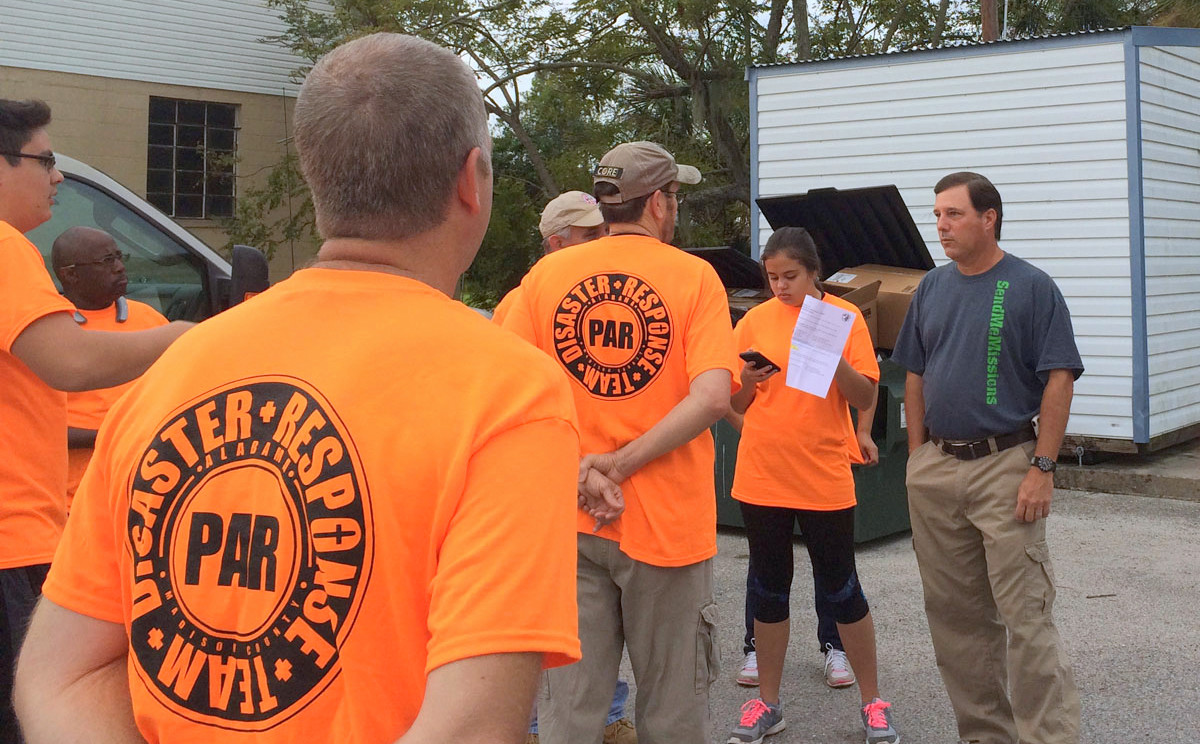
It was Serve Day. People had gathered at Manna House in their matching t-shirts to go into the community. Some would deliver food; others would paint houses; some would visit the elderly.

We began passing out name tags and markers. Wear the sticker so others can know you by name.

But one gentleman balked. He refused the sticker. He didn’t want to wear his name tag.

At first I thought it was for privacy. Maybe he didn’t want people knowing him by his name.

Then I overheard his wife ask him, “Why aren’t you wearing a name tag?

He quoted, “Do not let your left hand know what your right hand is doing.”

Oh. I recognized Jesus’s words from the Sermon on the Mount:

Beware of practicing your righteousness before other people in order to be seen by them, for then you will have no reward from your Father who is in heaven.
. . . But when you give to the needy, do not let your left hand know what your right hand is doing.”
Matthew 6:1, 3-4

Would that include not wearing a name tag into the community?

Sometimes it’s hard to know. We don’t want to do acts of service for praise or recognition. We don’t want to expect acknowledgement or a personal thanks.

Yet, on the other hand, Jesus also said,

“You are the light of the world. A city set on a hill cannot be hidden.
Nor do people light a lamp and put it under a basket, but on a stand, and it gives light to all in the house.
In the same way, let your light shine before others, so that they may see your good works and give glory to your Father who is in heaven.”
Matthew 5:14-16

So which is it?

  • Do we keep our good works secret so no one will know, or
  • Do we let others see them so God can be glorified?

Perhaps the key is our own motive. We ask ourselves why: Am I doing this to make me look good? Or instead am I doing it to make God look good?

If I had to keep my good deed a secret, would I still do it?

Our intentions matter.

Search me, O God, and know my heart! Try me and know my thoughts!
And see if there be any grievous way in me, and lead me in the way everlasting!”
Psalm 139:23-24

We can be a prideful people. Humility doesn’t come naturally. And even though God’s grace covers our cockiness, his power outweighs our pride, he wants us to be humble. Like Jesus was humble.

In The Blessing of Humility, Jerry Bridges points out that,

“Humility is the second-most frequently taught trait in the New Testament, second only to love.”

So was the man with no name tag being humble or just legalistic? Is saying your name being prideful? Or being personable?

That’s between God and him.

But because of the anonymous man, I also now see name tags as an opportunity for a heart check.

Can I take an opportunity to serve without turning it into a show of pride?

For me that day, wearing a name tag was a relationship-builder. It was a sign of friendliness and availability to other people, a way to show God’s love.

But ultimately, if God can’t get good credit, may I remain anonymous, too.

* * *

Do you like to be acknowledged for what you do? Does it matter if someone else notices or not? Please share your thoughts in the comments.

More on Humility:


Want Him to Read Your Mind? Yada, Yada, Yada

Do you wish your partner could read your mind?

Do you really want someone to know everything about you?

God knows. Does that make you uncomfortable?

Let’s look at the Hebrew word “yada” (to know) to discover why being known by God is actually a good thing, and why knowing God brings freedom, not fear.

Read it all here.

Know-God-Hebrew-Word-Yada_DoNotDepart

* * *

I’m writing today at Do Not Depart for our #OTHebrewWords series.

Will you join me thereyada, yada, yada?