
This is part 3 of 5 posts, How to Mark the Moment. It’s based on Chip Heath and Dan Heath’s book, The Power of Moments. This week we look at element 2, “Moments of Pride.”
Element 2, Moments of Pride
Why do some experiences impact us for days or weeks, while other moments go by unnoticed?
And how can we capture more positive moments so we can enjoy them longer?
Last week we looked at the first of four elements to make an experience special: elevating our moments.
This week we want to mark accomplishments, either our own or others, by creating moments of pride. (If you’re following along in The Power of Moments, this is from chapters 7-8. We’ll pick up chapters 5-6 next week.)
Goals Too Hard?
I’m thinking ahead. My daughter Morgan has entered her third trimester with our first grandbaby. I want to consider now how to create special memories with our grandchildren later.
But this grandchild will live several hours away, so how will I do it?
Why do some goals seem too hard?
- Because they are unmeasurable (like my goal to “learn Spanish”, even though DuoLingo tells me I’m 45% there—so untrue).
- Because they are so long (like memorizing a chapter of the Bible).
- Because the journey seems boring (like training for a marathon).
But in The Power of Moments, the Heath brothers show us ways that we can reach our goals by multiplying the milestones, thus giving us more moments worth celebrating.
Multiply the Milestones
They suggest this:
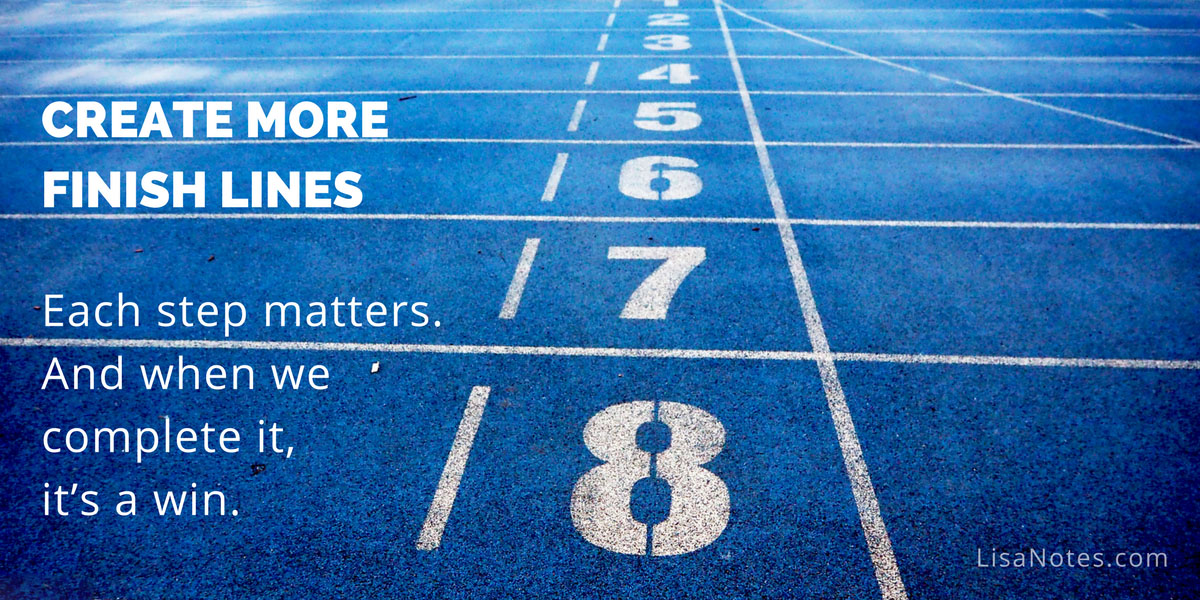
Set up many finish lines along the way, not just one grand prize at the end.
For example, a goal of “Lose weight” is too vague (even though it is measurable). Instead, set specific milestones along the way, and celebrate them when you succeed. Their examples include:
- Go one week straight without using the elevator.
- Pick out 2 microbrews to enjoy on Saturday after a full week without booze.
- If I jog continuously for three songs on my playlist, that entitles me to download three new ones.
They say you’ll know you’ve succeeded when you reach your pre-determined milestone: “Fitting into my sexy black pants (without gastrointestinal distress).”
We see these multi-step strategies at work all around us, such as earning Boy Scouts’ merit badges or finishing the Couch to 5K running program.
This is important even in our Christian walk. While we have a big goal of heaven after we die, Christ also intends for us to live an abundant life now.
By setting multiple finish lines, we can enjoy and celebrate many small wins all along our journey, instead of just trudging along for only one grand finale goal.
Celebrate Others
These moments of pride aren’t just about us, however. We can also recognize others’ moments of achievements. We do this best when we give authentic, frequent, and meaningful praise or prizes or celebrations.
Did you know that a top reason that people leave a job is a lack of praise and recognition?
Providing moments of recognition can be a turning point in someone’s life instead.
- Have you had a teacher who spoke words of life into you?
- Or a boss who applauded your work outside the yearly review?
- Or even a friend who said, “I noticed what you did for me; it made a difference.”
These moments of pride don’t necessarily happen on their own. We can create them through thoughtfulness and intentionality.
Every step matters, and when we complete it, it’s a win. Recognize it.
Jeff and I have set some specific milestones we’d like to reach for grandparenting despite the distance. They’ll likely be adjusted once the baby actually gets here.
But by designing our goals deliberately, with several benchmarks along the way, I hope we’ll create more moments of accomplishment and more opportunities to celebrate.
“We’re not stuck with just one finish line. By multiplying milestones, we transform a long, amorphous race into one with many intermediate ‘finish lines.’
As we push through each one, we experience a burst of pride as well as a jolt of energy to charge toward the next one.”
– Chip and Dan Heath
* * *
What’s a goal you have? How can you build in multiple finish lines and create more moments to remember? Please share in the comments.

The Four (EPIC) Elements of Marking the Moment:
- Intro – How to Mark the Moment
- E – Moments of Elevation
- P – Moments of Pride
- I – Moments of Insight
- C – Moments of Connection
For more on The Power of Moments, watch this 4-minute video, “Build Peaks, Don’t Fix Potholes”
