
Here are 5 books I recommend from what I read in February. Once a month we share our current reading lists at Jennifer’s.

Books I Recommend
1. Educated
A Memoir
by Tara Westover
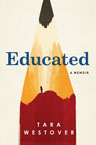
This almost unbelievable real-life story by Tara shares how she grew up in a survivalist home in Idaho with 6 brothers and sisters. Despite abuse and educational neglect, she somehow broke free and went to college, then graduate school, then received her doctorate. People really can overcome many obstacles.
2. Reading the Bible with Rabbi Jesus
How a Jewish Perspective Can Transform Your Understanding
by Lois Tverberg

How might Jesus explain the Bible to us from the culture when it was occurring? Tverberg shares many insights to get a better perspective of how early believers in God lived. Very informative.
3. The Great Evangelical Retreat
Finding Hope in Surrender (Evangelicals After the Shipwreck Book 1)
by Ed Cyzewski
Sometimes when we most need a way forward, we need to first take a step back. Cyzewski explains why Evangelicals need to surrender and refocus. Ed’s books—succinct and insightful—are always worth reading.
4. Start with Why
How Great Leaders Inspire Everyone to Take Action
by Simon Sinek
Do you know why you do what you do? We too often start with what or how. But why is perhaps the most important thing. This book helps you learn how to ask why about a broad range of areas in your life.
“This book is not designed to tell you what to do or how to do it. Its goal is not to give you a course of action. Its goal is to offer you the cause of action.”
5. Kindred
by Octavia E. Butler
This novel written in the ’70s is still important for our times. It’s about Dana, a black woman, married to Kevin, a white man, in 1976. Through no desire of their own, they find themselves mysteriously transported back to the early 1800s. They both struggle under new roles in Maryland during slavery times.
Reading Now
- The Life You Can Save
Acting Now to End World Poverty
by Peter Singer - Still Evangelical?
Ten Insiders Reconsider Political, Social, and Theological Meaning
edited by Mark Labberton - The Path Between Us
An Enneagram Journey to Healthy Relationships
by Suzanne Stabile - In Search of Wisdom
A Monk, a Philosopher, and a Psychiatrist on What Matters Most
by Matthieu Ricard, Christophe Andre, Alexandre Jollien - Why Evangelicals Need the Wilderness
(Evangelicals After the Shipwreck Book 2)
by Ed Cyzewski
* * *
What good book have you read this month? Please share in the comments.
My books on Goodreads
Previous reading lists