Why Now Is the Best Time to Be Generous
The Backpack Story That Shows the Power of Giving Now

“You cannot do a kindness too soon, for you never know how soon it will be too late.”
– Ralph Waldo Emerson

The Backpack She Couldn’t Afford

My friend and I had just been seated at a cozy Italian restaurant on a Thursday afternoon. Our waitress brought us our waters, and although she was warm and friendly, she seemed slightly distracted.

While we looked over our menus, she returned to her station, pulled out her phone, and began scrolling on it.

When she came back to take our order, she apologized for the delay—though we hadn’t noticed. She said she had been searching online for the cheapest place to buy a backpack for her daughter before school started back. The one her daughter wanted cost $80, and she was working extra shifts to pay for it.

The rest of our service remained excellent. When the waitress brought over the bill, I could see a glint shining in my friend’s eyes.

“Should I give her a $100 tip so she can buy that backpack?”

A Perspective Shift on Generosity Now

The thought reminded me of the book I just finished reading, The Happiness Experiment by Carl Barney. One premise of the book is: be generous now; don’t wait until later.

After a near-death experience on an airplane, Barney made a revolutionary decision: instead of waiting until he died to execute his will, he wanted to do it now, when it could most help those he loved. He then began giving away “pre-quests.”
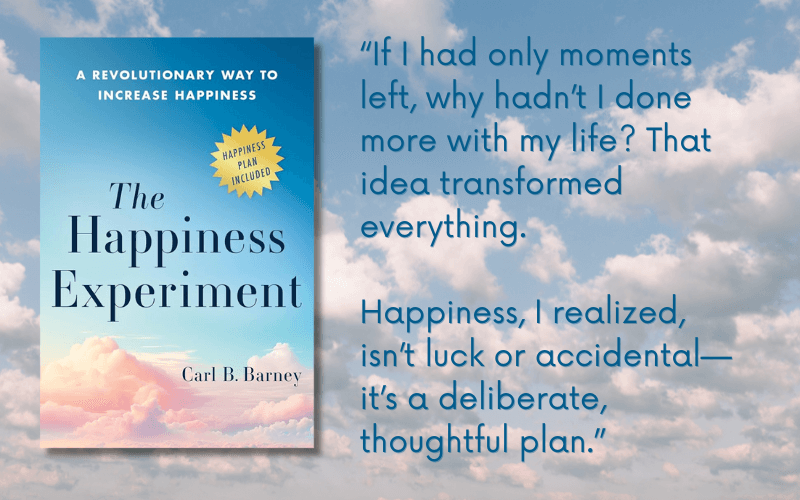
Cover of the book "The Happiness Experiment" with a quote about planning for happiness

One by one, he contacted the twenty people in his will. He told them that because they added such value to his life, he wanted to give them money now instead of waiting until his death (he said he plans to live to 120).

The monetary gifts were given with no strings attached, but they did come with support. Barney provided each recipient with a financial coach to help them use their new money in ways to increase their happiness, and had them each fill out a Happiness Planning Workbook.

“My mind flicked forward to another scene . . . pausing on the faces of the twenty special people named in my will. I had intended to recognize and express my gratitude to them after I was dead. There was no need to wait. I’m so pleased I didn’t.”

I found this idea intriguing enough to read all of Barney’s book. While I didn’t enjoy his writing style or even agree with some of his personal philosophies (I’ve since seen some negative press about him, too), I did appreciate his generous spirit.

And I want it to inspire me to give away more in the moment, too. Too often I overthink it and wait too long to decide, then the opportunity runs out. I miss it altogether.

Five Simple Ways to Give Today

However, in the real world most of us do not have big money to give away, like Barney does. But gifts come in a variety of shapes and sizes. And when given now instead of just promised for later, they can make a real difference.

How can we show generosity with things other than money? We can:

  • Show up with our time and presence
  • Offer a skill or resource
  • Share a meal together
  • Listen with undivided attention
  • Write a heartfelt note

After our lunch was over at the restaurant, my friend paid the bill, then passed a $100 bill to our waitress, encouraging her to buy that backpack for her daughter now to get her school year started off well.

The waitress’s eyes welled up with tears. She asked if she could give us a hug. As we exited the restaurant, we saw her run over to her coworkers and excitedly tell them what had happened.
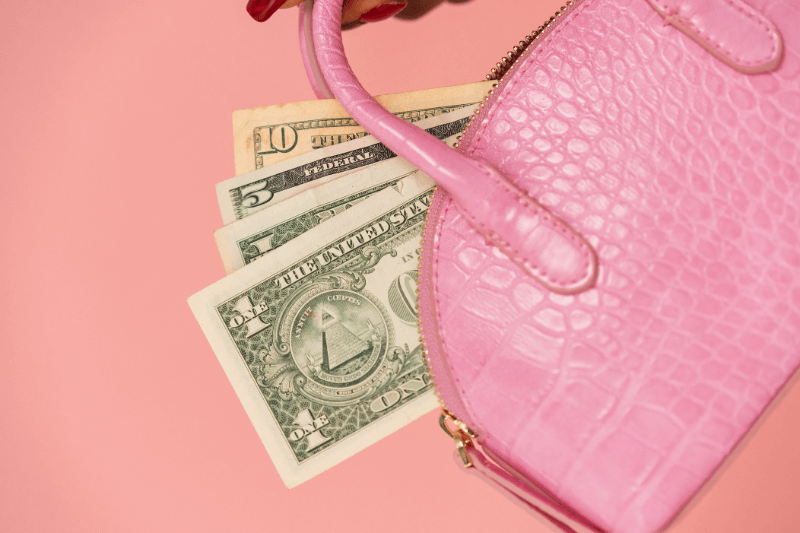
Money coming out of a purse to give to a waitress now instead of later

The spontaneous gift from my friend brought her joy.

And seeing kindness in action made me happy, too.

Because the best time to be generous is now.


Don’t wait to be generous. What’s one generous act—big or small—you could do today without waiting? When has someone given generously to you?

Tell your story in the comments.

My thanks to NetGalley for the review
copy of The Happiness Experiment

Ripple - Read more here


Before You Box Up the Past, Ask This One Question First
{Today is my 17th Blogging Anniversary!}

“To love someone long-term is to attend a thousand funerals of the people they used to be. The people they’re too exhausted to be any longer. The people they don’t recognize inside themselves anymore. The people they grew out of, the people they never ended up growing into.”
– Heidi Priebe

Sometimes the Ripples Overwhelm Me

Seventeen years ago today, on August 8, 2008, I clicked “Publish” on my very first blog post. I didn’t fully realize what I was starting, only that something inside me wanted to come out in written words.

That ripple is still moving.

I’ve changed since then—sometimes slowly, sometimes in an instant. When I go back and reread those early posts, I see I’m not the same person anymore. No one is. We let go of some things as we age, and grow into other things.

So in this year of Ripple, it feels like the right moment to finally open something else from the past, something I’ve wanted to read for a long time: my mother’s journals.

I’d already read a collection of letters Mama wrote to me to be read after she died. They moved me when I first read them. I’m moved still as I remember them now.

Envelope to "open only at my death"

Envelope full of letters from a mother to a child

But reading her journals feels different.

My older sister has kept them safe since our mother died in 2010. I borrowed them from my sister months ago—scattered pages, some numbered, most not, held together in a clear plastic bag. A few are clipped together.

Yet still I didn’t read them. Maybe it felt intrusive. Or maybe I liked the idea of still having something unread from my mom. Something left to discover.

Until now.

A clear plastic bag filled with handwritten journal pages

blank

The One Question That Changed Everything

I sit down in my chair, her papers in my hands. But before I start reading, I pause once again. I ask myself: “Should I just leave the past alone? Let the good memories be enough? Why risk discovering something I might not want to know?”

I brush off the questions.

Until a more important question surfaces that is too loud to ignore:

“What might I still learn from my mother?”

This question is enough. I give myself permission to get comfortable and start reading.

blank

“Just In Case Someone Reads This”

I leaf through the pages. Seeing my mother’s handwriting after all these years is jarring. I pull out the top sheet.

The very first sentence gives me a chill:

“Just in case someone finds and reads this, just realize that much of the time I was writing, I was under tremendous stress and may have written some things I normally wouldn’t say.”

A handwritten note just in case someone finds this

I don’t know whether to laugh or cry.

She continues:

“If it should offend anyone, it was not meant to. I just wrote what I felt at that time to release pressure.”

What am I about to uncover about my precious mom?

Her Words, Her Life—and Mine Too

The next page I pick up is an unsent letter to Mama’s father—Granddaddy, to me—on his 86th birthday. He was still alive at the time, but struggling in poor health and dementia.

In her letter, Mama pours out an apology for having to put him in a care facility once he could no longer stay at home. She writes it was the hardest day of her life.

A letter from an adult child to her father, unsent

I cry when I read about some of her other hardest days—because they are about me. The day my first husband left. The day I found out our sweet baby Kali might not make it.

I see how my pain was also her pain.

I continue reading. In another entry, she writes:

“I’m 53 and I’ve lived my whole life trying to please either my daddy or my husband. That’s why I enjoy being alone so much. I only have myself to please.”

That line touches something in me. It still resonates. Not just for her, but for all among us longing to meet other people’s expectations.

And I also laugh as I read. I hear her grumble about Granddaddy always being either too hot or too cold and still wanting his own mother (Mama Coleman was still alive then!) to keep tending to his every need.

I’m reminded that this mother I remember so admirably was also beautifully human. Her words are that of a real person living amidst uncertainties and complexity in a complicated world.

Just like me and my words in my world.

blank

Rippling Forward

Reading Mama’s words is helping me look more kindly at my own past self. Looking at the one who blogged in 2008 with ideas that don’t always fit comfortably with who I am in 2025, I see I need to give myself grace for the changes, just as I’m giving grace to Mama.

Maybe I’ll finish reading her journals by September 8, the 15th anniversary of her death. Or maybe not; I’m not rushing. I’m not sure I want to ever finish reading.

I’ll always have more to learn from my mother. Like how to be kinder, more resilient, more courageous. I want her ripples to forever touch and change my life.

Her journals also show me the value of ripples I send forward myself—things I do and stories I tell and words I write, as my mom said, “just in case someone reads this.”

To honor my rippling, this year I’ve been working on:

  • Creating photos albums for my grandchildren, pictures they can look at when they’re older to visualize where they came from
  • Publishing life stories in my Storyworth book, remembering making mud pies at Mamaw’s every Mississippi summer and surviving a category 4 hurricane on my honeymoon
  • Gathering my end-of-life paperwork—hopefully not to be needed soon, but because loving my children in the future also means getting my things in order now

Finding Not Just Mama, But Me

Just as I’ve changed from who I was, I will continue to change into who I’ll be. Just like my mother did. And just like my own children and grandchildren will—all of us fully human, complete in our fragility and also in our strength.

“But it is not our job to hold anyone accountable to the people they used to be. It is our job to travel with them between each version and to honor what emerges along the way.”
– Heidi Priebe

In the meantime, before my mother’s journals get boxed back up again, I’ll keep showing up for her truths on the loose-leaf pages in her blue and black scribbles.

I don’t know what else I’ll find on these pages. But I do know who I’ll find. My mama.

And I’ll also find me.

Because of who she was, I am who I am. It’s how life ripples on, one generation through another.

Coming and going. Yet always still here.

Forever.


Is there someone in your past who still teaches you new lessons? Share in the comments.

Ripple - Read more here

Read More:


8 Books Worth My Time—and 1 That Wasn’t
August 2025 Book Recommendations

“A writer only begins a book. A reader finishes it.”
– Samuel Johnson

Here are 6 nonfiction books and 2 novels that I recommend from my recent reads, plus 1 novel that I DON’T recommend. 

[See previously recommended books here]

NONFICTION

1. The Myth of Closure
Ambiguous Loss in a Time of Pandemic and Change

by Pauline Boss

The Myth of Closure: Ambiguous Loss in a Time of Pandemic and Change by Pauline Boss

I love learning about this topic, as I live with ambiguous loss myself, as do many of us. Not every (any?) loss we experience is cleanly resolved. We don’t always get closure like we think we must have. So can we grieve and heal when closure is impossible? Pauline Boss says yes. She says it’s a myth that we must have closure. She offers strategies to live with ambiguity and develop resilience even when we don’t get answers.

2. Algospeak
How Social Media Is Transforming the Future of Language
by Adam Aleksic

Algospeak: How Social Media Is Transforming the Future of Language by Adam Aleksic

I am fascinated by this book. Linguist and social media influencer Aleksic shows how powerful the algorithm really is. And how it is reshaping how we communicate with each other. If you’re a word nerd like me (and even if you’re not), you might find this book enlightening and entertaining, too.

[Read my full review here: What the Algorithm Did to Our Words—and Why It Matters]

3. Big Feelings
How to Be Okay When Things Are Not Okay
by Liz Fosslien and Mollie West Duffy

Big Feelings: How to Be Okay When Things Are Not Okay by Liz Fosslien and Mollie West Duffy

I’m in three active book clubs right now, which is marvelous! My weekly in-person group just finished this one—a personal and educational guide to navigating hard emotions like burnout, envy, and anxiety. The authors share a lot of research as well as many stories from their own lives. We had lots of great conversations about each chapter. 

And the illustrations are fantastic. You can see a lot of the simple yet very helpful cartoon drawings, like this one, at their Instagram account here, @LizandMollie.

Instagram post graphic from Liz and Mollie about a really hard thing

4. The Sports Gene *
Inside the Science of Extraordinary Athletic Performance
by David Epstein 

The Sports Gene: Inside the Science of Extraordinary Athletic Performance by David Epstein

This book is more than 10 years old, but it still feels incredibly relevant—no wonder Daniel Pink included it on his list of 21 favorite reads*. (I’m marking off two books from the list this month!). Epstein writes in this book about the nature vs. nurture debate around athletic success, which is complicated, as you might guess. He challenges some assumptions I had about talent, training, and the infamous 10,000-hour rule.

5. Choose Your Self
How to Embrace Being Single, Heal Core Wounds, and Build a Life You Love
by Megan Sherer

Choose Your Self: How to Embrace Being Single, Heal Core Wounds, and Build a Life You Love by Megan Sherer

Ignore the subtitle—I love being married! But I still find a lot of wisdom in this book, which I read with my monthly online book club. It gives lots of practical advice on real self-care—less about candles, more about healing patterns, regulating your nervous system, and building a strong relationship with yourself. It made a great book club book. 

6. Thinking in Bets *
Making Smarter Decisions When You Don’t Have All the Facts
by Annie Duke

Thinking in Bets: Making Smarter Decisions When You Don’t Have All the Facts by Annie Duke

This is another pick from Daniel Pink’s favorites list*—and also a Nonfiction November recommendation. I’m really glad I followed up on it. It’s by poker pro turned decision strategist Annie Duke. But it’s not about playing poker. It’s about getting more comfortable with uncertainty in life and making smarter choices. Duke does use examples from poker, but the real-life applications involve learning to better assess risk and probability about what you do know and don’t know. Very interesting!

FICTION

7. Dream State: A Novel
by Eric Puchner

Dream State

This novel begins as young adult Cece arrives at her future in-laws’ Montana lake house to plan her wedding to Charlie—but things get complicated when Garrett, Charlie’s best friend, shows up to officiate. The plot kept me reading more to know what would happen next. Even though this book is a little long at 448 pages, and the scary climate change thread hit a little too close to home, it is worth the time I spent reading it! 

8. Adrift
by Lisa Brideau

Adrift by Lisa Brideau

This book has an even larger climate storyline. In this one, Sarah wakes up alone in a boat with no memory of who she is. It’s set in 2038 when the world has deteriorated physically and culturally due to weather. It took me a few chapters to get fully invested in the plot, but once I did, I had to know why and what was going on. Part survival story and part mystery, I highly recommend it.

I DON’T RECOMMEND

I don’t usually post about books I DON’T recommend—but I’m making an exception for this one. Can someone can help me understand what I missed? Was the 1971 movie any better (I haven’t seen it)?

A Clockwork Orange
by Anthony Burgess

A Clockwork Orange

I read A Clockwork Orange for the monthly book club at my local bookstore. First published in 1962, it’s considered a dystopian classic, but the violence was disturbing and I really disliked the main character. I could barely get through the invented teenage slang—it made the book exhausting to read. I found nothing redeeming in it.

However, I did enjoy the discussion we had about it yesterday at the meeting. Some people actually found important philosophical thoughts in it. But most of us agreed that we didn’t like it (and everybody that had seen the movie recommended NOT watching it). 

I guess even so-called “brilliant” books aren’t for everyone, right? And that’s okay.

WHAT I’M READING NOW

  • Biased *
    Uncovering the Hidden Prejudice That Shapes What We See, Think, and Do
    by Jennifer L. Eberhardt
  • The Art of Gathering *
    How We Meet and Why It Matters
    by Priya Parker
  • Praying with Jane Eyre
    Reflections on Reading as a Sacred Practice
    by Vanessa Zoltan
  • The Notebook
    A History of Thinking on Paper
    by Roland Allen
  • Rise Above
    Overcome a Victim Mindset, Empower Yourself, and Realize Your Full Potential
    by Scott Barry Kaufman
  • Joyspan
    The Art and Science of Thriving in Life’s Second Half
    by Kerry Burnight

A list of 8 books that I recommend for reading and one book that I don't


* Asterisked books are ones I’m reading from Daniel Pink’s Favorite Books list; you can find it here.

What good book have you read lately? Please share in the comments.

sharing at these linkups


On the Blog – July 2025

Here are brief summaries and links to posts on the blog, Lisa notes, from July 2025.

blank

See previous months’ archives here


Snapshots, Snakes, and Sheet Music: A July Life Update
Share 4 Somethings - July 2025

Each month I share 4 somethings that I have:

  1. Loved
  2. Learned
  3. Went well
  4. Let go of

And then I link up with Jenn.

~ * ~ * ~ * ~

Something I loved

  • Photo Album Joy, Take Two 

I still love having hard copy photos in actual photo albums—the old-school, page-turning kind. There’s just something about holding a memory in your hands that feels more solid to me than tapping through a phone gallery.

So I’ve been slooooowly selecting and printing photos from the past ten years. I was excited to finish sorting my 2019 photos a couple weeks ago. I placed a large order with Snapfish for printing.

And then . . . I was disappointed when they arrived. The prints were too dark. However, Snapfish customer service was amazing! They let me tweak the photos on my end, then have the whole batch reprinted for free—including shipping.

A box of printed photos and a photo album ready to be filled with family memories

After one more week of mini edits, I submitted the do-over order last Sunday. I got an email yesterday that the photos have been reprinted and have shipped. I’m looking forward to receiving them, adding dates to the backs, and putting them in my album. Onward to 2020 photos next!

 ~ * ~ * ~ * ~

Something I learned

  • Playing It by Ear (Literally)

After a lifetime of playing piano with trusty sheet music, I decided this year to learn to play by ear, something I’ve always been in awe of, but felt was out of my reach.

Is this even possible for me?

According to YouTube, it is possible. I’ve been working through a few videos with my keyboard and it’s actually working!

Don’t expect me to perform this feat for anybody else’s ears though (unless you count my husband Jeff overhearing me), but it’s been so fun for my private entertainment. I’ve loved picking out favorite songs and finally understanding how to layer in chords.

And because I won’t give up my beloved sheet music altogether, I downloaded a piece I’ve fallen in love with—I Giorni (‘The Days’) by Ludovico Einaudi. Playing it feels so good to my soul.

Listen to I Giorni here for a soothing meditation.

A piano with sheet music of I Giorni in a warmly lit room

~ * ~ * ~ * ~

Something that went well

  • Walls So Fresh, I’m Afraid to Touch Them

After 20+ years in our house, we finally had the interior repainted.

Prepping was more intense than I expected (I still can’t find all the things I stashed away).

Home being prepped to paint kitchen walls

And now I’m currently living in fear of touching the walls. They’re just so clean. Like having a new car, I need to get that first ding out of the way so I can stop obsessing.

Next month: new flooring. Then hopefully we’ll be done for this round of major home updates. Maybe for another two decades?

~ * ~ * ~ * ~

Something I let go of

  • Coexisting, Snake Edition

I’m trying to let go of the false illusion that I don’t live in close quarters with all manner of wildlife. (Although I’ll still say it’s a myth that you’re always within 4 feet of a spider.)

When I spotted a very long snake sunning outside my back door, my old instincts kicked in to GET THE HOE. But my newer, more accommodating self said, “That’s a good snake.”

A harmless rat snake moving through green grass near a patio

So I let it be. And watched as it slithered on its way through the backyard, hopefully not to return!

Same goes for the geese in my yard. Yes, they poop on the driveway, but lately I’ve stopped shooing them off (it does no good anyway).

And for the first time ever, I even let a spider live inside my house. I won’t make it a habit—it was a one-time-only offer—I just wasn’t ready to get a squish mark on my freshly painted walls. A spider’s lucky day!


What is something you are loving, learning, has gone well, or had to let go of this month?

Share your thoughts in the comments.

I’m linking at these blog parties


How Is Your One Word Growing, Moving, and Speaking to You?
{One Word 2025 July Linkup}

The July One Word linkup is here! Scroll down to link a blog post about your word or to share a comment about it.

Whether your word has been close at hand or quietly lingering in the background, this month we’re offering a new way to interact with it: through your senses.

It’s our annual One Word Sensory Challenge—but this year, we’re expanding how you experience your word.

Below you’ll find three creative ways to explore your word’s presence in your life right now. Choose one or try all three!

1. PLANT IT

What would your word look like if it were growing from the ground?

A person planting a tree in sunlight representing natural growth and quiet strength.

Think about:

  • A bright sunflower or a quiet patch of moss?
  • Something with deep roots or quick blooms?
  • Drought-resistant or delicate and seasonal?

To do:

  • Take a walk and observe plants that feel like your word. Snap a photo.
  • Draw or doodle your word as a plant.
  • Repot a plant or plant something new to symbolize how your word is growing this year.

If my word Ripple were a plant:

Indoors, it’s like my dwarf snake plant—grounded with a clear center, each leaf rippling outward. Outdoors, I see ripple in my lantana: tiny blooms in fractal patterns. They grow outward like waves.

I see Ripple as having deep roots because some ripples can go on and on.

2. HEAR IT DIFFERENTLY

Words have texture and tone. What does your One Word sound like?

A variety of musical instruments evoking sound and sensory reflection.

Think about:

  • A steady heartbeat or a bubbling creek?
  • Silence or song?
  • What musical instrument would your word be?

To do:

  • Search for a sound online or in nature that reminds you of your word.
  • Record yourself saying your word aloud—try whispering, singing, or stretching it out.
  • Try “sound journaling”: sit still, listen, and write down any surrounding sounds that resonate with your word.

What does Ripple sound like to me?

Something soft and steady—like water that laps quietly onto shore. Nothing too loud or flashy; just consistent and calm. Maybe like a wind chime. Or the vibrating sounds that a singing bowl makes when it’s rubbed around its rim.

3. MOVE IT

How does your word move through the world—or through you?

Ballet dancer moving gracefully on pointe shoes symbolizing mindful movement and journey

Think about:

  • Is it still or fast-moving?
  • Are its movements graceful, clunky, smooth, or wild?
  • Does it flow like a river, leap like a dancer, or roll gently like a wave?

To do:

  • Take a walk and let your word determine your pace.
  • Dance or move to music that fits your word’s mood.
  • Trace your word in the air with your body—big or small.

How does Ripple move?

Ripples flow out in widening circles—smooth, quiet, and persistent. Their speed is determined by factors outside of their control, but they can travel far if if they’re not interrupted. 

Share Your Word With Us

The linkup is open now through midnight on Friday, August 8.
Add your blog post below.
Not a blogger? Share your update in the One Word Facebook group.

Let’s keep exploring the many layers of our words together.

Our next linkup opens Monday, August 25. Until then, stay curious about your word—and stay connected.

Explore your One Word through movement, sound, and growth using our Sensory Challenge prompts


Which of your senses most connects you with your One Word right now?

Share your thoughts here.

If you’d like to receive our monthly One Word emails and ideas, join here any time of the year.

Link Up About Your One Word

You are invited to the Inlinkz link party!

Click here to enter