9 Quotes from The Universal Christ by Richard Rohr

I’m continuing to learn from the book without opening it again (yet). It took me 4 months to get through it the first time. I finished it in April.

Since then, I’ve been listening to the podcasts centered on Richard Rohr’s book, The Universal Christ: How a Forgotten Reality Can Change Everything We See, Hope For and Believe.

Universal Christ Richard Rohr

It’s deep.

As with the book, I know I’m not catching everything in the podcast. But as I skirt around the fringes of the message, I hope I am getting closer to the center with each passing.

And eventually, I hope to reread The Universal Christ and understand even more about the message of hope and beauty and the oneness of Christ.

For now, I’ve been rereading through the quotes I marked in the book. Here are nine quotes from the first few chapters.

“The essential function of religion is to radically connect us with everything. (Re-ligio = to re-ligament or reconnect.) It is to help us see the world and ourselves in wholeness, and not just in parts.”

~ * ~

“Contemplation is waiting patiently for the gaps to be filled in, and it does not insist on quick closure or easy answers.”

~ * ~

“Remember, light is not so much what you directly see as that by which you see everything else. This is why in John’s Gospel, Jesus Christ makes the almost boastful statement ‘I am the Light of the world’ (John 8:12).”

~ * ~

“Many are still praying and waiting for something that has already been given to us three times: first in creation; second in Jesus; and third, in the ongoing beloved community (what Christians call the Body of Christ), which is slowly evolving throughout all of human history (Romans 8:18ff.). We are still in the Flow.”

~ * ~

“Seeing and recognizing are not the same thing.”

~ * ~

“We have faith in Christ so we can have the faith of Christ.”

~ * ~

“You are a child of God, and always will be, even when you don’t believe it.”

~ * ~

“In God you do not include less and less; you always see and love more and more.”

~ * ~

“We must—yes, must—make a daily and even hourly choice to focus on the good, the true, and the beautiful.”

* * *

Listen to the podcasts here on The Universal Christ (Another Name for Every Thing) with Richard Rohr.

Do you have a favorite Richard Rohr book? Is there a book you have read that you need to reread to fully understand it? Please share in the comments.


5 Books I Recommend – September 2019

“Think before you speak. Read before you think.”
– Fran Lebowitz

Every month I share the best of the books I just finished. Here are books I recommend from September’s readings.

5 Books I Recommend

Books I Recommend

1. The Nickel Boys
by Colson Whitehead

The Nickel Boys

“Most of those who know the story of the rings in the trees are dead by now. The iron is still there. Rusty. Deep in the heartwood. Testifying to anyone who cares to listen.”

We do care to listen. Colson Whitehead tells a riveting story about a young African-American man who gets sent to a reform school in Florida. The saddest part is that it’s based on a real school. Excellent novel.

[click here if you can’t see 1-Minute Book Review]

2. Range
Why Generalists Triumph in a Specialized World
by David Epstein

Range

Such an interesting book! The paths we think lead to success aren’t always successful. For example, Epstein says,

  • Rarely does a “head start” end successfully, if narrowly focused.
  • It’s better to diversify than be too narrowly specialized.
  • Slow and hard learning may last longer than quick, guided learning.
  • Know when to give up; don’t have too much grit.

This book kept my attention from beginning to end.

3. The Death of Politics
How to Heal Our Frayed Republic After Trump
by Peter Wehner

Death of Politics

This is a book to make you think. You may or may not agree with all of it, but you won’t come away unconvicted. It steps on my toes in places, and encourages me in other places to love more deeply instead of giving up in resignation.

“Our politics is deeply divided because we the people are deeply divided.

“White evangelicals got a seat at the table of power, something that in his life Jesus never did. But this ascent to power has come at a devastating cost to evangelicalism’s moral integrity and credibility, damage that might take generations to heal, if it ever does. To put the case bluntly, evangelicals and others were correct to say that religion should inform politics—but they let down their guard against politics corrupting religion.”

4. Happy Money
The Science of Smarter Spending
by Elizabeth Dunn and Michael Norton

Happy Money

Another fascinating book. Would you rather buy a material possession or an experience? Depending on the situation, the authors in this book suggest you’d be happier in the long run if you invest in the experience. Here are five ways to spend your money that their studies show might make you happier.

  1. Buy experiences.
  2. Make it a treat.
  3. Buy time.
  4. Pay now, consume later.
  5. Invest in others.

5. The Death of Mrs. Westaway
by Ruth Ware

Death of Mrs Westaway

This mystery novel by Ruth Ware is about Hal, a poor woman in England, who receives a mysterious letter saying she’d inherited money from her recently-deceased grandmother. But Hal knows she’s the wrong recipient. The plot moves quickly as Hal meets the family anyway and uncovers secrets that had been hidden for years.


READING NOW

  • Gospel Allegiance
    What Faith in Jesus Misses for Salvation in Christ
    by Matthew W. Bates
  • Something Needs to Change
    A Call to Make Your Life Count in a World of Urgent Need
    by David Platt
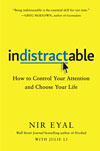
  • Indistractable
    How to Control Your Attention and Choose Your Life
    by Nir Eyal
  • Reborn Again
    Crucifying Christendom & Resurrecting a Radical
    by Christopher Vanhall
  • The Lying Game
    by Ruth Ware
  • A Thousand Lives
    The Untold Story of Hope, Deception, and Survival at Jonestown
    by Julia Scheeres

* * *

What good book are you reading this month? Please share in the comments.

My books on Goodreads
More books I recommend

sharing with Modern Mrs Darcy


Can You Change My Mind? Can I Change Yours?

Can you change my mind Lisanotes

Is This Reasonable?

I knew we’d disagree. My friend’s position was clear. I understood because I used to believe it myself.

But I had changed. I saw no indication that she had. So, what now?

We’re usually told to keep listening and keep talking it out when we disagree. And sometimes that works. Sometimes it changes someone’s mind when they hear a new bit of evidence. Or when they hear a backstory they’d previously missed.

But frankly, often new information does NOT change anyone’s mind. We find ways to get around it, we dig in to our original position, insisting (at least in our heads) that our opinions and beliefs are right; theirs are wrong.

It’s not rational. But it’s reality.

Words Work Differently

This book’s title caught my eye: Stop Being Reasonable: How We Really Change Our Minds. I heard the author, Eleanor Gordon-Smith, interviewed on a podcast episode of This American Life, in a segment called “Hollaback Girl.

Gordon-Smith was sharing her conversations with men in Australia who catcalled women. Despite showing statistics to the men that most women hated having sexual innuendos shouted at them from the street, and that it was an ineffective strategy for picking up women, most men continued to believe that women really loved the public remarks from strangers about their bodies.

After trying in vain to convince them otherwise, this finally dawned on Gordon-Smith:

“I finally understood what had happened. Words do not work in the same way for everyone. And when words are the currency of rational debate, rational debate does not work the same way for everyone, either.”

In this era of division in America, we think we can change people’s minds with the right words. With the right piece of evidence. If we just present the right link to the right article on our Facebook page, all our opponents will see the light.

But it rarely happens that way.

Gordon-Smith doesn’t present antidotes in her book like I wanted her to. Probably because there aren’t any magic answers. Barring a God-miracle, there aren’t any guaranteed, sure-fire methods to change minds, either our own or others. We each base our opinions on our individual mix of emotion and memory and interpretations.

“Anyone who says they have a persuasive strategy that will change a person’s mind without first knowing their circumstances or the genealogy of their beliefs is either lying or grievously mistaken.”

But Gordon-Smith does offer in her book six interesting case studies, some stories which show people do change their minds (a cult follower), and some in which they don’t (the catcallers).

In each case, what is “reasonable” ends up as a matter of perspective.

And that is our starting point.

Can we ever change each other’s minds? Maybe.

But don’t depend on it. 

Love in Disagreement

I continued listening to my friend talk about her belief.

Then I threw in what I thought were cold, hard facts.

Surely this indisputable evidence would sway her.

Of course, it didn’t move her. I finally stopped trying. I adjusted to the fact that I wasn’t going to change her mind. And she wasn’t going to change mine.

We’d have to leave it at that. For now anyway.

Maybe in time—with more experiences, more reflection, maybe even more facts—we could come closer to agreeing again. It is possible to change our minds; we all have done it. We’ve all thought we were right about something, only to realize later we were wrong.

But for today, our friendship wouldn’t rest on consensus, but on trust.

  • Trust that we’re both more than our opinions
  • Trust that the issue isn’t life-or-death
  • Trust that we still love each other, even when we disagree

Maybe those things aren’t reasonable either.

But it’s what we’ve got.

And that is enough.

* * *

What is most likely to change your mind? When is the last time you changed your mind about something important? Please share your thoughts in the comments.

My thanks to Net Galley
for the review copy of this book


How Do You Settle Your Monkey Mind?

How to Calm Your Monkey Mind

Fidgety Mind

Jeff heard me whimpering. It was 3:30 a.m. My body was in bed beside him, but my mind was a universe away.

He nudged me awake.

In my dream, I’d been yelling for help, help, help. Two bad guys in green uniforms had my arms pinned and a third was coming directly at me.

Even though now awake, the dream left me fidgety. My mind swung from one anxious thought to another.

…Did I put the ham back in the refrigerator?…How many days until we go to Julie’s?…Should I look at the clock again?…Did I tell Jeff about the funny bumper sticker I saw yesterday?…How many pages are left in my library book due Wednesday?…Am I prepared if the new grandbaby comes early?…Will I ever get back to sleep?…

My monkey mind was still yelling, “Help, help, help!”

Mind Your Thoughts

It’s been said we have around 50,000 separate thoughts each day. How are we supposed to wrangle these thoughts into meaning, into purpose, into peace?

A popular answer these days (but not a new answer) is meditation. Mindfulness is all the rage. It’s especially needful in this age of distraction.

I agree. [See “Is Christian Meditation Okay?“] I’ve already been practicing centering prayer for several years.

But meditate on what? Just anything? A single word? Nothingness?

Maybe. Sometimes each of those is needed. Each has a purpose it can serve.

But for me, the most calming cure for monkey mind is having a solid go-to passage to think about. To pray. To recite. To believe.

  • I want it to be true.
  • I want it to be good.
  • I want it to be God.

That’s one reason I keep returning to scripture memory as a primary spiritual discipline. I memorize verses that are engaging enough to focus me, but not so hard to frustrate me.

In the middle of the night, familiar favorites pop up the quickest.

But in the day, when my mind needs stronger weapons, I call on newer passages I’m learning.

Psalm 1 Memory Challenge

I’m starting again on Psalm 1.

I learned it years ago, but I want to relearn it again for who I am now, for where God has brought me now.

No, the words haven’t change since I first learned it. The truths haven’t changed.

But I have changed.

As we grow older and are exposed to life, our faith grows and matures, too. How I understood “for the Lord knows the way of the righteous” (Psalm 1:6) as a child is different from how I understand it today. Today it has more depth, more nuance, more life experiences underneath it.

Psalm 1:2 reminds me that meditating on God’s truth can be delightful. His love makes me stand firm like a a tree by water’s edge. It blesses me and helps me bear fruit.

Scripture memory isn’t magic. But it is powerful. The more I focus my mind on God’s beauty and his goodness, the more I know he loves me. And the more I love him in return, and am more capable of loving others.

It’s a lot to ask from my mind, to stop swinging from limb to limb, to rest quietly for a few minutes on one thought. That’s why we call it a discipline. But the rewards are worth it.

You might even say delightful.

“But his delight is in the law of the LORD, and on his law he meditates day and night.”
Psalm 1:2

* * *

What helps you calm your monkey mind? Please share in the comments.

Get LOTS of resources on scripture memory at Do Not Depart:


Put Your Shoes On – Be Ready to Bring Peace

You have a word from the Lord: Peace. You’re meant to carry this message of hope to others.

Are your shoes on?

Are Your Shoes On? Carry Peace

Are You a Shoe Girl?

First, she looks for her own shoes. She brings them to me to help her put them on. Then, she looks for my shoes.

I know what that means. She’s preparing to go somewhere. And wants me to go with her.

My granddaughter is not even two yet, but I already know she’s a shoe girl. Glittery shoes. Rain boots. Sandals. It doesn’t matter. She knows they are her ticket to go, go, go. And she wants me to be ready to go, too.

Others need us to be ready to go, too. The world needs something we have.

Are we ready to give it?

How can you give peace to those around you today?

READ THE REST HERE

* * *

We’re looking at each piece of the armor of God in our September series at Do Not Depart.

Will you join me there to talk about peace?


I Hope He Doesn’t Offend Y’all

Weed out offense, plant in holy ground

Do We Understand?

The only working elevator opened. Kay and I stepped inside with our cart of boxed dinners. Cindy needed to go down so she got inside the elevator, too.

And said this to us, “I hope he doesn’t offend y’all.”

She was talking about her dad.

Kay and I had just spent time with Mr. M, like we do every Wednesday afternoon. He’s elderly and wheelchair-bound. We talk about the weather, about what’s on the news, about our latest trips. It’s really just a few minutes. We give Mr. M his meal, then we move on to the next door.

But Cindy wanted us to understand more.

She is already in her dad’s apartment most of the afternoons when we come. Arriving after work, Cindy is quietly busy in his kitchen, organizing, cleaning, cooking. Smiling.

She continues in the elevator:

“Dad is really a good man. He’s just lonely. He’s by himself a lot. I try to come every day but I work 10-hour days and it’s hard.”

She’s seen how her dad jokes with us about keeping his suitcase packed, ready to travel with us our next trip. How he asks for hugs. How he wants us to come in and talk as long as we’re willing.

And honestly? Sometimes he is a hard visit.

Mr. M can barely hear us so we have to yell. We grimace at each other through his bear hugs. And he can slow us down when we think we need to hurry.

People Are Offensive

Some people truly are offensive. They cause pain and shame and spread ugliness. We aren’t to overlook it. Issues need to be addressed and problems need to be solved. And sometimes we have to walk away.

Other people simply expect too much from us. They don’t hear us. Their humor or personality or politics is different than ours.

Mr. M sometimes gets our stories mixed up. He asked me Wednesday, “How’s your mother doing?” even though I’ve told him several times that she died in 2010. It’s not my mom but the chronic pain of Kay’s mom that we’ve talked about with Mr. M.

Then he asked Kay about her vacation the previous week, even though I was the one out of town, and she was the one here who delivered his meal.

Yet here’s what we’re learning. Mr. M may talk too loudly and hug too tightly and confuse who is who.

But Mr. M is NOT offensive.

He is more than we see.

He is someone’s dad. He was once someone’s husband. He was an employee and a boss (he tells us he was a detective for years in our town). He’s now a friend to the neighbors on his floor.

  • He is all the things he once was.
  • He is all the things he is now.
  • He is all the things he will be when he leaves earth.

He is another of God’s children, here in our path today, that we are to love and be loved by.

And as time goes by, that task is getting easier and easier.

When we weed out offense, we plant in holy ground.

And grace grows there.

Love Covers the Difference

The past few weeks, Mr. M has started something new with us. The long afternoons of August were extremely hot. Our sweat proved it.

Instead of waiting for us on the 6th floor of his apartment building, he wheeled down in his wheelchair to our car as we unloaded the dinners on the cart. He held two cold water bottles in his hand. One for me and one for Kay. He didn’t want us to overheat. We accepted his gift.

And the next week, he met us in the lobby, again with bottles of water. He puts them in his refrigerator early in the day so they’ll be cold when we arrive. He gave us two again last week.

As we were trying to love him, he was trying to love us, too.

And God let both happen.

I still may notice the crumbs on Mr. M’s shirt. But what I see underneath is a heart that loves enthusiastically.

If God can call me beloved and beautiful, not offended by my selfishness and hard-heartedness and brokenness, then can’t I do likewise?

  • Take the water.
  • Give the hug.
  • Speak a little louder.

To his daughter Cindy, know this: we understand. We see—through you—that your dad was once a good man. And we agree with you: he is still a good man.

No, your dad doesn’t offend us. He loves us. We love him.

This is what matters.

“Most of all, love each other as if your life depended on it. Love makes up for practically anything.”
1 Peter 4:8 (The Message)

* * *

Who have you grown to love more as the years go by? Please share in the comments.