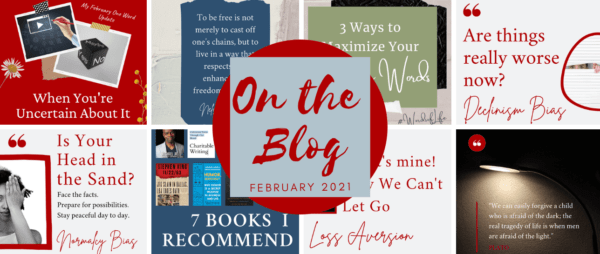
If You See Differently Than Your Group—Community Bias {Bias Day 10}

Community Bias

What is community bias?

Community bias is our tendency to only see what our group wants us to see.

As Brian McLaren explains it, “It’s almost impossible to see what our community doesn’t see.”

McLaren further explains that when we’re in sync with our group, our ideas flow freely. At least within the boundaries of how our group already thinks.

But if we start to think differently from our group? Our minds slow down and it becomes harder to think clearly. At least initially.

What’s an example of community bias?

If you know a teenager or remember your own teenage years, you know how easy it is for a teen to think like her group thinks.

If the group thinks it’s cool to wear bell-bottomed jeans, that’s what she wants to wear, too. She doesn’t even think about it. She trusts her group and accepts it as true. Case closed.

Why does it happen?

We look to our group to learn how to behave. We need to see how others navigate life so we can too. It’s natural and necessary to belong to a group. We like to fit in. We function best in community. It keeps us safe and gives us purpose.

A group gives us shared values and experiences and beliefs that we can adopt without effort, without having to think about it.

We may have many groups: our spiritual group, our work friends, our political allies, our hobby clubs, our families, even our sports affiliations.

Each group likely has its own core set of unspoken beliefs that keep it tied together. That’s not necessarily bad.

But it becomes bad when no longer think for ourselves or when we’re too afraid to ask questions or disagree for fear of disbarment from the group.

Is community bias a bad thing?

Ultimately, yes. The inability to think for ourselves can lead us down dangerous paths, both literally (agreeing to drunk driving because that’s what the group is doing) and figuratively (becoming an engineer because that’s what everyone in the family does, even when it’s not your thing).

Community bias robs people of their individual uniqueness they’re created with.

It’s also dangerous for others outside our community bias. When we think everyone should think like we do (because we’re right, after all!), then everyone else is wrong. When someone disagrees, we alienate them, rob them of opportunities, and destroy relationships.

If you’ve ever questioned whether to leave a church home, and talked to someone within the church about it, you may have quickly brushed up against community bias. Other people still on the inside may not be able to see what you’re seeing at all. 

Today’s political climate is another case in point. In-groups can quickly turn against their own members if they voice any disagreements, even erupting into bullying and violence.

How can we steer clear of community bias?

As with the other biases, it’s hard to watch out for something we don’t know about. So be aware that community bias exists.

  • Is there a topic your group refuses to talk about?
  • Do they get nervous when you bring up a dissenting view?
  • Is everyone being funneled to believe only the party line?

It’s difficult when one’s views become out of sync with their community, but it’s even more difficult if they’re not allowed to talk about it.

As my dad used to say, think for yourself. Don’t believe something just because someone else says it’s true. 

Ask questions. Seek truth. Be honest. Stay curious. Talk to others. Be compassionate. Differ with grace.

How did Jesus handle community bias?

Jesus definitely had to deal with community bias from some of the Jewish people in his day. Jesus was a major disrupter to their current group-think of how religion was meant to be. He came to finish off an old way of life and transform them into a new way of life. They didn’t appreciate that.

Jesus faced major opposition because he didn’t see like the group wanted him to see. He saw differently. The gatekeepers challenged him to the point of death.

What did he do about it? He kept teaching, kept loving, kept welcoming in the outsiders anyway.

Jesus forewarned his new followers that they would be rejected, too, for thinking differently than the group. To not be surprised by it. To keep modeling love anyway.

He commissioned new believers to:

“go back to their communities of unchallenged bias to be gentle disruptors, using images like ‘sheep among wolves,’ ‘light of the world,’ ‘salt of the earth,’ ‘yeast in bread,’ or ‘wise as serpents, innocent as doves’ to help them understand both the danger and beauty of their transformative work.”
– Brian McLaren, Why Don’t They Get It

Can we do that, too?

Be on the lookout for those who have been kicked out of their group, who need loving acceptance, who need to belong without having to conform.

Even if that someone is you.


Have you been on either the inside or the outside of community bias? Please share in the comments.

You are on Day 10 of the series: “How to Uncover Hidden Biases.”

Uncover Hidden Biases

Previous: Halo Effect {Bias Day 9}
“Are Taller People More Successful Than Shorter People?”

Next: Hindsight Bias {Bias Day 11}
“I Knew It All Along! Really?”


Are Taller People More Successful Than Shorter People? The Halo Effect {Bias Day 9}

Statistics say, overall, taller people do make more money than shorter people over their lifetime. But is it because tall people are smarter and more skilled? No.

It’s more likely because of how tall people are judged. Because they are tall, people also assume they are healthier, stronger, and more competent. Thus they are given more opportunities and viewed more positively. 

It’s the halo effect in action.  

What is the halo effect?

The halo effect is our tendency to make an overall judgment of a person or thing based on one trait (such as height or physical attractiveness).

The halo effect can work both positively and negatively though. If our first impression of a person is good, we easily associate other good qualities to them as well. But if our first impression is bad, we associate other bad qualities to them (it’s called the horn effect when it works this direction).

The halo effect is also known as the “what is beautiful is good” principle.

Here’s an example of the halo effect.

Marketers use the halo effect on us all the time. When your favorite actor or actress pitches a product, you’re more likely to believe their pitch because you like them, and thus buy the product.

Studies have shown that when a food product is labeled “organic,” we also unconsciously assume it has less calories in it and that it is good for us to eat daily, regardless of whether or not it’s true (even when it is “organic” Oreo cookies).

Why does this happen?

The halo effect is a shortcut for our brains. Because our brains are naturally prone to take the easy way out, we prefer to make one judgment quickly and stick with it, rather than have to reevaluate frequently.

We lean toward creating an image that fits with what we already know too. If a person is attractive, surely they also are kind and intelligent.

Why is the halo effect bad for us?

The halo effect disrupts our good judgment. It locks us into a one-track mindset, regardless of what the facts say. It can lead us to make unfair decisions in how we treat other people.

Have you ever “fallen in love at first sight”? Only to discover later that your perfect find wasn’t so perfect after all? That’s the halo effect. 

In education, studies show that more attractive students are given higher grades than less attractive students, even among experienced teachers, due to the halo effect. And if a teacher is viewed as friendly, the students rate them as also more attractive, warm, and likable.

One study has shown that wait staff who are attractive will earn approximately $1,200 more per year in tips than food servers who are viewed as less attractive because the more attractive servers are unconsciously assumed to be more skilled and friendly as well.

Halo Effect

How can we counter the halo effect?

Because the halo effect is either used about us or by us almost daily, it’s important to be aware of it so we can counter it.

Notice when you make a snap judgment about a person or a product. Ask yourself why.

  • Do you agree with the politician because of her stand on the issues, or just because she is a good public speaker?
  • Are you hiring the employee because they met all the right qualifications, or because they dressed nice for the interview so they must be a good employee?

Remember that each person is complex and just because you know one thing about them doesn’t mean you know everything. Gather the facts.

Experts also advise countering the halo effect by slowing down your assessments. Give yourself time to form a proper opinion. Have a set of standards you can compare to. Be willing to hold differing perceptions in your mind instead of making it all one direction.

And when appropriate, consider concrete actions. For example, educators can grade papers anonymously if they want to steer clear of bias.

How did Jesus handle the halo effect?

Jesus wasn’t tempted by the halo effect. Scripture says he could see above it all (Mark 2:8; Luke 9:47), that he knew what was in a person’s heart, regardless of their outward appearances. 

We need to remind ourselves as humans that we do not possess special inside knowledge of a person. We have only partial knowledge, thus we need to be slow to make judgment.

And when possible, don’t pass judgment at all, especially not on outward appearances.


How have you seen the halo effect in action? Please share in the comments.

You are on Day 9 of the series: “How to Uncover Hidden Biases.”

Uncover Hidden Biases

Previous: Loss Aversion {Bias Day 8}
“But it’s mine! Why We Can’t Let Go”

Next: Community Bias {Bias Day 10}
“If You See Differently Than Your Group”


But It’s Mine! Why We Can’t Let Go {Bias Day 8}
—Handling Our Loss Aversion

What is loss aversion?

Loss aversion is our preference for avoiding loss more than our preference for acquiring gain.

It hurts to lose something once it is ours. We’ll work harder to keep from losing it than we would to acquire it in the first place.

Here’s an example of loss aversion.

If someone gives you $15 as a birthday gift, you’re pleased. But it won’t compare to the grief you’ll feel if $15 flies out the window of your car.

If you own a $50 vase, you might refuse to sell it to someone offering $75. Yet if you saw the exact same vase in the store, you might not buy it for $25.

In general, once we own something, we become possessive. The ratio of pain from a loss is almost twice that of joy from a gain.

Why does this happen?

Our bias leans toward safety. When measured against each other, threats weigh heavier than opportunities.

“For an organism operating close to the edge of survival, the loss of a day’s food could cause death, whereas the gain of an extra day’s food would not necessarily cause an extra day of life.”

This old saying applies:

A bird in the hand is worth two in the bush.

We simply hate losing things we already own.  

Why is loss aversion bad for us?

Loss aversion causes us to cling too tightly to our things, our thoughts, our money, even when we need to release them. We fear losing what we have. And the more we have to lose, the more fear we have of losing it. Our attachments can make us feel vulnerable and anxious.

Loss aversion operates from a scarcity mindset. It perpetuates stinginess instead of generosity, not only with material things, but also with relationships and ideas. The longer we are in a relationship, for example, the harder it is to let go, even when it’s unhealthy.

We’re more comfortable with the bad we already have, versus the possible good we’re uncertain of. We are biased to believe this:

“Better the devil you know than the devil you don’t.” 

But it's mine Loss Aversion

How can we manage our loss aversion?

As with the other biases, become aware that loss aversion is a real thing. Notice when it’s being used against you, such as when a streaming service offers you a trial month for free, knowing that once you try the service, you won’t want to let go of it.

Also be willing to change your perspective about things you already have.

For example, when you’re cleaning out a closet, ask yourself if you would buy this blouse today if you saw it in the store. If not, get rid of it. Instead of viewing yourself as already owning it, change your viewpoint to that of a non-owner.

Another strategy to help deal with loss aversion is gratitude. Be content with what you have, when you have it. Hold things loosely, being grateful for time already spent instead of being anxious about a future loss. Develop an abundance mindset.

As Socrates said, “He is richest who is content with the least, for content is the wealth of nature.”

Also, remember to think long-term. The fear of an impending loss now can prevent you from making a wise decision for your future. Move past a short-term-only framework.

Did Jesus teach about loss aversion?

Jesus taught his followers to focus more on his spiritual kingdom than on a physical kingdom. Material treasures hoarded here can be be destroyed and stolen, he said. Everyone will experience loss of these things. But spiritual treasures in his kingdom are safe (Matthew 6:19-21).

Jesus also taught that life is more than possessions (Matthew 6:25). More than reputation. More than attachments. Being anxious about what you wear or how you look or how much you have will add no value to your life. Instead, he said that seeking the kingdom of God and his righteousness will bring all things into alignment (Matthew 6:33).

Bottom line, Jesus taught it’s better to live with open hands instead of clinched fists. 


Loss aversion affects us all differently. Maybe you don’t cling to money, but you cling to your schedule, for example. Do you struggle letting go of things you no longer need to keep? Share in the comments.

You are on Day 8 of the series: “How to Uncover Hidden Biases.”

Uncover Hidden Biases

Previous: Scripture Wisdom {Bias Day 7}
“If You Don’t Know What You’re Doing”

Next: Halo Effect {Bias Day 9}
“Are Taller People More Successful?”


If You Don’t Know What You’re Doing {Bias Day 7}

James 1-5

As you ready your heart to begin a new week, go to the Source for help.

On Monday, February 8, we’ll begin looking at more biases that hinder our ability to live into our God-given purposes.

We know who can give us vision to see our blindspots. He loves it when we ask him for help.

And he loves to help us.


You are on Day #7 of the series: “How to Uncover Hidden Biases.”

Uncover Hidden Biases

Previous: Bias Quotes {Bias Day 6}
“5 Quotes to Awaken Our Hidden Biases”

Next: Loss Aversion {Bias Day 8}
“But It’s Mine! Why We Can’t Let Go”


5 Quotes to Awaken Our Hidden Biases {Bias Day 6}

“An unexamined life is not worth living.”
—Socrates

~ * ~ * ~

The fool doth think he is wise, but the wise man knows himself to be a fool.
—William Shakespeare

~ * ~ * ~

quotes about bias

~ * ~ * ~

It ain’t what you don’t know that gets you into trouble. It’s what you know for sure that just ain’t so.
—Josh Billings

~ * ~ * ~

Search me, O God, and know my heart! Try me and know my thoughts!
Psalm 139:23
—King David


You are on Day #6 of the series: “How to Uncover Hidden Biases.”

Previous: Our Biases and Politics {Bias Day 5}
“Blinded by Politics? Uncover Your Biases”

Next: Wisdom Scripture {Bias Day 7}
“If You Don’t Know What You’re Doing”


Blinded by Politics? Uncover Your Biases {Bias Day 5}

Everybody Has an Opinion on Politics

One of the greatest dividers in our nation lately has been politics.

But not just politics itself. Our opinions on politics, too.

I’ve personally felt the divide among family, among friends, among neighbors.

And I don’t like it. I’m sure you don’t either.

How can we bridge the divide? No magic solutions here.

But there is something we each can do: Attempt to uncover our own biases regarding politics. We all have them. No one is immune.

Biases and politics

Overcoming Our Biases in Politics

How can we apply the four biases from this week specifically to politics?

(1) How Can You Avoid Your Confirmation Bias? {Bias 1}

CONFIRMATION BIAS is listening only to what we already agree with. Listening only to our political party or leaning. It keeps us trapped in our own echo chambers.

My friend is a good example of how to break out of confirmation bias in politics. She and her dad are on opposite sides of many political issues. She has her sources; he has his.

But occasionally, she watches his news channel. She reads articles he suggests (and suggests some for him). She goes out of her way to listen to views that might oppose her own.

It doesn’t mean she changes her mind. That’s not necessarily the goal.  

But it educates her on how her father is thinking. And it gives them a better chance at communicating with each other. It’s still difficult. But it’s better than it would be.

(2) But I Don’t Want to Leave My Comfort Zone {Bias 2}

COMFORT BIAS causes us to avoid uncomfortable political conversations before they even happen.

No one is suggesting we pick political fights on Facebook. Or leave snarky comments on Twitter. Those are never helpful. 

But in person, when the right opportunity arises, it’s okay to push ourselves a little, to engage in safe and healthy conversations about our political stands. To ask questions. To listen. To grow. To step outside our comfort zone for a few minutes. 

(3) Why We Think We Already Know the Answers {Bias 3}

COMPETENCY BIAS (also known as the Dunning-Kruger Effect) is a tricky one. We each unconsciously overestimate what we know, without knowing we’re doing it.

When it comes to politics, we all know people (and likely ourselves too) who think they are “experts” on several issues. Maybe we read a news article or saw something online, and voila!—we now know the simple solution to untangle complex issues.

But as our mamas told us, “A little knowledge can be a dangerous thing.”

With politics, as with all other topics, we need to remember there is always more iceberg under the surface than what we see on top. Let’s practice a humble “I don’t know” more often so we can keep learning more.

(4) How to Stop Being So Negative {Bias 4}

NEGATIVITY BIAS also affects us all. It’s easier to see the bad things in politics rather than the good things, to point out what’s wrong with everyone else. 

Recruit a friend or partner to gently remind you when you’re getting too negative.

While we don’t have to find good in every issue (some issues have nothing good in them), we also don’t have to assume the worst about every politician (especially those on the opposite side). Name-calling and gaslighting and generalizing are not helpful; they are negative and harmful.

We need to keep our eyes open to problems that need solving. And work to solve them. But we also need to seek out positive things happening in politics, too (and yes, there are many!).

Seeing Past Our Biases

No one is immune from having biases. But likewise, none of us are beyond hope from seeing past our biases if we’ll keep an open mind.

No one has to live in the dark basement of politics, locked down in their own opinions. We all have a choice to walk into the light, and to live and love in brighter spaces.


How do you overcome your political bias? I’m trying, but it’s hard. Share your thoughts in the comments.

You are on Day #5 of the series: “How to Uncover Hidden Biases.”

Uncover Hidden Biases

Previous: Negativity Bias {Bias Day 4}
“How to Stop Being So Negative”

Next: Bias Quotes {Bias Day 6}
“5 Quotes to Awaken Our Hidden Biases”