
No Pride in Giving, No Shame in Taking

The line Saturday morning was long and jumbled and talkative.

Each person was waiting to receive their free teal bag. It contained a carefully-loaded gift of meat and vegetables and dessert, enough to cook a beautiful Thanksgiving dinner for their family this Thursday.

thanksgiving-bag-giving-taking

I walked through the crowd and said hello here and there, looking for someone who wanted to talk.

I saw a friend and stopped. We chatted about the autumn weather finally arriving.

Then she told me what she often tells me, “Thank you so much for what y’all are doing. It makes such a big difference to us.”

I gave my standard reply, “We’re just passing it along as God gives it. We’re glad to do it.”

And it’s true. God gives to us so we can enjoy giving to others.

But more is true.

I said it to her. I needed to hear it again myself. It is this:

None of us know when it will be our turn to be on the receiving end.

None of us are above it.

None of us are below it.

We like to think, “It’ll never be me.” After all, we plan and save and prepare for such surprises. I’ll always be on this side of the line, we think, never the other.

But if we’ve ever seen (or been) someone devastated by a job loss or a health catastrophe or a financial crumble, we know that, yes, it could be us.

And in many ways it has already been us, it is us now, and it will be us again.

Give and take is a dance. It’s an art form of rhythm and movement, of story and liturgy, of back and forth.

Sometimes we give.
Sometimes we take.

We’re not better people because we give.
We’re not worse people because we take.

We all do a little of both in every season of our lives, in various ways, and in differing degrees.

Let none of us think we’re always a giver. Or always a taker. We’re all some of both. Because that’s how God designed community to work.

If we participate in this dance with grace and partners and intention, it’s a beautiful waltz to behold.

Notice this Thanksgiving week how you dance back and forth between giving and receiving, between offering and accepting, between handing out and taking in.

And whichever side you fall on in this moment, say thanks. Thankful to be able to give. Thankful to be able to receive.

My friend and I ended our conversation in agreement:

When we have, we give.
And when we need, we receive.

There should be no pride or shame on either end.

Let’s be grateful in it all.

* * *

For November, I’ve been welcoming Song and Dance for “Welcome,” my One Word for 2016. See the monthly welcoming practices here.

Related:

How will you give this week? How will you receive? Please share in the comments.

How to Love That Other Number on the Enneagram (All Nine Types)

See my new series in February 2020 on 20 Ways to Practice the Enneagram for Spiritual Growth.

Enneagram for Spiritual Growth


How Others View the World

“The Enneagram shows us that we can’t change the way other people see, but we can try to experience the world through their eyes and help them change what they do with what they see.”
– Ian Cron and Suzanne Stabile

how-to-love-enneagram-number

Knowing your strengths and weaknesses helps you grow.

Knowing other peoples’ strengths and weaknesses helps, too.

What I’m learning about the Enneagram is it’s not just knowledge for ourselves. It’s also knowledge we can use to better love our friends, family, coworkers.

how-to-love-that-other-number-on-the-enneagram_pin

In their book on the Enneagram, The Road Back to You, Ian Cron and Suzanne Stabile say that the Enneagram can be a tool for you to see how others are viewing the world.

“When you realize that your Loyalist Six husband views the world as a place filled with danger and uncertainty, and he in turn understands that when you get up in the morning you as a Performer Three feel an urgent need to compete and excel at everything you do, it’s amazing how much more compassion you can have for each other.

Everything isn’t so personal anymore. You understand that your loved one’s behavior is born out of a fractured vision of life.”
– Cron and Stabile

Ian and Suzanne gave helpful tips at the Know Your Number conference for dealing with each personality type. (See “5 Things I Learned at the Enneagram Conference” here.)

Think about the personalities in your circle of friends. You likely know at least one person from each type.

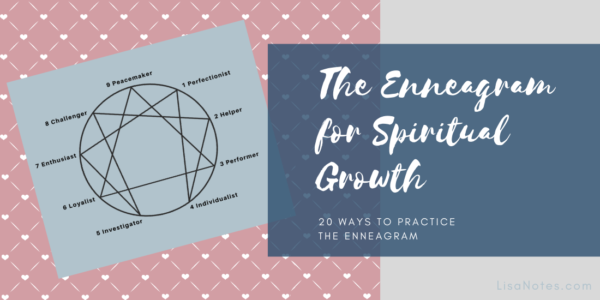
Here are the nine types.

the-enneagram

Then apply one of these tips below to better love that person in a way that makes sense to them. (You’ll find much more in the book, The Road Back to You, and on the podcast by the same name.)

How you can help someone who is a . . .

1 – Perfectionist

Because perfectionists always hear voices in their head about how to improve things, don’t interrupt them while they’re working. It doesn’t help to tell them something is good enough. Instead, ask how you can help them make it better.

2 – Helper

Twos wants to take care of everybody, even at their own expense. Help them understand they don’t have to do it all, just their one piece. And that you like them just as they are, even when they’re not helping.

3 – Achiever/Performer

Threes are competitive and success-driven. (Threes are revered in America, btw.) Don’t slow them down by talking in paragraphs to them. Communicate with them instead through bullet points.

4 – Individualist/Romantic

Fours are intense, have a wide emotional range, and are prone to melancholy. So don’t tell Fours to cheer up. They’re just feeling what they feel. (This is the least populated number on the Enneagram.)

5 – Investigator

Fives are drained by the world if they have to engage it too long. When you’re with them, don’t ramble. Get to the point. They are minimalists. They enjoy being with people, but not necessarily to “hang out.”

6 – Loyalist

Sixes know that life is uncertain and can’t be predicted. Remind Sixes that they need to trust their own experiences with God. Help them by exasperating the situation even worse. Listen to all their fears. (Half the world are Sixes.)

7 – Enthusiast

Sevens are adventurous and always ready for more fun. They also are most prone to addiction because they avoid pain and don’t know how to handle grief. Help them address all their emotions, not just the happy ones.

8 – Challenger

Eights are exceptional leaders and like to take control. They have more energy than any other number on the Enneagram. They like to know exactly where you stand, so always be straight-up with Eights. And challenge them if you disagree; they’ll respect you for it.

9 – Peacemaker

Nines will do almost anything to avoid conflict. They’re happy to just go along, so they can be slow decision makers. Learn to not rob them of making their own choices. Let them know their own preferences matter. (Nines make up the second largest group.)

Understanding that everyone sees life from a different lens can help us be more kind and patient with each other.

As we listen and learn, let’s do so with an attitude of gentleness and non-judgment, not forcing people to change, but giving them space to grow.

“It’s when we stop trying to change people and simply love them that they actually have a shot at transformation. The Enneagram is a tool that awakens our compassion for people just as they are, not the people we wish they would become so our lives would become easier.”
– Cron and Stabile

* * *

Related:

Can you spot the potential number of your spouse or friend? Please share in the comments.


5 Things I Learned at the Enneagram Conference

“Your personality is who you seem to be, but it is not who you are.”
– Ian Morgan Cron

the-enneagram

I’ve been learning about the Enneagram this year. It’s a personality typing system based on ancient wisdom for spiritual growth.

But it’s also based on oral tradition, not written, so when I got the opportunity to listen instead of just reading about it, I took it.

Ian Morgan Cron and Suzanne Stabile, authors of The Road Back to You, are traveling the country giving weekend seminars called “Know Your Number.” I attended last month in Montgomery, Alabama. (I reviewed the book here, including the nine types.)

whatever-your-number

Jeff packed a gift in my suitcase before the seminar (I think he’s a 2, the Helper, yes?)

On Friday afternoon of the seminar, I thought my number was a 1, the Perfectionist. (I reload the dishwasher; I read all instruction manuals; I keep all my tax returns neatly filed for years).

But by Saturday night, I decided maybe I’m a 5 instead, The Investigator. (I need lots of time alone; I love gathering information—the internet is a dream come true; I’m happier texting on the phone rather than talking.)

Now what do I think? I’m still not sure which number I am.

But that’s okay. Ian and Suzanne said it can take awhile to figure out your number. The tests alone don’t determine it (actually they didn’t seem fond of the tests).

The point is: Keep learning, keep growing, and keep allowing God to lead the way.

5 Things I Learned at the Enneagram Conference

  1. What you don’t know can hurt you.

“What remains unconscious remains in control.” But the more we understand ourselves, the more we can cooperate with God in our transformation.

Discovering your Enneagram number can shorten the learning curve. Knowing yourself helps you better use your strengths, helps you monitor your reactions when you’re stressed, and helps you deal more positively with others.

  1. It’s about motivation, not just behavior.

Your personality number is determined more by what motivates you, not by how you behave. That’s why most online tests can be wrong as often as right—they don’t distinguish between motivation and behavior. You and I might perform the same action, but if I’m doing it out of pride and you’re doing it out of fear, we’re not coming from the same place, and thus may be different numbers. Keep digging to find your true number.

  1. We each are all nine numbers.

Taken as a whole, all nine numbers together give us a full-rounded view of God.

But individually, though we likely have some of each number in us, we click the most into one number. And we stay that same number for life, likely being set in it by the time we’re five years old.

  1. What you do with it counts.

This is important: We can’t change how we see the world.

But we can change what we do with what we see.

  1. Be kind to yourself.

Initially, we might not like what we discover about our number. Thinking of myself as either a 1 or a 5 doesn’t appeal to me. I see the negative traits in the profile and the negative traits in myself. And I don’t like those.

But it’s important to adopt a posture of lovingkindness to ourselves: “Healing and transformation can only happen in a climate of self-compassion.”

“Once you know your type you owe it to yourself and the people you love (or don’t love, for that matter) to become a kinder, more compassionate presence in the world.”

As John Calvin put it: “Without knowledge of self, there is no knowledge of God.” I wouldn’t phrase it that strongly, but I see some truth there.

As Ian and Suzanne told us, Christian voices throughout the centuries are united in this message for us—Wake up!

Waking up—becoming aware of who we are—helps us better know who God is, and knowing who God is helps us better know ourselves.

Regardless of our number.

* * *

Related:

Do you know your Enneagram number? Please share in the comments.


Does Your Soul Need Pampering? “7 Days of Soul Care”

god-longs-for-us-to-trust

Who needs pampering?

We all need pampering from time to time.

We know what that looks like physically: rest, good food, massages, pleasurable activities, no stress.

But how do we pamper our souls?

Dolly Lee has a brand new book available today about how to care for our souls, 7 Days of Soul Care.

Dolly walks us through a seven-day journey of personal stories, scriptures, journal questions, and prayers to help us better connect with God.

7-days-of-soul-care-dolly-lee

She says that through doing a series of small things, we allow God to do the extraordinary with our ordinary.

The seven days are centered around these themes:

  1. Know God, Know Yourself
  2. Embrace Your True Worth
  3. Know Jesus, Know God
  4. Discern Your Soul’s Condition
  5. What Trials Can Reveal
  6. Take Steps Toward God
  7. Rest and Play

At the back of her book, Dolly provides a great list of recommended resources on soul care, daily devotionals, and online resources.

Here are some of my favorite lines from 7 Days of Soul Care.

“When we engage with our extraordinary God in our ordinary, we become exceptional in the ordinary because his Spirit is with us and within us.”

~ * ~ * ~

“Prayer is the fuel that drives the engine of lasting transformation because it connects us with God’s presence and power.”

~ * ~ * ~

“Slowly over the years, I sensed God’s love as a felt-experience and not merely an abstract theological concept. Our deepest truths are not merely propositional but also deeply felt and personal.”

~ * ~ * ~

“God doesn’t want us to feel worthy if we’re doing well or to feel unworthy when we’re not. In God’s eyes, our worth doesn’t go up and down like the stock market.”

~ * ~ * ~

“We have inherent worth apart from our appearance, or our behavior, or how another has treated us, because God created us in love for love.”

~ * ~ * ~

“Every act you do with our extraordinary God isn’t ordinary— it’s exceptional because it is infused with his holy presence.”

* * *

How do you pamper your soul? Please share in the comments.

You can buy Dolly’s book here. She writes a beautiful blog, Soul Stops, and is on Instagram @DollyMLee or #7DaysofSoulCare.

Dolly M. Lee

Dolly’s goal is to collect enough in royalties to donate $500 to International Justice Mission, an anti-slavery organization that protects the poor from violence.

Thanks for the advance copy of this book.


On Election Eve, You Are Elected

election-flag

There are times we feel vulnerable. Not quite comfortable. Not quite safe.

There are also spaces that make us feel that way. Unguarded. Wide open. Susceptible.

Maybe you don’t like to sit with your back to the wall. Or sleep with your head to the door.

On this night before electing the next President of the United States, we may feel like our backs are to the door. We can’t see around the corner. We don’t know what’s about to enter the room.

I’m reading Love Warrior by Glennon Doyle Melton. These paragraphs (taken from three different pages) speak of feeling vulnerable in a space.

Here Glennon is in a marriage counseling session with her husband Craig at the therapist’s office.

“I’m being swallowed up by a big black leather couch in Craig’s therapist’s chilly office. My knees don’t reach the cushion’s edge, so my legs stick straight like I’m a doll someone has propped up. I decide that if I can’t make my feet reach the floor, it’s best to pretend that I don’t want them to, anyway. I pull my legs up toward my chest and wrap my arms around them. I am my own shield.” page 123

~ * ~

“I shiver and pull my sweater tighter. For the first time I notice that both Craig and his therapist are wearing T-shirts and shorts. Why don’t men ever notice the cold? Why don’t they ever carry sweaters and curl up and make fists of their sleeves and wrap their arms around their legs? Why the hell are they so brazen and unfurled and warm and comfortable all the time?” page 126

~ * ~

“I push myself up and out of the chair. I pull off my sweater and hold it in my hand. I will my body not to shiver. I stand up, and the men’s eyes lift toward me in unison. I look down at the therapist first and I say, “You should get an adjustable chair in this office so female-size people can put their f—— feet on the ground.” page 129

I’ve felt that way. I’ve sat on couches where my feet don’t touch the floor, in chairs where I can’t reach the ground. It’s never comfortable.

And as we approach tomorrow’s voting results, we might feel this way, like we’re surrendering ground, unstable, susceptible.

But it’s not so.

Whether the results come back like we want them to or not, we will still be standing on Wednesday morning. On solid ground. Both feet.

Because we have already been elected. We’ve been chosen. God picked us.

  • 1 Peter 2:9 (CEV)
    “But you are God’s chosen and special people. You are a group of royal priests and a holy nation. God has brought you out of darkness into his marvelous light. Now you must tell all the wonderful things that he has done.”

As children of God, our ultimate security doesn’t rest on man-made governments. It doesn’t rest on amendments to constitutions. It doesn’t rest on agreements or mandates or policies.

Our safety rests on Love. We live in his kingdom, He is our world, and even death can’t pry us out of his hands.

He’s chosen us to be here at this time, in this place, for this reason. And regardless of who wears the man-made title of “leader,” we are God’s elect to fulfill God’s purposes.

So on this election eve, we need not fear. We’ve already been elected.

  • To show love.
  • To be merciful.
  • To give grace.

That is a victory for everyone.

  • Romans 8:31
    What then shall we say to these things? If God is for us, who can be against us?
  • Romans 8:32
    He who did not spare his own Son but gave him up for us all, how will he not also with him graciously give us all things?
  • Romans 8:33
    Who shall bring any charge against God’s elect? It is God who justifies.

* * *

Is there a scripture that reminds you that your feet on on the Rock? Please share in the comments.