What a Smelly Elevator Taught Me About Questioning Beliefs
The Elevator Test
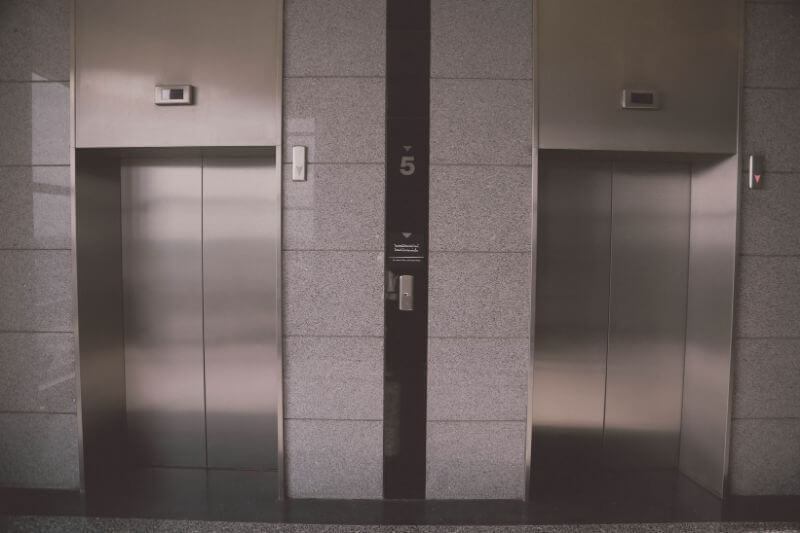
When the elevator door on the right opens, we immediately smell something.
It stinks.
It’s Monday afternoon at the apartment complex where we deliver free meals. Our grocery cart is full of food containers, and we’re ready to start making our rounds.
A woman gets out of the elevator. She warns us, “Watch out for the puddle on the floor,” she says. “Someone peed there.”
Now I smell it even stronger.
We pause to debate what to do next.
Do we get on the elevator anyway? Do we wait for the second elevator on the left, hoping it comes quickly?
I believe this may be too much for me.
I start leaning toward a third option: maybe we should just call it quits, leave the food in the lobby, and go home.
It surprises me how strong my reaction is. I had wanted to be here. And yet just the idea that someone chose to relieve themselves in an elevator fills me with disgust.
A strong enough belief that I’m ready to walk away.
But as we stand there, I notice I’m reacting strongly to something I don’t actually know for sure.
- What if someone had been sick?
- What if it was from a small child?
- What if it was something else entirely?
Would a different answer make a difference in our decision?
While we linger in the discussion, the elevator door closes. Without us.
A Book for Questioning
Lately I’ve been reading—and experimenting with—a new book by Nir Eyal called Beyond Belief.
The premise is simple but powerful: many of the things that limit us may not be based on evidence, but on false beliefs we’ve unconsciously adopted.
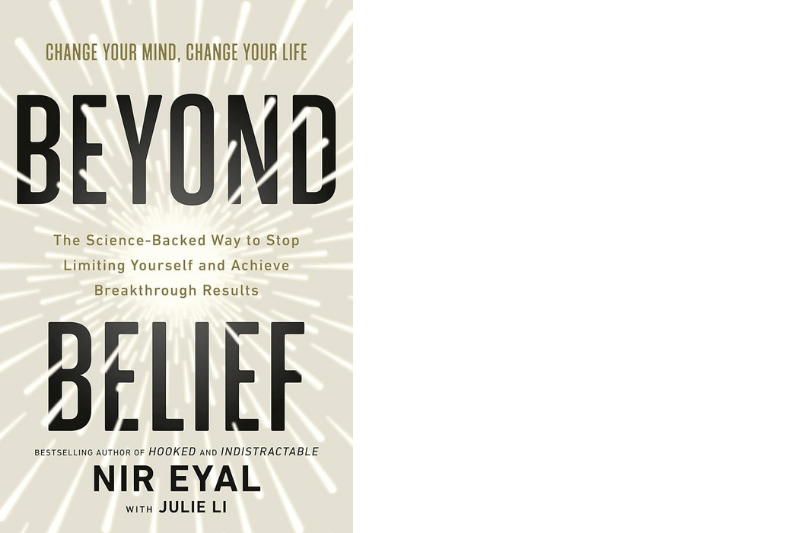
These are the definitions that Eyal uses to explain the differences between these three things:
- Fact: An objective truth that can be verified with evidence
- Faith: A conviction without need for objective evidence
- Belief: A firmly held opinion, open to revision based on new evidence
The book is primarily about beliefs—our strongly held opinions. Eyal describes beliefs this way:
“Beliefs aren’t simply thoughts or feelings. They’re tools—working models we use to navigate reality when the truth isn’t fully knowable.”
The problem comes when we allow our opinions to limit our lives.
Examples of these kinds of beliefs include:
- Believing someone doesn’t like you if they had to cancel your lunch date, so you never reschedule
- Believing you’re not smart enough to graduate so you never enroll in college
- Believing you’re too old to learn a new skill so you let yourself fall behind
None of these are facts. These beliefs are simply interpretations.
According to Eyal, the way to challenge limiting beliefs isn’t through argument. It’s through finding evidence.
He suggests asking questions like:
- Does this belief hold up to real-world feedback?
- Am I ignoring evidence that contradicts it?
- Is this belief open to revision?
Beliefs matter because what we believe shapes what we see, and what we see shapes what we do.
The Quiet Power of Belief
Not every thought we have is true.
Some thoughts are.
Some thoughts aren’t.
The same goes for beliefs.
But the way to find out isn’t through overthinking—it’s often through trying something and seeing what happens.
Books like Beyond Belief encourage me to do just that. It lists three powers of belief:
- Attention: the power to see what you believe
- Anticipation: the power to feel what you believe
- Agency: the power to do what you believe
Experiment with beliefs by starting with evidence. Focus where it counts. Shape the stories you tell yourself.
Practicing Small Experiments
Since reading the book, I’ve been trying some of these experiments in my own life.
For example, when lying in bed I sometimes believe I’ll never fall asleep. Yet when I pause and look at the evidence, I know I always eventually fall asleep. Every night. Believing my body will suddenly forget how to sleep is a belief that doesn’t hold up.
Or when I believe my whole day will be ruined if I don’t finish my to-do list. I experiment by intentionally leaving a few things undone and see if I survive. Spoiler alert: I do.
And when I believe I can’t finish my rounds if someone urinated in the elevator, I can question that too. Is it possible I actually can endure a 10-second elevator ride while stepping around whatever is on the floor?

The Elevator, Revisited
The elevator door that opens next is the left one. Whew. We get in and go to the second floor. But after finishing the meal deliveries on the second floor, it’s time to return to the elevator to head up to the third floor.
Two doors. Two choices.
Which one will open first? It’s the one on the right. Ugh.
This time, though, something is different.
There’s no odor. No puddle. Just a leftover paper towel from a cleanup.
We step inside and laugh. Whatever had been there before—urine, spilled liquid, something else entirely—is gone.
And either way, we would have survived it.
I’m grateful I didn’t give in to my earlier belief that the situation was simply too horrible to endure. (Shout-out to my companions who helped me persevere.)
The moment feels small, but it sticks with me.
Sometimes testing an experiment isn’t necessarily to prove yourself right or wrong, but to see what is possible.
Maybe it can be as simple as stepping into an elevator that you were sure you couldn’t tolerate.
As Eyal writes:
“Extraordinary lives aren’t built on grand declarations. They’re built on small efforts—actions that create evidence, evidence that strengthens belief, and belief that fuels more action until possibility itself expands.”
And every life deserves to be extraordinary.
Question for you:
Have you ever believed you couldn’t do something, only to discover later that you were more capable than you thought?
Share your thoughts in the comments.
thanks to NetGalley for the review copy of this book
- 8 Books I Recommend: Being Human, From Memoir to Plague to Fiction
- The Day I Sat on My Hands Instead of Taking Notes
Oh, yes, the stories we tell ourselves can limit our choices and put undue strain on relationships. These are good questions to ponder.
Thanks, Linda. I think if we could make less assumptions about what the other person is thinking–and just ask instead–we’d probably have less struggles. I know I can make up some crazy stories in my head at times. 🙂
What we believe about ourselves and others can often be limiting unless we test these beliefs in real time, Lisa. What a fantastic example you’ve given us here today. Truly made me think. Blessings!
I tested this out last night with my husband. All day I’d been regretting an email I sent a friend; I was afraid it might have sounded rude when I didn’t mean it that way at all. I finally asked my husband to look at it, and he immediately set my mind at ease, assuring me there was nothing at all rude about it. It was all in my head. I should have asked his opinion sooner. 🙂
Such an insightful post, Lisa. I love that you asked yourself questions as you stood there deciding. We don’t always know the truth behind situations, do we?
I think the beliefs drilled into us as children can be especially hard to overcome. It reminds me of a poem I heard while getting my teaching degree – Children Learn What They Live. Love and blessings to you!
Yes, I have a lot of old tapes that play through my head from years ago. When I’m aware, I can catch them and question if they’re valid or not. But many often lurk underneath awareness. I hope I’ve gotten better at it as I’ve aged, but who knows? ha. Hope you’re doing well, friend!
A great post Lisa! I’m a questioner, always have been, which sounds wonderful but can get you into all sorts of mischief while growing up & it did! lol!
The most wonderful time I had of looking at different thinking including challenging my own was when I was doing my qualifications at University. I took subjects that questioned everyday societal Paradigms, I found it most insightful & really eye opening to view not only my own Paradigms but other’s & society’s from different perspectives. Which was so very helpful & fruitful as a Clinical Counsellor.
Blessings, Jennifer
Oh, those university studies sound so intriguing to me too, Jennifer! I would have gotten in trouble alongside you. My father was quite a questioner so he set an example for me to question things. And yes, sometimes it can get us into trouble. 🙂
Maybe one practical thing we can learn from the elevator. Come prepared. To clean. To help.
Good thoughts here, Lisa. Thanks.
Well, gulp, I confess it didn’t even cross my mind for ME to clean up the spill in the elevator. So I appreciate your comment here; it adds even more questions for me to consider about my mindset! Thanks, Willow.
The premise is simple but powerful: many of the things that limit us may not be based on evidence, but on false beliefs we’ve unconsciously adopted.
wow what a powerful sentence this is. I have been listening to the labels I call myself and asking if they are true. I have discovered some old narratives that are no longer true or never have been.
and you example of if your whole day was ruined – When I was working fulltime and having a discouraging day I would make myself “grade” the day. First of all it made me smile then it invited me to review the whole day seeing that there were many good things. Some days then moved up and I would say B+ or A- but I don’t think I ever graded one an F even on terrible days. Silly? probably but helped me shift my mindset.
That’s brilliant to grade your day AND to look back to realize that no day got an F. Too often I forget to look back and see how the evidence has been gathering up.
I actually got randomly chosen to spend a one-on-one hour on zoom this week with the author of this book, Nir Eyal. It was incredible getting to ask him questions, and watching how adeptly he asked questions of me to help me uncover my own limiting beliefs. It was a conversation I’ll continue revisiting for a long time to come.
What a great post and great lesson that you shared.. because yeah, I think we’ve all had times when we thought we couldn’t do something and ended up being far more capable than we thought. That sounds like a wonderful book too.
Yes, we sell ourselves short a lot of times, sometimes consciously and probably even more tiems unconsciously. It’s hard to see what we can’t see. This book has been really helpful in steering me to take a closer look under the hood.