“Your Family in Pictures” – Book review

“Great photography is all about knowing how to set yourself up for success. When I was a newbie, I assumed professional photographers were like magicians. Their cameras were their magic wands able to capture the most amazing photos at any time of day or night. Years later, I know better.”
– Me Ra Koh

Her first piece of advice every single time? Turn off the flash.

Whether you’re using a point-and-shoot camera or a DSLR, author and photographer Me Ra Koh listed that tip in almost every chapter of her new book, Your Family in Pictures.

It made me smile. I’ve been hearing this the past few years from my daughter Jenna who is a professional photographer herself. She could look at a picture I’d taken and disappointingly say, “Mom, you used the flash again.”

So I’ve stopped using my automatic flash (except in really dark places). And I’ve started looking more for natural light. It’s all about the light, right?

I only take pictures for fun and for memories. I like pictures with people in them the best, but I also love taking nature photos. So although this book is geared toward family photos, there are tons of good tips for photography in general. Me Ra Koh shares a lot about lighting and other factors that go into better pictures. She writes in clear terms, gives practical suggestions, and of course, uses great photos for illustrations.

Your-Family-in-Pictures

She’s big on lists (I am, too), so you get a lot of this:

  • 7 spots in your home for great light
  • 10 steps to set up your photos for success
  • 3 ways black and white can transform so-so photos
  • My top 10 times to take candid family photos
  • 5 tips for photographing everyday life

And she does follow through with providing those tips.

For example, under “5 tips for photography family portraits,” the most common question (“What should we wear?”) is answered with this: “Have Mom wear what she feels most beautiful in, and everyone else’s clothes should complement hers.” We all get that . . . because if Mama’s not happy, etc.

She breaks the chapters into these categories. (See the full Table of Contents here)

  1. Setting yourself up for success
  2. Developing a photographer’s eye
  3. Everyday life
  4. Holidays
  5. Family portraits
  6. Tweens & teens
  7. Family vacations & travels

An appendix helps you decide what kind of equipment to buy. I found it helpful information to form my wish list. Koh has also written Your Baby in Pictures and Your Child in Pictures. And if you’ve seen her pictures, you know she knows what she’s talking about.

Here are a few more general tips from Me Ra Koh for photographing most anything.

  • Keep a camera out. The beauty of everyday life most often happens when we least expect it. Keep a camera out at all times and within arm’s reach. This also helps desensitize the family to having their photos taken.
  • Use the camera you have. Don’t have your DSLR nearby? Don’t worry. The iPhone and other smartphones take remarkably good photos. The best camera is the one you have with you.
  • Pretend you only have thirty-six shots. Even though you may have a huge memory card that holds a gazillion photos, do you really want that many photos of an afternoon at the swimming pool? Pretend that you only have thirty-six shots to take, which is equivalent to what one roll of film used to be. If you only have thirty-six shots, you’ve got to pause and ask yourself how you are going to use them.
  • Let go of perfection. A successful photo of cousins ranging from age six months to six years isn’t about capturing perfect little smiles. Not every face may be looking at the camera, but the overall story–that allows for a little bit of chaos–is the family pictures that you will all adore when they are grown and have kids of their own.

* * *

Do you love to take photos too? What’s your favorite thing to photograph? Please share in the comments.

Thanks to Blogging for Books for the review copy of this book


Books I’m reading – January ’15

Once a month we share the books we’ve finished reading and are reading now at 5 Minutes for Books. Here is my list for January.

BOOKS I FINISHED FROM DECEMBER’S LIST

1. Just Mercy
A Story of Justice and Redemption
by Bryan Stevenson

Just-Mercy_Bryan-Stevenson

Okay, this one! Read it! I was overwhelmed with the stories told by attorney Bryan Stevenson, founder of the Equal Justice Initiative. Stevenson writes compassionately and compellingly of his true-life cases with death row inmates and youthful offenders. I know it’s only January, but I see this book being one of the most influential I’ll read all year.

2. Your Family in Pictures
The Parents’ Guide to Photographing Holidays, Family Portraits, and Everyday Life
by Me Ra Koh

Your-Family-in-Pictures_Me-Ra-Koh

My review here

This book on taking better photos is helpful for both the beginner with a point-and-shoot camera as well as those of us wanting to better use our DSLR cameras. The chapters are short, to the point, and provide practical tips as well as help you remember the bigger picture of why you’re taking photos in the first place.

3. Think Like a Freak
by Steven Levitt and Stephen Dubner

think-like-a-freak

Another winner from Levitt and Dubner in their Freakonomics series. They share new stories in a fun yet informative way on culture and economics. Topics this time include what we can learn from Nigerian email scammers, hot dog eating champions, and more things you’d never think of.

4. The Secret Life of Pronouns
What Our Words Say About Us
by James W. Pennebaker

The Secret Life of Pronouns

This is for us word-nerd types. So naturally I found it fascinating! Author Pennebaker—who is also a social psychologist as well as language expert—shares his findings on how our word choices reveal more about us than we know. An interesting tidbit in the book is this website, Analyze Words. Enter your twitter name (or anyone else’s) to see how your words are reflecting your personality.

5. Born to Blog
Building Your Blog for Personal and Business Success One Post at a Time
by Mark Schaefer and Stanford Smith

Born-to-Blog

My review here

This book says most bloggers fall into one (or more) of these categories: dreamers, storytellers, persuaders, curators, or teachers. So you don’t have to be a business blogger (I’m not!) to find helpful nuggets in this book, such as reminders to not aim for perfection; share your moments of truth; improve your posts by wiping out the first third of the story.

6. The Narcissist Next Door
Understanding the Monster in Your Family, in Your Office, in Your Bed–in Your World

by Jeffrey Kluger

The-Narcissist-Next-Door

Not my favorite, but this book did provide interesting and new information about the narcissists in our lives. In my section of the country, I see the most common garden-variety narcissism among sports fans (collective narcissism) which isn’t necessarily harmful (although it can be), but is definitely annoying (except to marketers, who find it profitable).

7. Gay-Neck
The Story of a Pigeon
by Dhan Gopal Mukerji

Gay-Neck_The-Story-of-a-Pigeon

This novel is about training carrier pigeons during WW1, and was the 1928 Medal Winner of the Newbery Award. I read it for the Newbery through the Decades Challenge, and it was only so-so to me. Maybe if I had read it as a child in the 1920s I’d feel differently? It was slow on plot and heavy on bird research. Nonetheless, it was worth reading and makes me look forward to more modern award winners.

BOOKS I’M READING NOW

1. The Book Thief
by Markus Zusak

The_Book_Thief_by_Markus_Zusak

I’m going slow on purpose. It’s that good. I don’t want this novel to end (even though I’ve already seen the movie and know how it ends). The writing is SO beautiful and the story is engrossing about a young girl’s life in Nazi Germany and about her love affair with books.

2. Simplicity
The Art of Living
by Richard Rohr

Simplicity_Richard-Rohr

Warning: I’m in a Richard Rohr phase. This book is about finding joy through vulnerability, through self-surrender, through letting go of our preconceived notions of God and instead having a real relationship with him.

3. Falling Upward
A Spirituality for the Two Halves of Life
by Richard Rohr

Falling-Upward_Richard-Rohr

This Rohr book is about understanding the different tasks of the two halves of life (and spoiler: the second half of life is even more exciting than the first!). We are already participating in something very good, and true religion embraces that participation.

4. Simply Open
A Guide to Experiencing God in the Everyday
by Greg Paul

Simply-Open_Greg-Paul

My review here

After reading what Jean Wise said about this book, I knew I had to read it too. Greg Paul invites you to greater awareness of God all around you, particularly through your senses, to deepen your spiritual journey. I just finished the section about having open eyes. Good so far!

* * *

What are you reading this month? Please share here.

Whats-on-Your-Nightstand-at-_5-minut

My books on Goodreads
Previous reading lists


Threats to our faith – Review of “A Christian Survival Guide”

A-little-faith_A-Christian-Survival-Guide_Ed-Cyzewski

Let’s be honest: If you’ve never had questions about the Bible or God or your church, you’re probably not very engaged.

Because the more we read and see and experience, the more we wonder about the “truths” we’ve been taught. Nobody has it all figured out; if we did, we’d be God.

So what do we do? Turn off our brains and just pray for more faith? No, author Ed Cyzewski would say. Instead, he wrote a whole book to help us address the threats to our faith.

“Is doubt a good thing? Well, it’s certainly not God’s ideal. However, the consistent theme throughout Scripture is that God can work with people in the midst of their doubts. Doubt is not a deal breaker.

A Christian Survival Guide doesn’t dismiss the questions we may or may not speak aloud, but it works through them.

Questions such as . . .

  • What about all the violence in the Old Testament?
  • Are there errors in the Bible?
  • Who really goes to hell and exactly what is it?
  • How does a good church go bad?
  • How much of my money does Jesus need?

But you need to know this. Ed isn’t giving us the answers. He’s just helping us make peace with the questions. (And maybe figure out a couple answers too along the way).

He does this by staying centered on the one thing we DO know:

There’s only one thing I know for certain about Christianity. In fact, it’s the only way I know to make it work: stay close to Jesus.”

In the end, our faith can be strengthened through questioning, not weakened, by always circling back to Jesus. 

“We can’t provide bulletproof arguments to those determined to doubt. However, we can testify that meeting Jesus has radically reshaped our lives. We can testify that we once were blind, and now we see. A changed life is hard to disprove.”

QUOTES

I highlighted WAY too many lines in this book to share them all here. Here’s a sampling from the two parts, “Christian Beliefs” and “Christian Practices.”

On “Prayer: A still small voice for big loud problems” (Chapter 1)

If Jesus made prayer an integral part of his life, what makes us think we can do any better without it? If anything, Jesus sent us a very important message about the practice and importance of prayer. Our survival as followers of Jesus depends on it. Since our Lord modeled prayer for us, we’d better figure out a place for it in our lives.”

On “The Bible: A source of crisis and hope” (Chapter 2)

“If there is one purpose for the Bible, it isn’t to prove that the Bible is true; it’s to help us meet God. At least, that’s what Jesus said. . . . The question for us today isn’t ‘Am I doing the Bible right?’ The question is this: ‘Am I living like Jesus?‘”

On “Deliver Us from Evil . . . Is God late?” (Chapter 4)

“I wish I could arrive at a more polished and complete ‘explanation’ for the questions in this chapter. . . . The most comforting explanation I can find for God’s relationship with pain and suffering is this brief verse of Scripture: ‘Jesus wept.'”

On “Errors in the Bible?: Fact-checking the Holy Spirit” (Chapter 6)

“While we have good reasons to affirm the truth of Scripture, we need to make sure we’re affirming it for the right reasons. The Bible is important, but it isn’t Jesus. Last I checked, no one says, ‘The Bible saves.‘”

~ * ~

“Is the Bible true because we can prove it textually or because it accomplishes what it promises?”

~ * ~

The miracle of the Bible is that God still changes lives just as he said he would.”

On “Community: When bad churches happen to good people” (Chapter 12)

“Think about this for a moment: Could you take a cross section of your neighborhood, gather them in a room for an hour, and pick five songs and a lecture they would all agree on? Good heavens, just picking one song they all liked would be hard enough! Community is not for the faint of heart.”

* * *

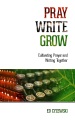
You can buy Ed’s book here and read his blog here. I need to make my own “Ed’s Books” page–his is here–because each book I’ve read from him has been enlightening and encouraging. Really.


Can you be quiet?

Words are often two to three steps removed from true experience.
– Richard Rohr

A Catholic, an Episcopalian, and a Baptist walk into a room.

They ask the remaining 27 of us seated in a circle (Catholics, Episcopalians, a few Lutherans, two Baptists, and me) to keep silence for the weekend (excluding our conference sessions). Don’t talk in the dorms or at meals. It was no joke.

We were on individual vacations with God.

That’s one way to get us quiet—make it a requirement for the “Introduction to Centering Prayer” retreat.

But that’s only exterior silence.

How do we quiet down on the inside?

Prayer-Retreat-notes

After dropping off luggage into my private room at the new retreat house at the century-old Sacred Heart Monastery, I pulled my coat tighter for the walk up the hill to our prayer room for Conference One, “Prayer as Relationship.”

At the beginning of the session we shared briefly who we were. At the end of the session we asked any questions we had. Then we returned to silence until the next session.

We didn’t talk.
We didn’t tweet.
We didn’t text (well, not counting the three times I texted Jeff over the weekend to assure him I wasn’t converting to the nunnery).

(Oh, and the Benedictine sisters graciously allowed us to participate verbally with them in Lauds and Vespers in the chapel, even though my Protestant background hadn’t adequately prepared me for that. But I was pleased to shortly crack the musical code of chanting the Psalms with them. Go, God.)

(And one more, while I’m confessing . . . I did speak out loud to the cafeteria server Saturday night to ask her not to put the greens on my plate of spaghetti. I’m sure God understood.)

As it turns out, silence isn’t saying “no” to communication. It’s saying “yes” to communion. On a uniquely different level. The mind stays on, but it vibrates with a different energy.

When we turn off the words, we tune in to something else. To God, in other words.

  • To sounds (the woodpecker kept a beautiful beat as I walked the prayer labyrinth)
  • To smells (the candles gave off a soft aroma when we did Centering Prayer together)
  • To tastes (the oatmeal at breakfast took me straight back to my childhood and my mother)
  • To sights (oh, the icons to discover in a monastery!)
  • To touches (the warm sheets at an early bedtime were exceptionally welcoming)

prayer-labyrinth

shadow-plant

table-setting

And ironically, even through silence, we can tune more into seeing God in each other as well.

Clearing my mind of small talk conversation starters, I was free instead to notice a husband (silently) serve his sick wife so attentively (she also a fellow-retreatant). I noticed an older woman in our group place her hand gently on the shoulder of a younger one when tears welled up in her eyes. I noticed how, without words, we could still welcome each other to a new day just with smiles and better eye contact.

Does that mean we need to give up talking altogether? Of course not!

But does it mean we could try it occasionally? Definitely.

God has and will continue to use words (thankfully!) to show his love and demonstrate his glory. But he doesn’t have to.

There’s more to Christ than what we read in red ink on white paper.

Jesus—the Word himself from the beginning—fleshed out among us to give us what words alone couldn’t. He didn’t want to just talk to us; he wanted to live with us.

There are many ways to commune with God. We all have our favorites. We return to those the most. And perhaps rightfully so.

But God might have some favorites too, and they may or may not be the ones we’re most comfortable with or think we’re most “successful” with.

Show up for all of them now and again—including silence. God may do his greatest work through the method you think is the biggest waste of time.

Try quieting down the temporary noise a few times this week. See if you can better hear the eternal.

centering-prayer-retreat

* * *

For the final meal of our retreat—lunch on Sunday afternoon—we broke our silence and talked with each other, now all friends (or “My people!” as I discovered). It was delightful. Is it harder for you to speak up or to be quiet? What’s the longest you’ve gone in silence? Let’s share words in the comments.

Related:


When spirits intersect

sacred-meetings_Lisa-notes

It wasn’t anything particular you said.

I just knew something was different.

Like many, you mainly wanted prayers for your kids. Your husband left when your first child did, leaving you a single mom with four kids to raise. The two daughters are now on their own, but you still have three boys at home.

You did what you could. You met you goal to stay off welfare, to not live on food stamps.

But even through the pride of your accomplishments, I could hear you were tired. A weary warrior. Years of day-by-day living takes its toll. So when we started to pray, you seemed relieved.

Yet there was something more. Something deeper.

An intersection of spirits. 

We can’t predict when God will rip a hole through our atmosphere and tie two souls together. We can’t prepare for it. We can only be open to it. To notice it when it happens.

You said it first. “There’s the power of God here.”

I knew it was true.

We prayed together for courage, for your push to keep food on the table, for strength.

You looked at my name tag. “Lisa,” you repeated my name. “I’ll remember you. I’ll be praying for you. Every day. We are secret prayer partners now.”

I knew that was true, too.

We hugged. We said good-bye. You walked into the next room.

I wanted to find a quiet place right then to soak in the Spirit, to be still in the moment. Tears were begging to spill over.

Holy moments need room to breathe.

But I looked at the line. More people were waiting. And there were no exterior quiet places.

So I quickly typed your name into my phone, hid your face in my heart, and went on to the next person.

Did you know that I prayed for you today, Juanita? And many days since that first time.

Our paths may never cross again in the flesh. But they will in the spirit. In his Spirit we remain bonded, friends, sisters.

God won’t let me forget you.

Sometimes God connects us to people we hardly even know. For reasons we don’t have to understand.

  • Maybe it’s for us.
  • Maybe it’s for them.
  • Maybe it’s for deeper battles still to come.

Whether these relationships end up lasting a lifetime—or just ten minutes—they still matter. They are more than warm feelings in a moment.

These sacred meetings are thin places, the spiritual world intersecting with the physical world, reminding us that there is more.

The Spirit still moves about, breathing in and out through his people.

Our responsibility is to stay awake for it. To notice the people around us. Those we already know intimately.

And those we’re just about to meet.

* * *

Have you ever met a stranger and felt like you knew them already? Please share in the comments.

Related:


Women in the kingdom – “Jesus Feminist”

What-would-love-want-us-to-do_Jesus-Feminist

Jesus has been taking me crazy places lately in his kingdom. He’s been teaching me new things about participating with him in the now (my OneWord365 for the year).

And so accordingly, I’m paying close attention to his timing. It’s been exceptionally interesting (including watching a baby’s birth last weekend (!), and being whisked away to a monastery prayer retreat this weekend).

As I pray to see his goodness in all situations—even some really difficult ones—I want to share these encouraging words with you about participatory kingdom living from Sarah Bessey’s Jesus Feminist: An Invitation to Revisit the Bible’s View of Women.

Yes, it is a book about women in the kingdom, but it’s so much more. It’s about all of us in the kingdom, all of us loved, all of us important. May Sarah’s words spur you on—female and male—to keep trusting God like they are urging me.

“I won’t desecrate beauty with cynicism anymore. I won’t confuse critical thinking with a critical spirit, and I will practice, painfully, over and over, patience and peace until my gentle answers turn away even my own wrath.”

~ * ~

“Here is, very simply, what I learned about Jesus and the ladies: he loves us. He loves us. On our own terms. He treats us as equals to the men around him; he listens; he does not belittle; he honors us; he challenges us; he teaches us; he includes us—calls us all beloved.”

~ * ~

People want black-and-white answers, but Scripture is rainbow arch across a stormy sky. Our sacred book is not an indexed answer book or life manual; it is also a grand story, mystery, invitation, truth and wisdom, and a passionate love letter.”

~ * ~

“The culture, past or present, isn’t the point: Jesus and his Kingdom come, his will done, right now—that is the point.”

~ * ~

“It starts with this question: What would Love want to do here?

~ * ~

Let’s reclaim the church ladies now. Church ladies aren’t supposed to be kept in their women’s ministry corner. . . . It’s a lovely thing to watch men and women working together for the Kingdom of God. Women have more to offer the church than mad decorating skills or craft nights.”

~ * ~

If there is one soul in your care, one face in your loving gaze, one hand in yours, then you are loving the world. As Wm. Paul Young writes, ‘If anything matters then everything matters,’ and so the work today, the love we give and receive and lavish on the seemingly small tasks and choices of our days can tip the scales of justice and mercy in our world.”

~ * ~

“God wants his daughters to thrive, mature, gain wisdom, hone their gifts, and contribute to his vast purposes in our world. . . . God created his daughters to be kingdom builders—to pay attention to what is happening around us, to take action and contribute.”

~ * ~

“I’m through wasting my time with debates about women-should-do-this and women-should-not-do-that boundaries. I’m out. What an adventure in missing the point. These are the small, small arguments about a small, small god. Our big and good God is at work in the world, and we have been invited to participate fully—however God has gifted and equipped and called each of us.”

~ * ~

“Theologian Jonathan Edwards aptly said, ‘The task of every generation is to discover in which direction the Sovereign Redeemer is moving, then move in that direction.’

~ * ~

Now go. And do. You know Jesus—you have experienced the power and the grace with your own life; you have felt it in your own heart. Now go—heal, disciple, minister, love, loosen chains, throw open doors, bang your own pots and pans.”

* * *

How have you seen God at work in your corner of the kingdom lately? Please share in the comments.