Use Nonfiction to See Through Someone Else’s Eyes
{Nonfiction November Week 4}
Nonfiction is one way we can get a glimpse into someone else’s world. This week’s theme for Nonfiction November—seeing through another’s eyes—reminds me that books have helped me understand more perspectives than I have access to in person. Books teach us so much about people of different cultures, politics, ages, abilities, and experiences.
And if we’re open to them, the diverse perspectives we meet in books can carry over to genuine connections in real life.
Here are 5 books I’ve read this year that showed me Diverse Perspectives.
The Migrants We Misjudge
Migration is one of the most natural human acts, yet certain people are punished for it while others are praised. It’s often the media we consume—not the actual facts—that determines how we view it.
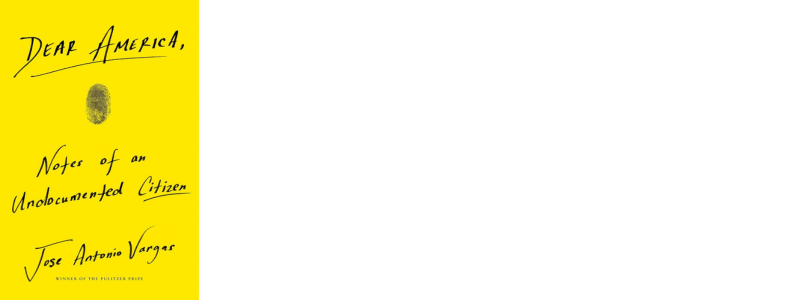
In Dear America, renowned journalist Jose Antonio Vargas writes about his own difficult immigration story coming to America from the Philippines at 12 years old. But he also shares staggering statistics about immigration in general—like the billions in taxes undocumented workers pay each year and the reminder that “there is no line” here for people who want to become citizens.
“Even though it is an illegal act to enter the country without documents, it is not illegal for a person to be in the country without documents. That is a clear and crucial distinction. I am not a criminal. This is not a crime.”
As I read this book, I thought often of my own friends who have come to the United States to escape extreme violence in their own countries. I’m grateful they made it here alive.
The Justice We Skew
Arbitrary Death is quite an enlightening book about the death penalty in America.
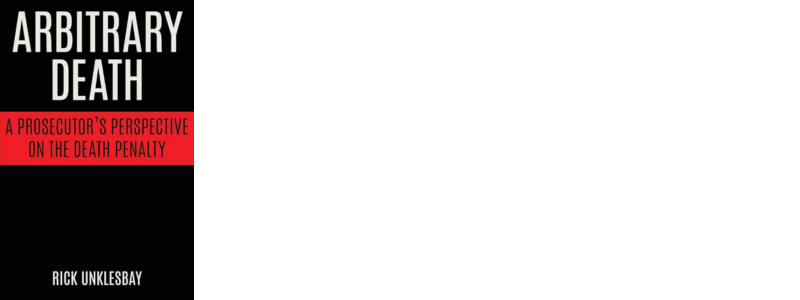
The death penalty is often framed in legal absolutes, but author and prosecutor Rick Unklesbay—writing from firsthand experience—shows that decisions for a death sentence are actually quite arbitrary, including occasional wrongful sentencing of innocent people. Again and again he witnessed victims’ families feel no promised closure after decades of legal wrangling to see human executions.
“Are we willing to take the chance of an innocent person being executed? The alternative of life in prison without parole exists. Shouldn’t that be sufficient?”
The Struggles We Overlook
Disability Visibility opened my eyes to more struggles (practical and otherwise) than I ever knew existed for people living with disabilities. I picked this book from last year’s recommendations in Nonfiction November. So glad I did!

I learned so much from the multiple authors who share their real-life experiences in this collection of essays, including the perspective on the high cost of—and eventual resignation from—pursuing miracle cures:
“People ask me, ‘Have you tried yoga? Kombucha? This special water?’ And I don’t have the energy to explain that yes, I’ve tried them. I’ve tried crystals and healing drum circles and prayer and everything. What I want to try is acceptance. I want to see what happens if I can simply accept myself for who I am: battered, broken, hoping for relief, still enduring somehow.”
The Faith We Force
In How to End Christian Nationalism, Amanda Tyler writes from her research on Christian nationalism.
She concludes that when Christian nationalism abounds, there is no religious freedom for anyone. Why? Because . . .
“Religion that relies on state control for protection and enforcement is not a flourishing faith that can be freely chosen. . . . Christianity is not what unites us as Americans. Belonging in our society must never depend on how (or if) we worship, what we believe (or don’t), or how we identify (or don’t) religiously.”
Who is the “right person” to have a conversation with about Christian nationalism? Tyler says it’s someone you’re already connected to. Because if we can’t attend to it close to home, we won’t be able to end it in the public square. (Maybe not at the Thanksgiving table though?)
The “Them” We Mislabel
Finally, What’s Our Problem? makes a challenging suggestion: Get rid of our labels of Us vs. Them.
Tim Urban says it’s always a delusion to believe it’s only good guys vs. bad guys in this world. Rather, take the view that each person has the capacity to be both. So,
“There is no Them. Just one big Us.”
I don’t agree with everything Urban says in this book, but enough to wonder, as he suggests, if the real danger may not be that we just disagree, but that we’re losing trust in each other altogether.
Summary
Reading nonfiction through someone else’s eyes can be a shortcut to learn more compassion toward people different than us. Every person deserves to be treated with respect. The more we understand others’ lives and experiences, the easier it becomes to extend that respect.
But these particular books didn’t just help me see others more clearly—they also helped me see myself a little more clearly, too. For better and for worse. And isn’t that where real change begins?
What about you? Was there a book this year that opened your eyes to a perspective you hadn’t considered?
Share your thoughts and book suggestions in the comments.
It’s Week 4 of Nonfiction November. Find more book suggestions (and add your own) at Rebekah’s blog, She Seeks Nonfiction.
- Because You’re Not Perfect Either
- Learning to Disagree Better with Mr. T-Shirt Man: One Ripple at a Time
I think I already have How to End Christian Nationalism on my TBR list, but I will be adding the rest of these as well.
I hope you get something out of it if you read it, Olivia. There are a lot of good books out there about the subject; this is just one of them.
I heard a lot about Disability Visibility. Time to put this on my TBR list.
I think you would appreciate this book like I did, Linda. There are so many different voices in it. I learned so much by listening to them.
Dear Lisa, Your words need to be repeated : “Reading nonfiction through someone else’s eyes can be a shortcut to learn more compassion toward people different than us. Every person deserves to be treated with respect. The more we understand others’ lives and experiences, the easier it becomes to extend that respect.”
Waht the world needs now!!!
Thanks, Nancy. These are definitely lessons I need to practice myself again and again.
🙂
Now that my eyes have been “fixed,” I’m looking forward to getting back into reading so many books. I’m currently reading “Behind the Badge” by Joey Jones. He has collected the stories of police officers, fire fighters and others who bravely serve our communities day after day. It’s such a different perspective for me, Lisa, and I’m learning so much about the challenges these folks face day after day, and yet keep on doing their jobs. Wonderfully inspirational!
That sounds like an interesting book, Martha. My brother-in-law was a lifetime firefighter. He had some of the craziest stories. There was so much more to the job than I ever realized. He could fill a book himself! ha.
Excellent list. My book group had a great discussion about Disability Visibility and we all learned a lot.
My book club spent a month with Disability Visibility too! It prompted good eye-opening discussion among us as well.
wow this is a challenging list for sure. Love it you open yourself up to diverse ideas to explore then are willing to bring them to us too. Thank you for this. I just heard about a book called Nations Apart by Colin Woodard which explains why our country stays so divided. I am going to get it from our library
Thanks for sharing Nations Apart with me, Jean. It sounds so interesting! I’m going to get the Kindle sample sent over right now and then see if my library has it. (What would we do without our libraries? I would be broke!)
love my library. Just picked up Joyspan!!
I may squeeze these into my TBR, but I’ll have to see if our library or the large city library system just north of us, to which I have a library card (and where I used to work as a librarian) has them. My book budget has exploded — and it’s been a real mess to clean up! 🙂
I understand. I use the library for almost all my books. Thankfully I have access to a larger library system too (also north of me!) which has far more books than my local library system. Yay for you once being a librarian, some of my favorite people. 🙂
Thanks for sharing your recommendations. I really must prioritise Disability Visibility.
I think you’ll find it worthwhile to move it higher on the list. That’s what I had to do after seeing it recommended so much last year for Nonfiction November. 🙂
I love to listen to and read the stories of others. Living in California I have many opportunities to learn about the diverse set of circumstances and beliefs of my neighbors. For the most part I think they are good with me being me, and I have gleaned much compassion through their willingness to be who they are… all made in the image of God. We’re all in process and our stories matter.
Thank you!
It sounds like you’re doing your part to see and respect all people, Lisa. It makes a difference, once person at a time!
Great choices here. I really want to find the equivalent of Disability Visibility for the UK but will get round to reading that one anyway soon, I think.
It’s a good one! I added “the view from down here: on being disabled in an ableist world” on my list from someone’s suggestion on Nonfiction November (I think it’s written by a UK author), which reminds me somewhat of Disability Visibility, except that the latter is written by many authors.
Great suggestion, except I think you probably got that from me as I’ve just been talking about it for my Week 4 post (and should be reviewing it soon). It was really good but that ensemble piece is what appeals with Disability Visability.
Yes, I did get the suggestion from you, Liz! ha. I checked my notes of where the recommendation came from, and it was indeed from your week 4 post. Obviously I liked it. 🙂 And yes, I agree that the ensemble book provides a different kind of clarity; there’s something unique about hearing from multiple voices.
I added Arbitrary Death to my TBR. When I was in college, I had an entire blog about the death penalty. It’s a super interesting subject.
Oh, how interesting that you wrote an entire blog about the death penalty. I’m curious to know more! Is it still online?
I am interested in learning more about how to talk to others about Christian nationalism. I added Dear America to my wishlist. Thank you, Lisa!
You’re welcome, Deb. And I started the sample today of The Common Good from your suggestion (and watched the YouTube video you linked). I do love Nonfiction November so much. 🙂
I always become familiar with some fresh perspectives on the world when I visit blogs during Nonfiction November.
You shared some powerful examples this week. The book about how Christian Nationalism sound like one I really need to consider. Thank you for bringing it to my attention.
My week 4 post: https://headfullofbooks.blogspot.com/2025/11/nonfiction-november-week-four-diverse.html
You’re welcome. And I just got the Kindle sample sent to me of “There’s Always This Year: On Basketball and Ascension” from your post. Thanks, Anne!
Thank you for wrapping up in such a meaningful way why I love non-fiction so much. Sometimes I just yearn to hear a story poured out from another’s heart. This practice of reading widely enlarges our borders, softens our hearts, and helps grow empathy and understanding.
Thanks for taking us there, Lisa. Thanksgiving blessings to you and yours. Bless you.
Great post, thanks! Enlightening
“How to End Christian Nationalism” sounds like an important read. Things are so interwoven at so many levels that it’s hard to tell where the motivations for certain ideas come from. I’m interested to hear the ideas for getting things back on the correct track. Thank you for sharing that one!
I’m not a huge fan of non-fiction, despite being the author of a book myself. I’d be interested in reading Disability Visibility.