
When You Can’t Get in the Game: Finding Purpose from the Bleachers
“When we are no longer able to change a situation, we are challenged to change ourselves.”
—Viktor E. Frankl
Sitting in the Bleachers
Sometimes I have dreams that I’m sitting in some bleachers. Just watching a game. A spectator. Maybe cheering, maybe emotional about who is winning or losing.
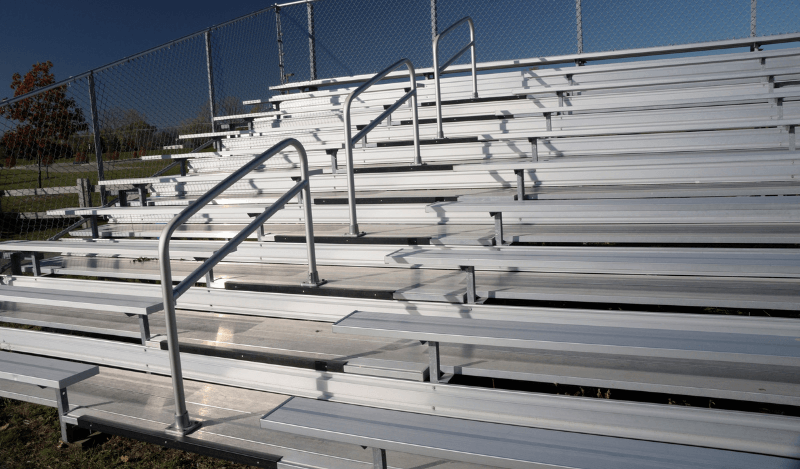
In some of those dreams, the bleachers begin to tip backward, and we all begin to fall out (although I usually wake up before I hit the ground). Other times, I almost drop something through the cracks beneath my feet.
I awake from these dreams feeling uneasy—because even in waking life, sitting in the bleachers doesn’t always feel safe to me.
When You Can’t Get in the Game
When I’m a spectator in the bleachers, I have no control over how the game is played. I can’t advise the players. I can’t referee the calls.
I can only sit and watch.
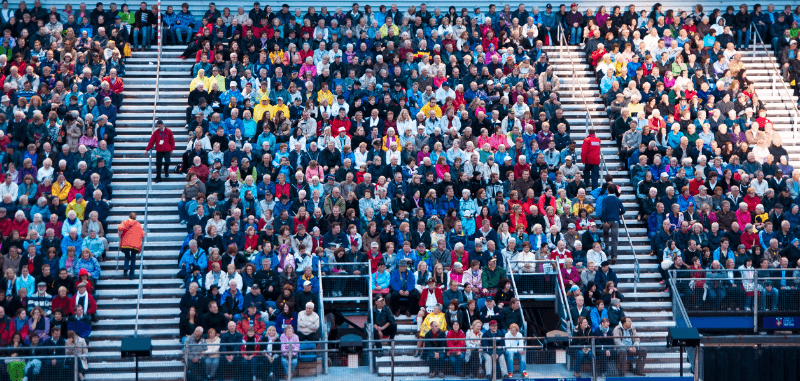
Our culture shouts, Get in the game! And often, that’s good advice. I’m currently even memorizing Teddy Roosevelt’s “Man in the Arena” speech to remind myself that courage belongs to those who show up and participate.
But not every game is ours to play.
Not every work is ours to do.
Some games we simply can’t play right now—whether by choice or circumstance. Sometimes the best we can do is sit in the stands and watch and cheer for those who actually are on the field.

Finding Purpose from the Sidelines
It’s humbling. It can feel powerless.
Yet I’m learning that being in the bleachers doesn’t mean I’m disconnected. I can still pay attention.
From the stands, I can see the whole field. I can notice things I’d miss if I were on the field. Distance sometimes bring clarity that can’t be achieved close up.
Sitting out also can be a time of healing. A place to rest, to regain strength for when it is our turn to play again. The bleachers may be the safe place we need to recover from previous grueling games. Protection, not punishment.
And sometimes? Sitting in the bleachers means I can turn away from the game and talk to my friends; I can go to the concession stand and get popcorn; I can leave early if the game is too slow or a blowout.
While the bleachers may feel torturous when we want to play, with a reframing of perspective, maybe the bleachers can become exactly where we need to be. At least for now.
And when a new game begins that is ours to play, maybe we’ll be more ready than ever to get in the game.
When have you found yourself sitting in the bleachers—watching instead of playing—and what did you learn from it? Share your thoughts in the comments.
- How to Grow a Long Joyspan: Why Older Can Truly Mean Better
- Ripples Through Time: Reading My Late Mother’s Words—Then My Own
Good thoughts. I sort of see this in not being as active in some ministries that used to be a major part of my life. Time constraints, health issues, and moves have curtailed some of my activities. I don’t really mourn the loss because I still have plenty to do, and I enjoy what I am doing. And the people handling those things now are doing a great job.
Sometimes, too, the bleachers are a place to cheer on and encourage those in the game. I’m not a big rah-rah person and don’t like it when the cheerleaders are in my line of vision trying to get me to clap or stand when I just want to see the game. But I imagine playing in front of empty or sparsely populated bleachers is a bit discouraging to the players. So I can still encourage others as an observer.
Good points, Barbara. Our “games” change as we move through life, and usually leaving one behind makes room for a new one. Yes, there is always plenty to do for each of us.
I know what you mean – sometimes the cheerleaders can be a bit bothersome when they actually prevent us from getting more involved with the game instead of engaging us more with it. ha. It’s interesting how homefield advantage really is a thing though when there is a good crowd supporting their team.
Sometimes, sitting on the sidelines is the most important thing we can do both for others and ourselves. We’re not meant to be active in all things at all times. Now, with Danny’s health issues, we’ve both been benched for many long weeks and can’t participate in church and other activities as we would like. Instead of griping, we are choosing to encourage others who are in the game. Great reflection here, Lisa. Blessings!
The people on the sidelines can truly be a gift too, Martha! Every team appreciates having a crowd of supporters who will cheer them on. We all have different roles at different times. I love your choice to play an encouragement role for this season you’re in.
I too have been thinking lots about this overwhelming feeling of powerlessness and how to deal with it. I do like your image. and your comment about memorizing the man in the arena helping to give you courage ( my word of the year – that is interesting, is it working?) I find that is an interesting contrast – being in the arena vs in the bleachers. You are learning from both sides. Finding an image does help me through a challenging time such as this chaotic cultural upheaval we are going through that is leaving me feeling so powerless. Thank you for sharing this image. I am going to ponder this. The arena? The bleachers? Who are the refs? can I be a photographer on the sidelines? An announcer in the booth? Can I leave the game early if I don’t like the score? ooo, you got me thinking…..
I love your series of questions, Jean! They are useful to me too. I’ve been thinking about my bleacher dreams for some time and wondering what they could possibly mean. I’m exploring more possibilities now. And you’re right that this is such a crazy time of uncertainty as we try to decide what is ours to do and what is not ours to do in this upheaval. Sometimes I don’t feel like anything I do makes a difference. But then I remember that my actions are at least making a difference in me, if nowhere else, and that counts for something.
Wow, there’s so much here, Lisa, and can I just say that it’s wonderful to be challenged by your example of memorizing someone’s speech because you want to commit yourself to a way of being in the world.
Thanks, Michele. This particular passage has been more challenging than most. The language is a bit archaic so the phrases don’t roll off my tongue (or through my brain) very easily. 😉
Thank you for this. As an Introvert, I’ve always worked in outward facing positions (go figure). However, most of those positions were in supportive roles of those who were doing the direct service (training and managing volunteers working with new mothers, training and managing facilitators who were facilitating hands on activities with youth, offering support and resources for agricultural producers, etc). I had a brief time when I felt “less than” because the work I was doing was the quiet kind. There were no accolades or awards and I’d fallen into the trap that my productivity defined my worth…but if my productivity was in the background, how would anyone know? I had to come to the realization that *I* knew, and that was all that mattered. I realized that, in my work, I was acting as bridge for my community to get from where they were to where they wanted to be or setting a foundation from which they could build a better life and that quiet work was so so important. So, yes, cheering on from the bleachers is such an important role for the whole game, no matter what anyone else might tell you 🙂
I tend to prefer work in the shadows too, and yes, it sometimes has felt that work is invisible and unappreciated. I had to have several pep talks with myself especially when I was raising kids that even when no one saw my work, what I did still had value. Although in one volunteer job I have now delivering meals, I am the face of the work and get TOO much credit, when I know the real work was spent by someone else in their kitchen for hours planning and preparing the food. When someone thanks me too much, I have to remind them that it’s not me that deserves any credit but the cooks. 🙂
I love your imagery that you were a bridge for your community – I hope I’ll remember that for myself too! Thanks, Melissa.
Thoughts that came to mind: good followers make good leaders; as Clarissa Pinkola Estes said in Women Who Run With the Wolves – sometimes we need to sit back & pant & wait; Melissa commented on the intrinsic value of working in the background – we can be our own cheerleader.
Thanks for these insights, Mona. And this is the third mention in a week from various sources referring to Women Who Run With the Wolves – I’ll take that as a sign that I really need to move that book higher on my to-read list! 🙂
Great post and visual. So true every game isn’t ours to play, and that is more than okay. Cheering others on! Yes. Resting, needed. Thank you.
Thanks, Brenda. I hope I’ll remember this the next time I have a nightmare about bleachers tipping over. ha. Bleachers can be a good thing! 🙂